
Level 1 sweep and inspection to the NFPA 211 annual standard - flue, crown, cap, and flashing checked and photographed
Chimney sweep logs do not sweep chimneys. They loosen some creosote - which then falls where a brush and vacuum still have to collect it.
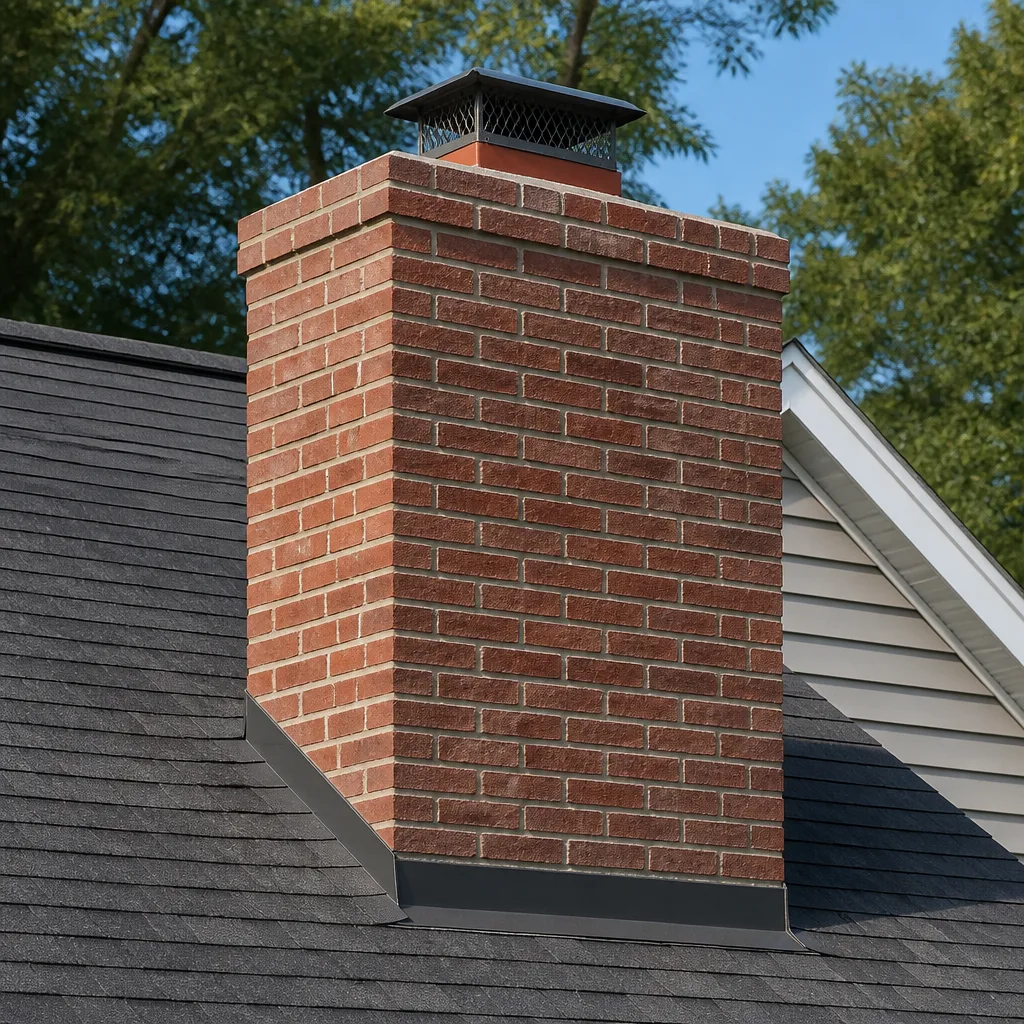
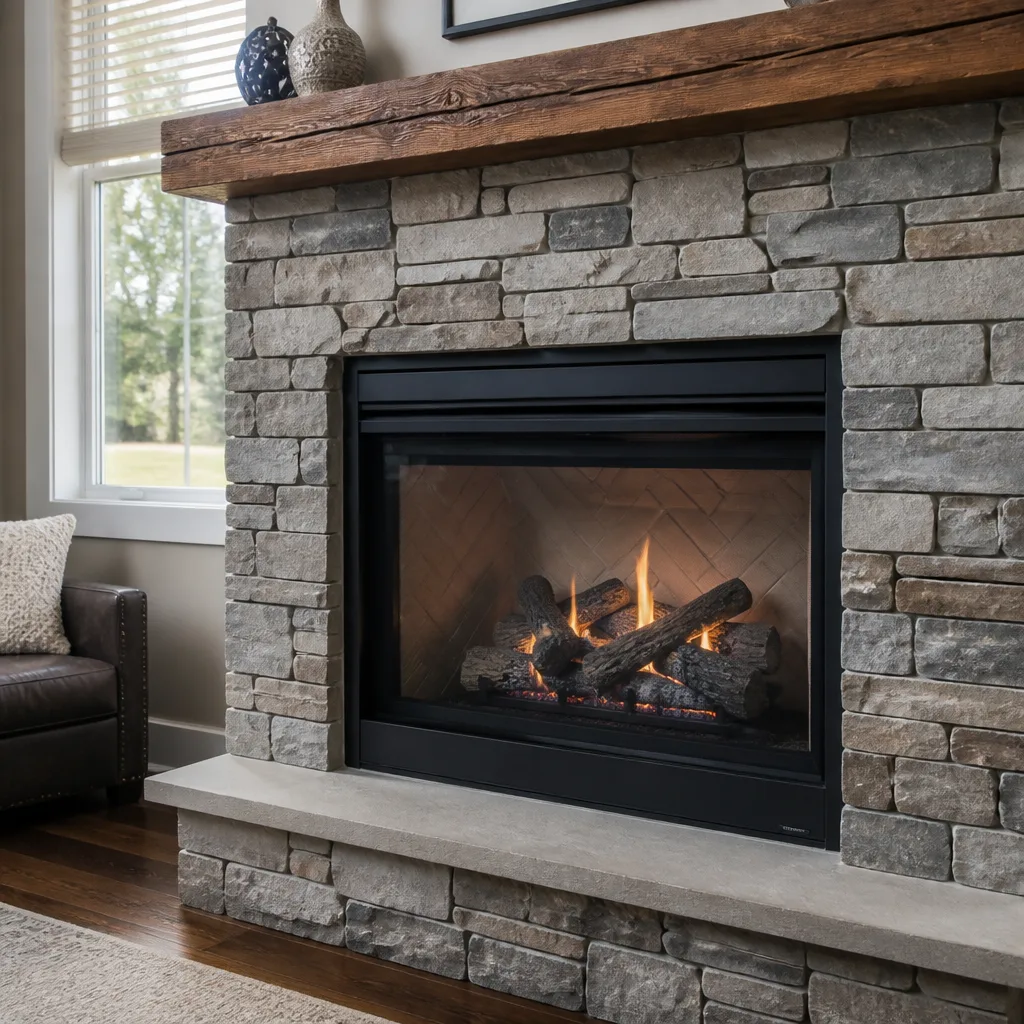
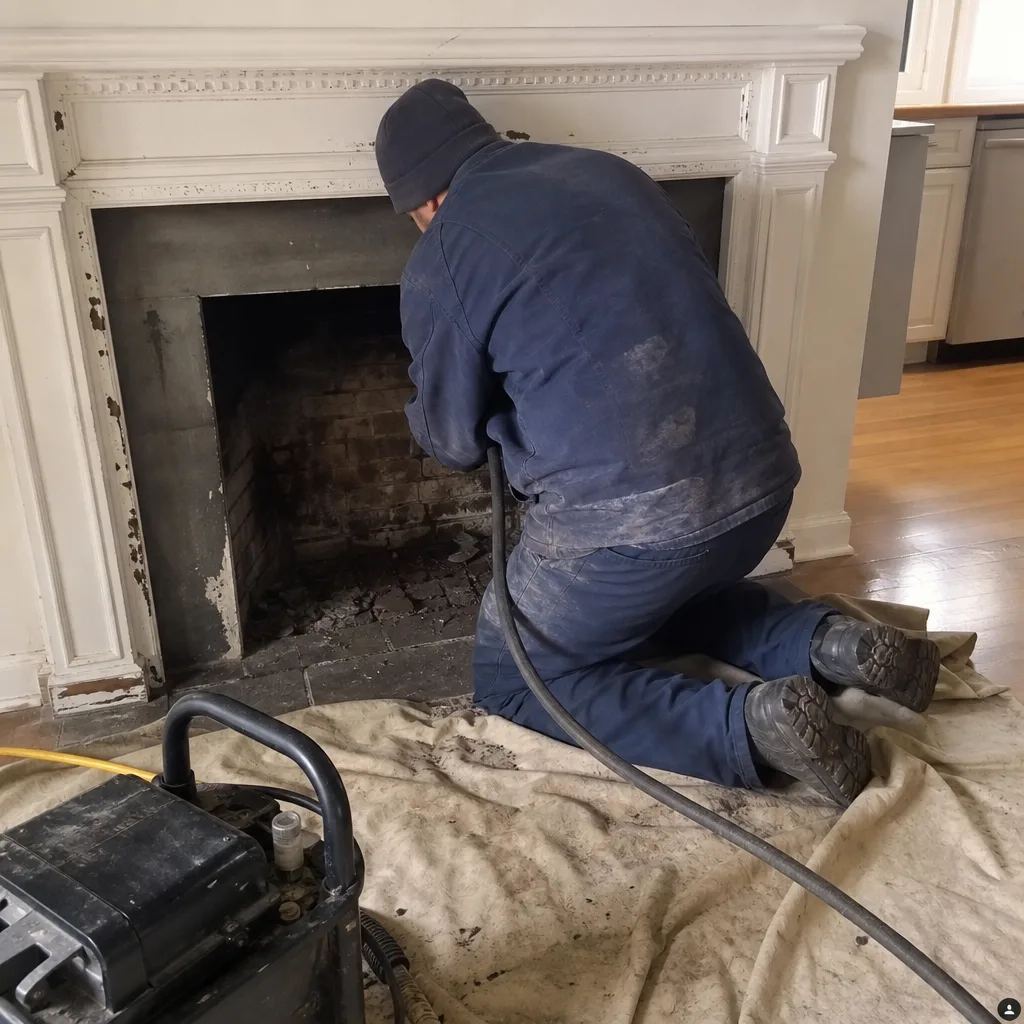 Before
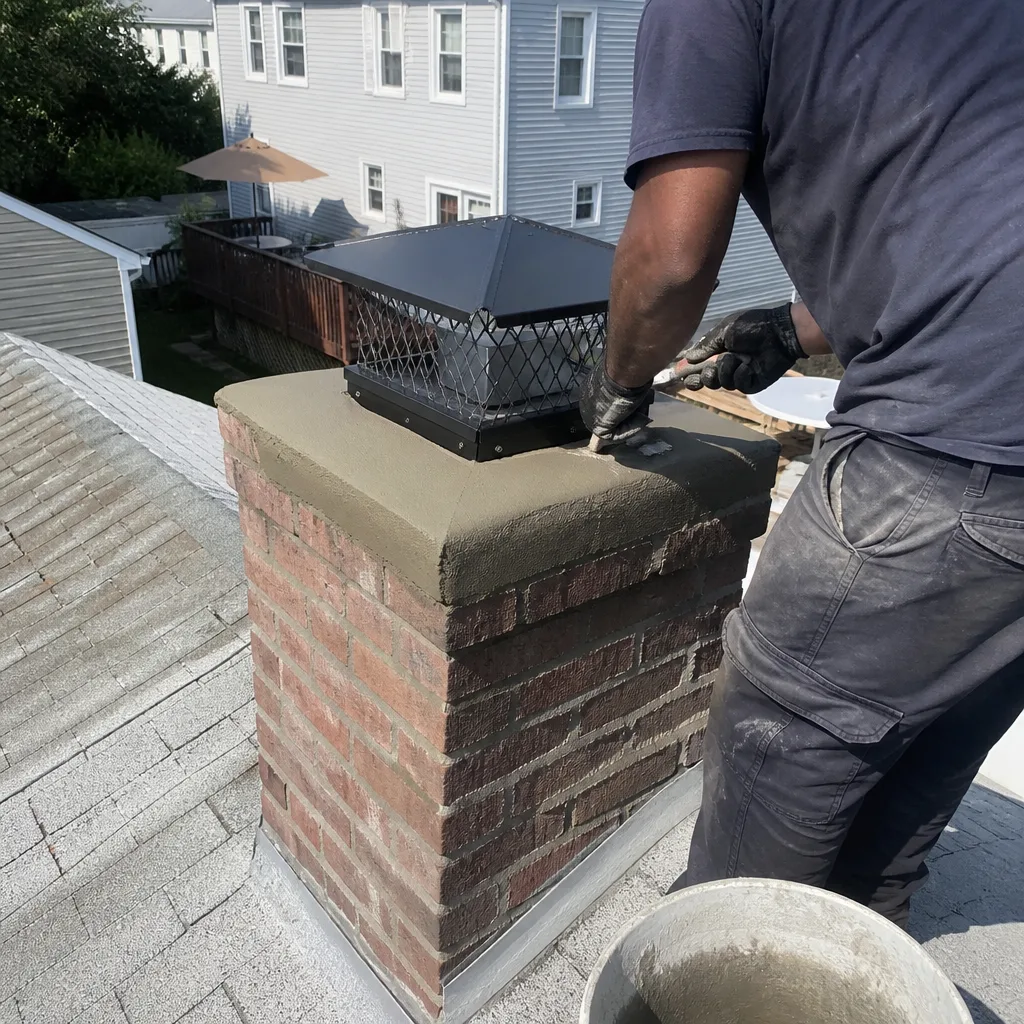 After
After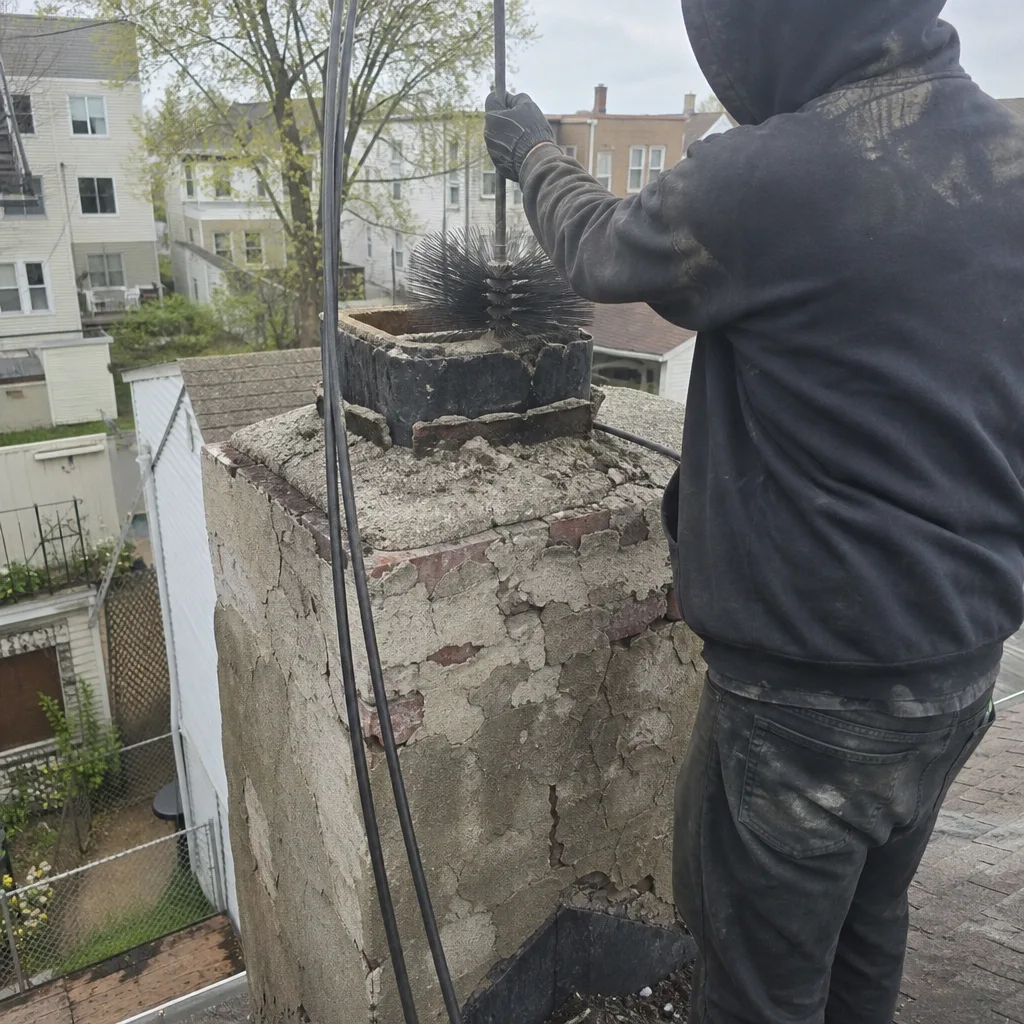 Before
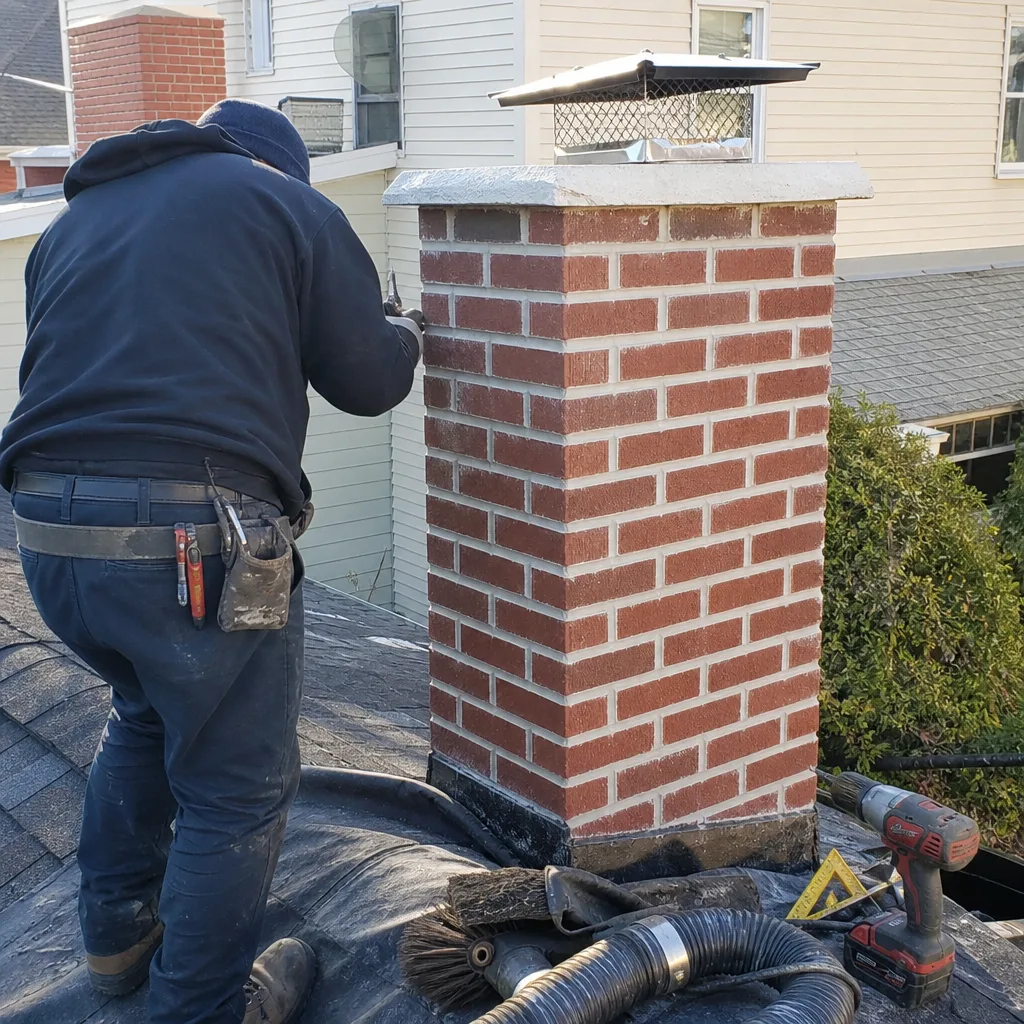 After
After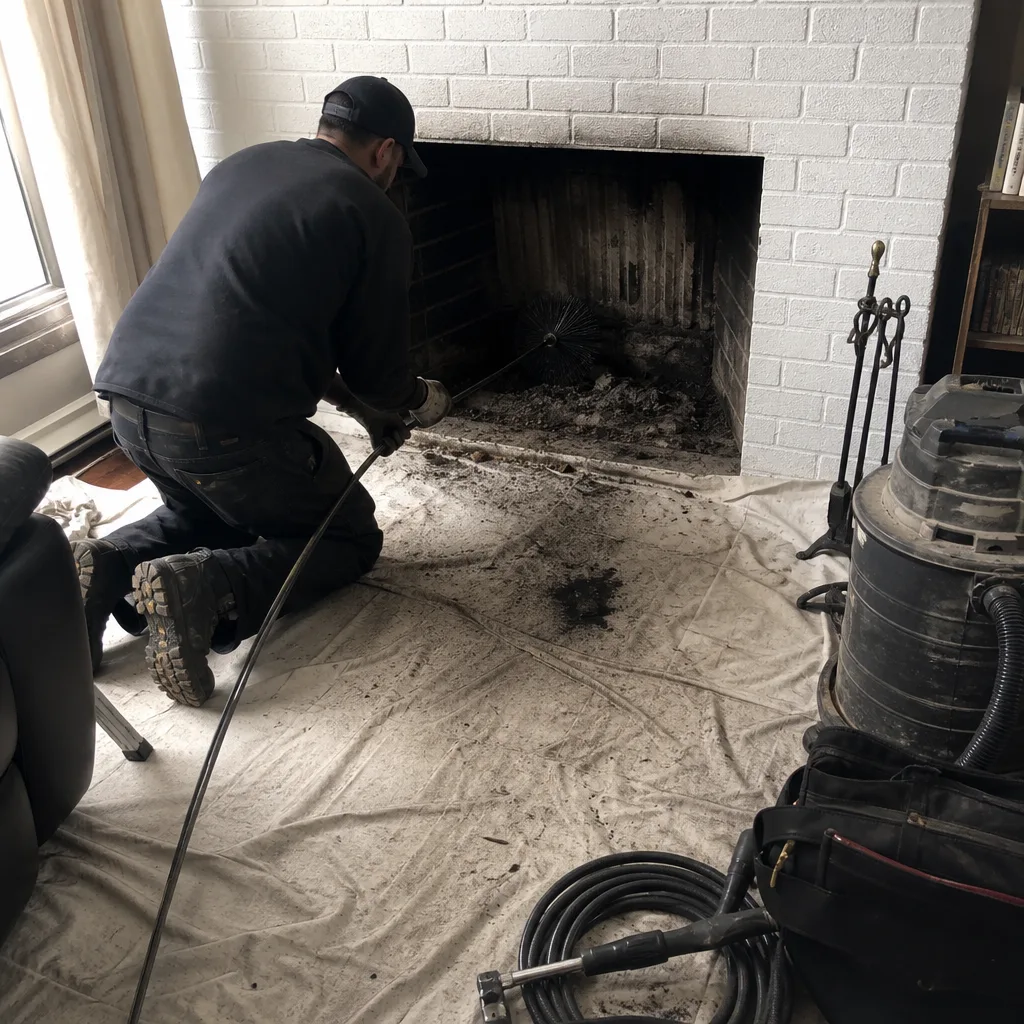 Before
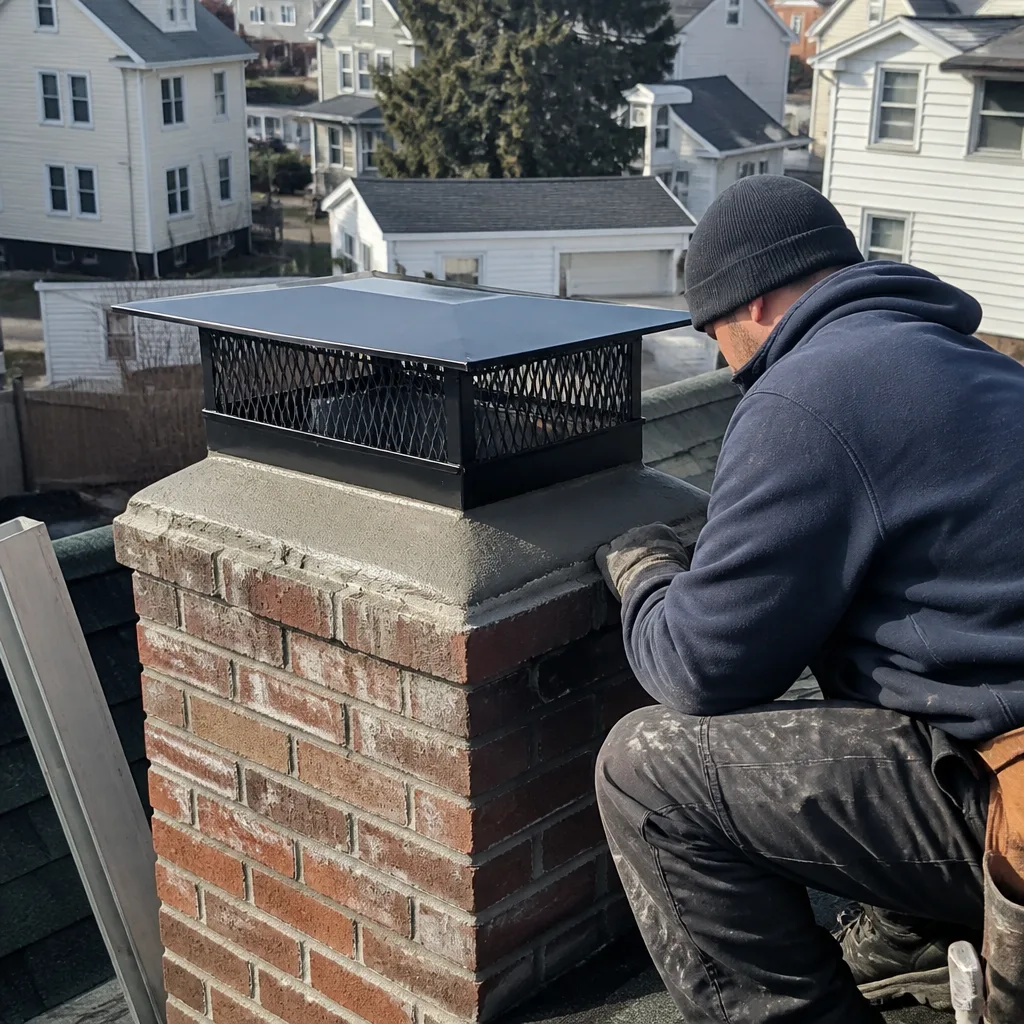 After
AfterFast, Reliable Fireplace Services Across Manhattan
A fireplace service call in Manhattan is different from anywhere else in the country. Walk into a pre-war co-op on West 86th Street or a brownstone in Harlem and you’re not looking at a fireplace that was installed in 2012. You’re looking at a masonry chimney that’s been standing for 90 to 130 years, likely with the original clay tile flue liner still inside it, and possibly serving more than one apartment through a shared flue. That changes what a fireplace service actually means. Our Fireplace Services team has documented more than 38,000 chimney inspections since 2009, and the assignments we handle in Manhattan consistently involve building coordination, FDNY compliance, and shared flue systems that a suburban single-family job never touches.
You’re not calling for a quick tune-up. You may be calling because smoke backs up into the top floor unit, or because your co-op board flagged the fireplace in a FISP filing, or because you installed a gas insert and want to know whether the existing flue can handle it. We answer those questions with camera evidence and written pricing before anyone starts work. Call (862) 272-3868 to schedule an inspection, and keep reading to understand exactly what you’re dealing with in a Manhattan fireplace.
What happens when you call
- 1
A real person answersNo phone trees - you reach a local pro.
- 2
You get an upfront price rangeHonest numbers before anyone is dispatched.
- 3
A background-checked tech heads outLicensed & insured, dispatched right away.
- 4
You approve before work beginsNothing starts until you say go.
Key Takeaways
- Fireplace service in Manhattan is not a single-unit job. Many pre-war buildings share flue systems across apartments, and a compromised liner affects every unit on that stack.
- Nothing gets recommended without camera evidence you can see. A Level 2 inspection with a flue camera is the default on every visit, and you receive a documented photo record when we finish.
- Manhattan pricing for fireplace services runs higher than surrounding boroughs due to building access rules, DOB compliance requirements, and the age and condition of pre-war masonry.
- Written price, written scope, written warranty. Before any work starts, not after. That’s Clause 1 of the Haven Standard, and it applies to every job in Manhattan.
Why Level Two Chimney Jersey City Is Manhattan’s Preferred Fireplace Services Company
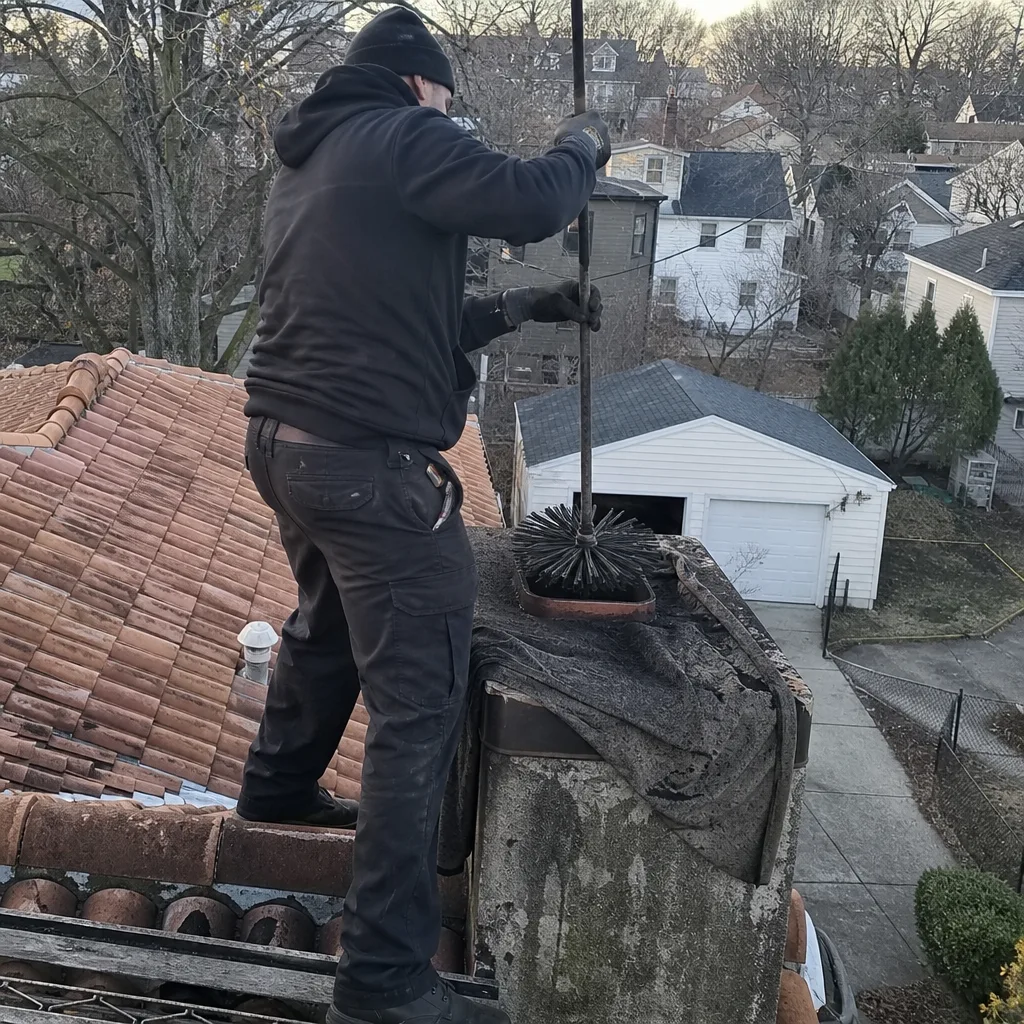
Manhattan’s housing stock is overwhelmingly pre-war masonry. Brownstones in the Village and Harlem, six-story tenement walk-ups on the Lower East Side, and large pre-war co-op towers from the 1900s through the 1930s dominate the residential landscape. Most of these buildings still contain their original clay tile flue liners sized for coal combustion, never relined, and often cracked, offset, or spalled. When we arrive for Chimney Repair in Manhattan, we’re rarely the first company to look at the chimney. Too often we’re the first company that put a camera down the flue and showed the homeowner or board what was actually there.
Corrine Halstead, who leads Level Two Chimney Jersey City, made camera-scan documentation the default on every job back in 2009. Years before regulators or insurers asked for it, our crews photographed what they found. That practice became Clause 4 of the Haven Standard, and it means you never get a verbal report. You get a photo record, with the flue condition, smoke chamber integrity, and creosote class documented in writing.
We schedule directly with Manhattan residents and building managers from our New York City office, with crews dispatched locally. Calls are answered by a live person, 24 hours a day. When a technician is assigned to your job, you get the license number, the tech’s name, and a text when they’re on the way. That’s the H.A.V.E.N. standard: Verified crews, Arrive on schedule. No anonymous subcontractors, no “we’ll get to you sometime this week.”
 Before
 After
AfterOur Fireplace Services in Manhattan
Manhattan’s fireplace work splits into a few distinct categories, and each one has different failure modes in a pre-war building. Here’s what we handle most often in Fireplace Services in Manhattan.
Gas Fireplace Service
Gas fireplace service in Manhattan usually means servicing a gas log set or gas insert that was retrofitted into a firebox originally built for wood. That retrofit is the most common source of problems we see. The original damper may have been designed for coal or wood-fire drafting, and forcing it to work with a modern gas appliance creates draft and carbon monoxide risks. We service the gas valve, pilot assembly, thermocouple, and burner, then verify the flue is properly sized and terminated for the appliance. In Manhattan, a gas fireplace service call typically runs $275 to $450, though pre-war flues with off-set clay tile liners can push that higher when a camera inspection reveals liner spalling that needs attention.
If you’ve got a gas insert in an Upper East Side pre-war tower where the flue was never relined, do not accept a service call that only checks the gas valve. The flue condition is the life-safety variable. We check it with a camera on every visit.
Wood Burning Fireplace
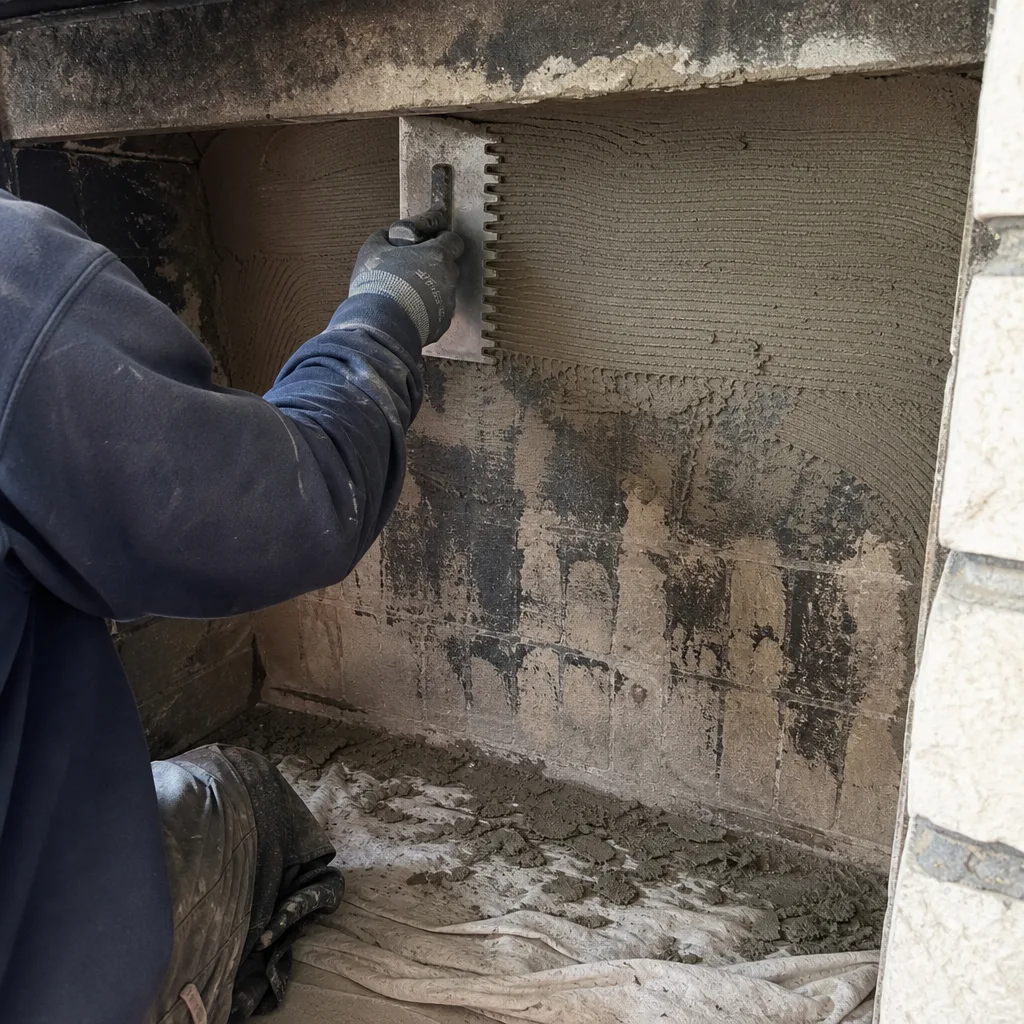
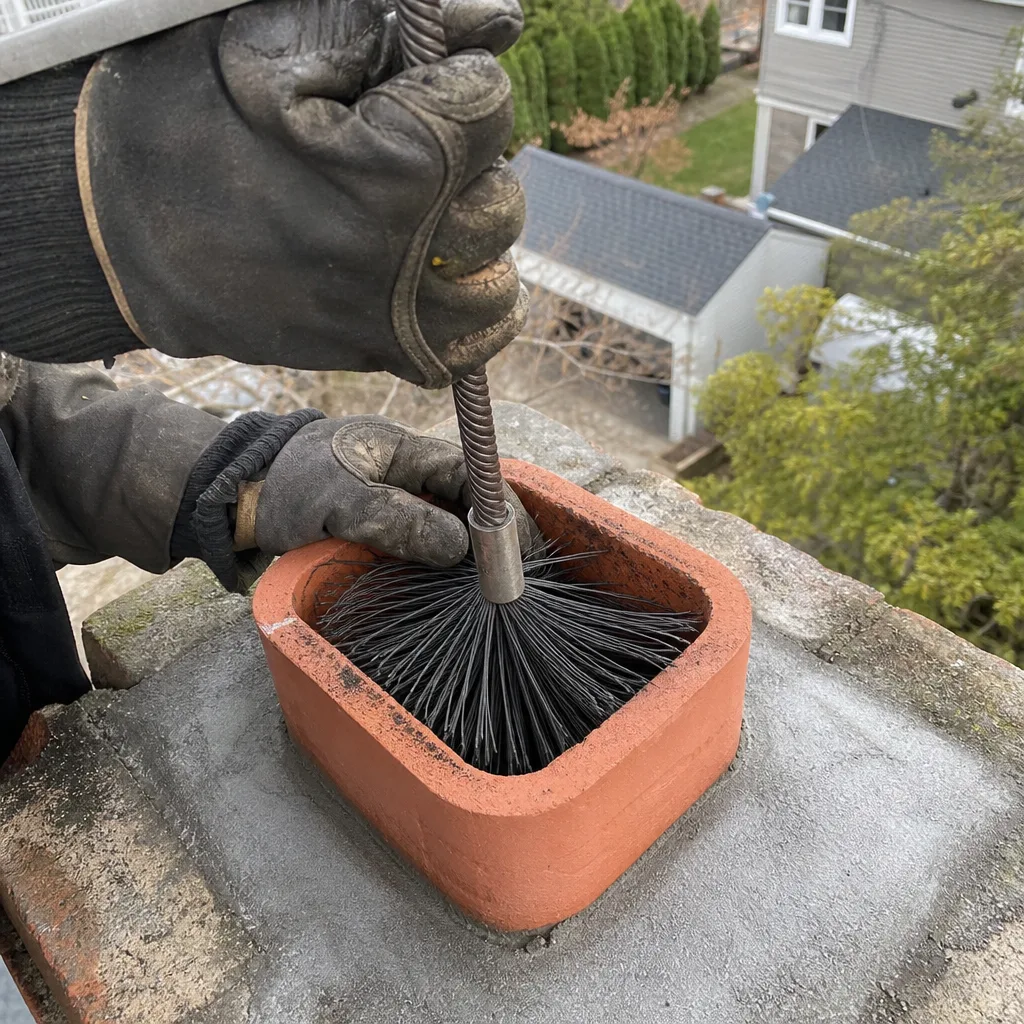
A wood burning fireplace in Manhattan is almost always in a brownstone or townhouse with a dedicated flue, and it’s often the original 1880s-1920s masonry stack. Those flues were built for coal fires at lower temperatures and shorter burn cycles. Modern wood fires run hotter and longer, which accelerates creosote deposition in an unlined or clay-tile flue that was never designed for sustained wood combustion. We clean the firebox, smoke chamber, and full flue length, then run a camera to document creosote class and liner condition. Wood fireplace cleaning in Manhattan runs $250 to $425 for a standard single-flue townhouse, though shared gang flues in tenement layouts cost more because they require access coordination and longer flue runs.
Fireplace Insert
Fireplace inserts in Manhattan are popular in co-op buildings where residents want heat output closer to a wood stove without altering the masonry structure. The insert sits inside the existing firebox and vents through the original flue via a liner. The problem in Manhattan is that many original flues are too small, cracked, or offset to safely accommodate the insert’s exhaust gas temperatures. We install and service inserts with a flue liner sized to the appliance manufacturer’s spec, using materials from HeatShield or Olympia Chimney when relining is required. Fireplace insert installation in Manhattan typically runs $3,800 to $7,200, with the liner labor being the largest variable. We give you a written price before ordering any material.
Damper Repair
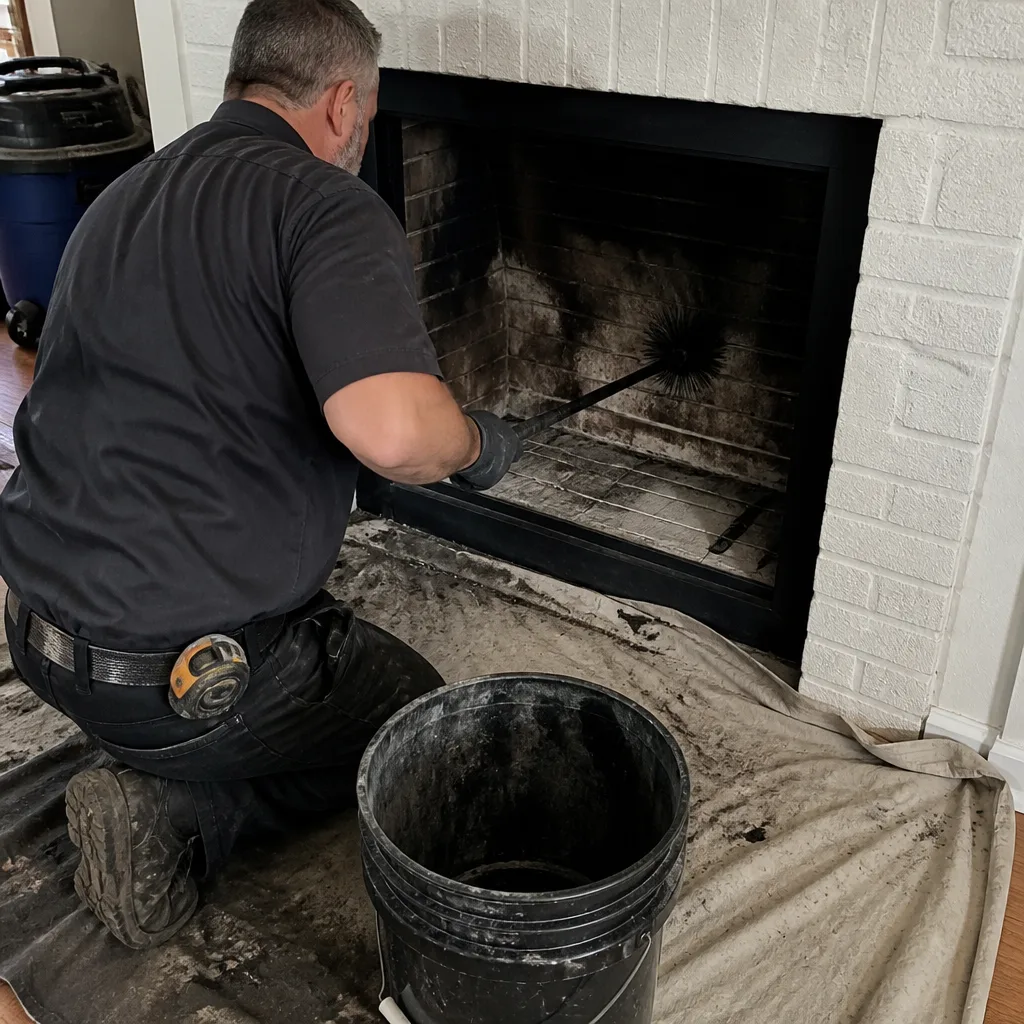
Damper repair in Manhattan is one of the most frequently misquoted services in the industry. A damper that works fine for a wood fire may be completely wrong for a gas insert, because gas exhaust carries water vapor that condenses on a cold damper and corrodes it, and because a gas appliance requires a smaller, fixed damper opening to maintain proper draft without excess heat loss. We see quotes for damper replacement on fireplaces that were never going to be wood-fired again, and quotes that ignore damper replacement entirely when it’s genuinely necessary for gas safety. Damper repair or replacement in Manhattan runs $275 to $600 depending on whether it’s a top-sealing damper, a throat damper, or a custom pre-war cast iron unit that needs fabrication.
Trusted Brands We Service in Manhattan
We service and install gas logs, inserts, and fireplace components from manufacturers with parts support networks that reach Manhattan quickly. We work with HeatShield for flue resurfacing when a clay tile liner is cracked but the masonry stack is sound. For flex liners and connector components we use DuraFlex. For fireplace insert venting and termination caps we draw on Olympia Chimney. Parts arrive through the Haven buying network, which keeps customer prices honest. We keep common service parts in our local stock. If you’re in Manhattan and your gas valve is failing mid-winter, we don’t have to wait a week and half for a part to ship.
Common Fireplace Service Problems We See in Manhattan Homes
- Shared gang flues with one deteriorating liner. In many Manhattan co-ops and tenements, multiple apartments vent into a single flue system. If the clay tile liner in that shared flue cracks or offsets, every unit on the stack is at risk. Boards sometimes delay repairs because no one has put a camera in the flue and shown them what’s there. Fixing one apartment’s fireplace does not fix the shared flue. We document the whole system before anyone makes a repair recommendation.
- Techs recommending relining based on age alone. A cracked 100-year-old clay tile liner does not always need a complete relining. HeatShield resurfacing often restores the flue to safe condition at a fraction of the cost of a full reline. But if the liner shows spalling, offset joints, or multiple cracks throughout its length, relining is the correct fix. The point is you should see the evidence. Every job includes a camera inspection and a documented photo record, so no one sells you a liner on the basis of “old house, old chimney.”
- Cleaning only the accessible fireplace unit, ignoring the shared flue. A crew shows up, sweeps the firebox and the first few feet of flue, calls it done. In a Manhattan building with a gang flue, that’s half a job. The full flue length, smoke chamber, and termination cap all need cleaning and inspection. A partial clean on a shared system leaves the common flue coated with creosote, and that’s where the chimney fire risk sits.
- Damper quotes that ignore gas conversion realities. Manhattan homeowners converting from wood to gas get quoted a damper replacement without the technician considering what the new appliance actually needs. A wood damper left in place on a gas insert can cause draft problems and carbon monoxide spillage. We verify the damper type, opening size, and flue connection against the appliance every time, and we show you what’s there before we quote.
Pricing for Fireplace Services in Manhattan, NY
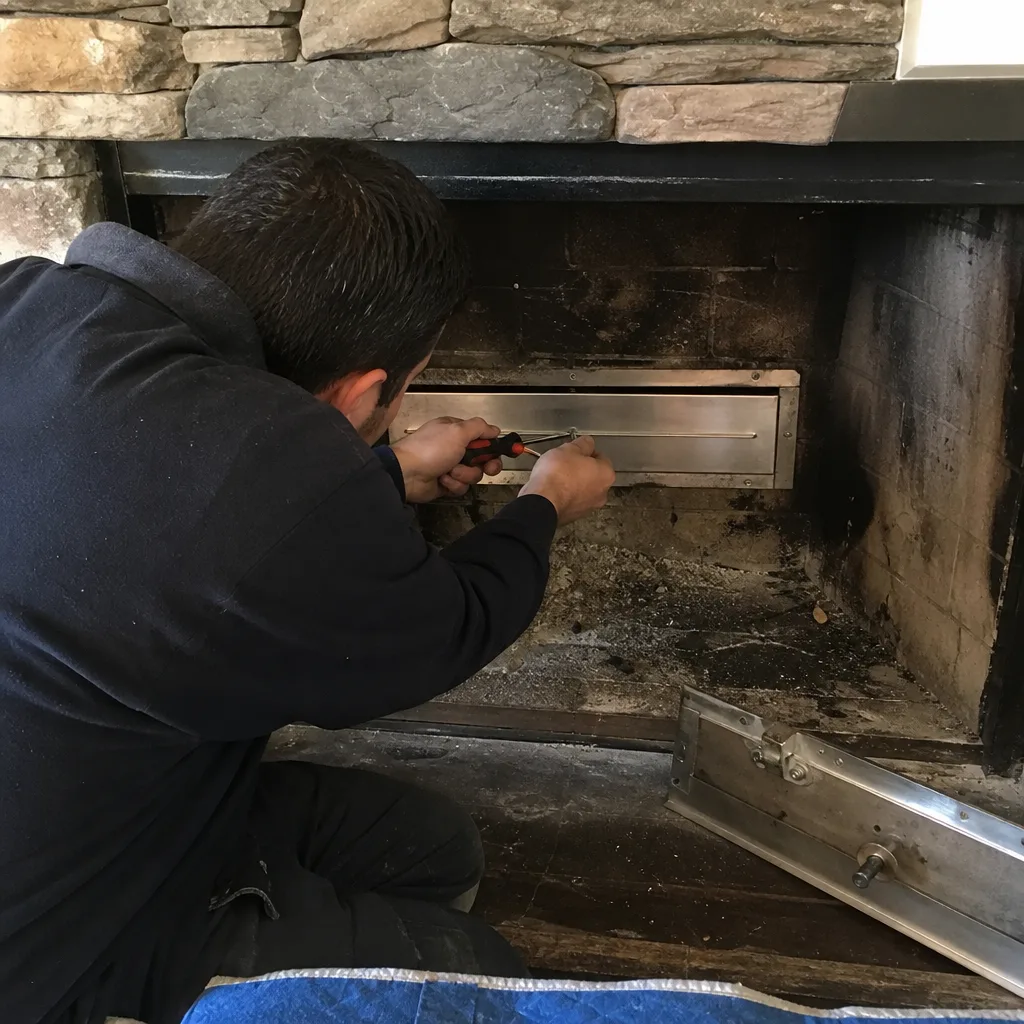
Manhattan fireplace service pricing runs higher than Brooklyn, Queens, or the Bronx for reasons that are structural, not arbitrary. Building access in co-ops and condos requires insurance certificates, board notification, and sometimes superintendent scheduling. Many jobs involve shared flues, which means the liability and documentation burden is higher than a townhouse with a dedicated flue. And most of the stacks we work on are 80 to 130 years old, which means we spend more time verifying flue condition than we would on a 20-year-old suburban fireplace.
A standard fireplace cleaning and Level 2 camera inspection in Manhattan runs $250 to $425 for a townhouse or individual apartment unit. Gas fireplace service runs $275 to $450. Damper repair or replacement runs $275 to $600. Fireplace insert installation runs $3,800 to $7,200. Gas conversion from wood, including flue verification, liner installation if needed, and gas log setup, runs $2,200 to $5,500 depending on flue condition. Every single price is delivered in writing before we start, with a written scope and written warranty. No verbal estimates, no “we’ll figure it out later.”
Bring us a competitor’s written estimate and we’ll give you a free second opinion on it. Call (862) 272-3868 and we’ll get you scheduled. You’ll walk away with camera photos and a documented record of everything we found, whether or not you hire us for the repair.
What Actually Happens if You Skip Fireplace Service in Manhattan
Here’s what we’ve seen in Manhattan apartments and townhouses where fireplace maintenance got deferred for years.
Third-degree creosote. That’s the glazed, tarry form of creosote that a standard brush cannot remove. It forms when a wood fire burns inefficiently, which is common in flues that are oversized for the firebox or starved for draft. Third-degree creosote ignites at roughly 1,000°F and burns as a chimney fire that can crack flue liners, damage the masonry stack, and spread into adjacent building materials. In a shared gang flue, a chimney fire in one unit’s flue is a fire in the building’s flue. That’s the reason we document creosote class in the photo record on every job.
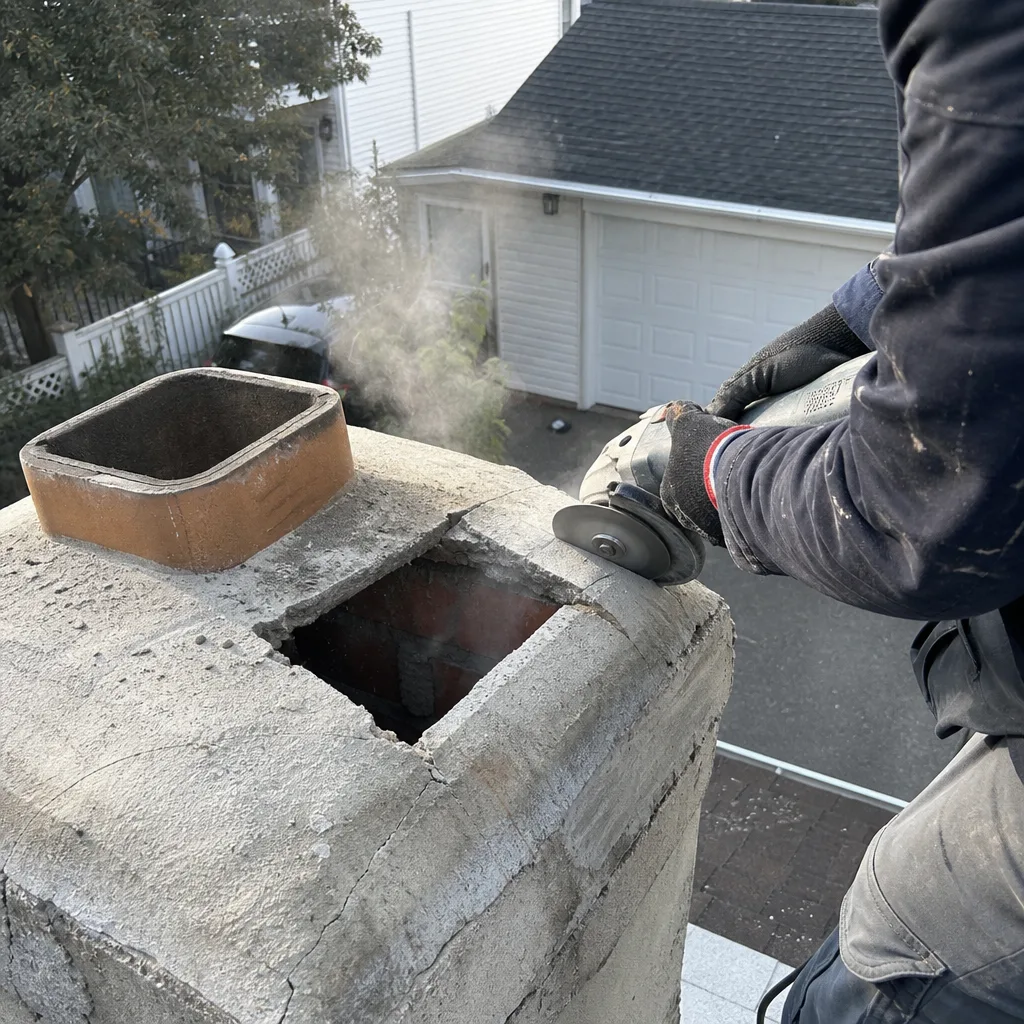
In one six-story pre-war co-op on West 86th Street, residents on the top floors complained of smoke backing up into their units. Our crew found a cracked clay tile flue liner in a shared gang flue, with third-degree creosote glazing that a brush could not remove. We coordinated with the board, documented the spalling at the smoke chamber, and performed a Level 2 inspection before recommending HeatShield resurfacing, all with camera evidence the board could review.
Carbon monoxide is the less visible risk. When a gas fireplace or insert vents into a flue that’s cracked, blocked, or improperly sized, combustion gases can spill back into the living space. Carbon monoxide is odorless, colorless, and lethal. The only defense is a flue inspection with a camera and a gas appliance service that verifies draft and termination. That’s not fear-based marketing. It’s a physical fact of how combustion gases work in a 100-year-old masonry chimney.
Then there’s the salt air. Manhattan sits on an island between the Hudson and East Rivers, and the salt-laden air strips mortar joints and accelerates spalling in chimney crowns and caps faster than inland cities with comparable winters. Combined with October-through-April heating seasons and hard freeze-thaw cycling, a chimney crown that was patched five years ago may already be cracked and allowing water into the masonry. A water-damaged crown is a much cheaper repair today than a full flue relining and mason rebuild five years from now.
The Facade Inspection Safety Program and Your Manhattan Fireplace
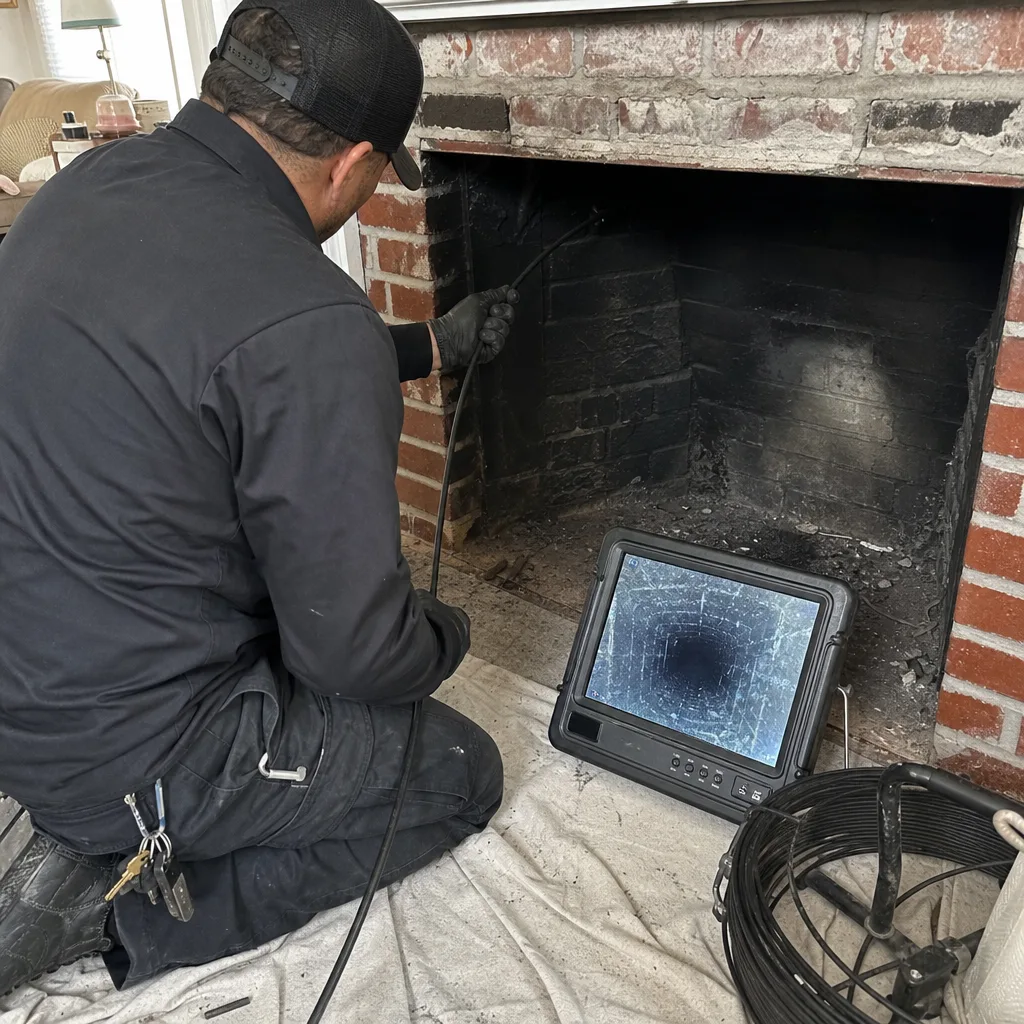
Manhattan’s FISP, formerly Local Law 11, legally requires buildings over six stories to file exterior inspections every five years. Those inspections explicitly include chimney and parapet conditions. A large share of Manhattan’s residential stock falls under this law, and the result is a steady, legally mandated pipeline of chimney assessment work that has no equivalent in surrounding suburban markets.
What that means for your fireplace service: if your building has received a FISP filing that mentions the chimney, and the board or management company asks us to assess the stack, the scope is broader than a cleaning. It involves examining the flue from the roof termination down through the smoke chamber, documenting any spalling, checking the crown for water infiltration, and verifying that the liner is sound enough to serve whatever appliances now vent into it. We provide a written report with photo documentation that meets what the DOB expects. We coordinate with the board and management company so the work is scheduled with proper access and insurance certificates, and we do not recommend work that the board cannot verify with camera evidence.
We Also Serve Cities Near Manhattan
In addition to our work across Manhattan, we serve the surrounding areas. We handle fireplace service, chimney cleaning, and flue inspection in Manhattan and nearby New York, Long Island City, Astoria, and Elmhurst. Each area has its own housing stock and its own failure modes, but the common thread is the same: camera documentation, written pricing, and no work recommended unless you can see the evidence for yourself.
Serving Manhattan, NY - Our Local Coverage Area
We’re based in the Manhattan area and know this community well. Use the map below to see our service coverage - if you’re nearby, we can almost certainly help.
FAQs - Fireplace Services in Manhattan
Cleaning, inspection, and basic fireplace service in a Manhattan co-op or condo generally do not require a DOB permit. The work that triggers permit requirements is structural, such as rebuilding part of a masonry chimney, changing the flue configuration, or installing a new liner that alters the venting system. If you’re in a co-op, the board’s alteration agreement may require board approval for any work beyond routine cleaning, and many boards also require insurance certificates from any contractor entering the building. We handle that paperwork directly with your management company. When a job requires a DOB filing, we tell you in writing before work starts. Call (862) 272-3868 with your building’s specific situation and we’ll tell you exactly what’s needed.
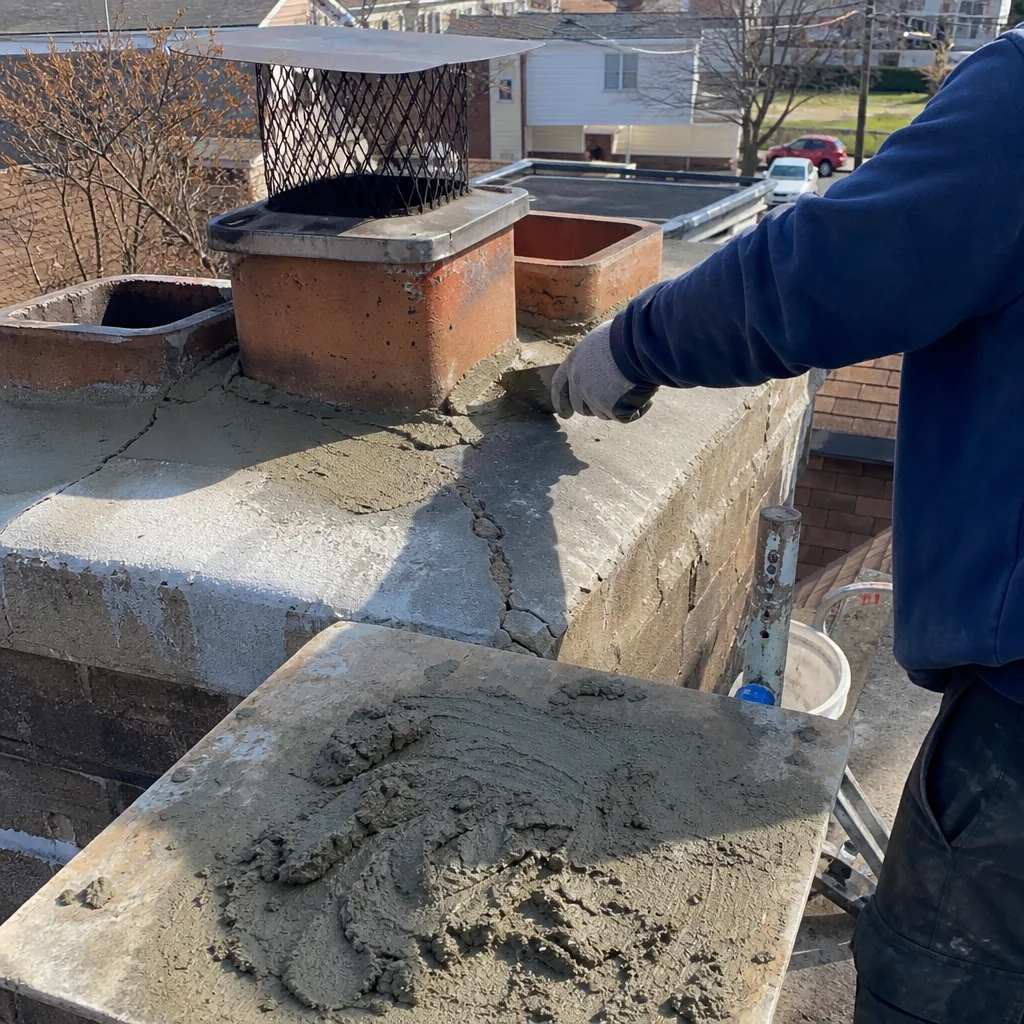
Salt air from the Hudson and East Rivers accelerates the breakdown of mortar joints in chimney crowns and caps. The salt crystals penetrate the porous mortar, then expand and contract with freeze-thaw cycles from October through April, causing spalling and cracking faster than inland cities with the same winter temperatures. A crown that would last 20 years inland may need repair in 10 to 12 years in Manhattan. We inspect the crown on every visit and document its condition with photos. If we see early spalling, we quote the repair at a fraction of what a full crown rebuild costs later.
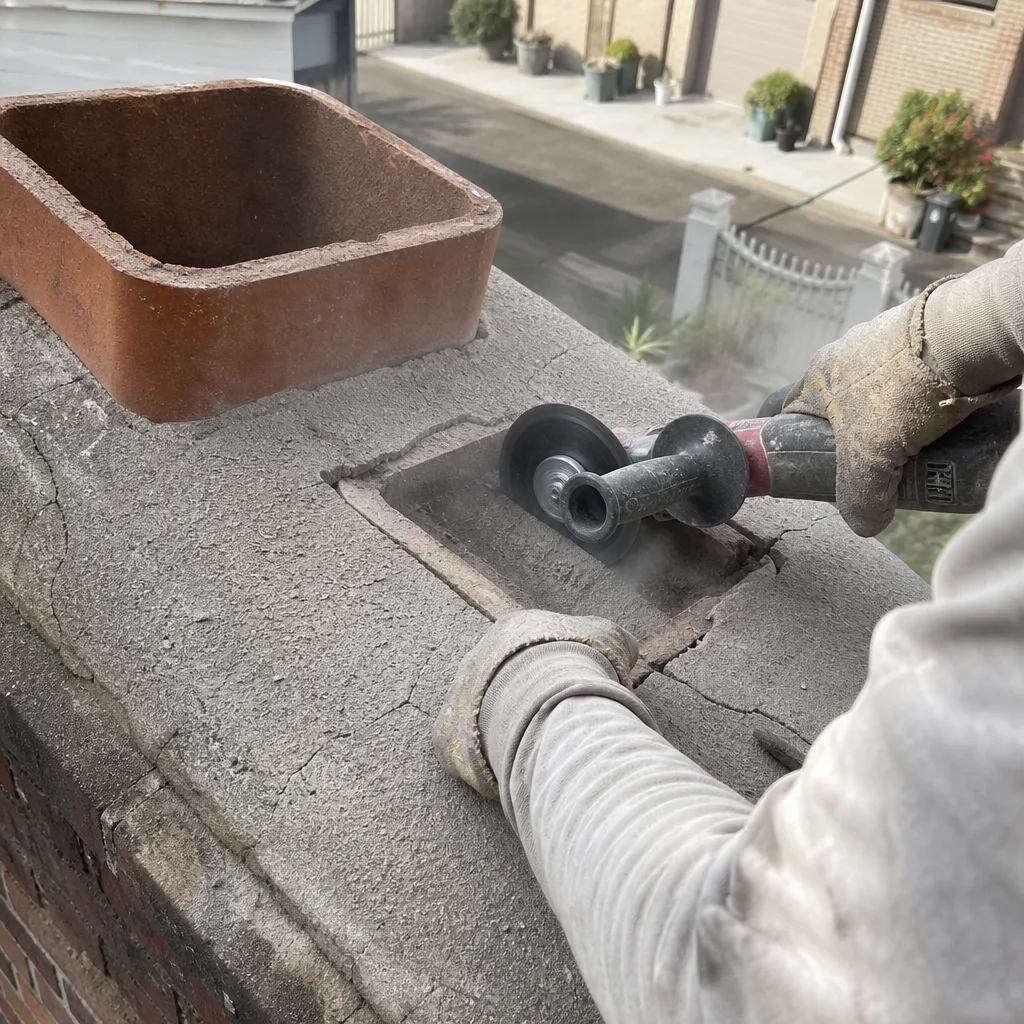
Sometimes. If the existing flue is structurally sound, unlined or clay-tile flues can sometimes be resurfaced with HeatShield rather than fully relined, and some gas inserts can vent through a properly sized existing liner. But many pre-war Manhattan flues are cracked, offset, or sized for coal, and those cannot safely serve a gas appliance without relining. The only way to know is a camera inspection. We don’t recommend relining unless we show you the camera evidence that makes it necessary. Gas conversion in Manhattan runs $2,200 to $5,500, with the largest variable being whether the flue needs relining work.
The Facade Inspection Safety Program (FISP, formerly Local Law 11) is a New York City law that requires buildings over six stories to submit professional exterior inspections every five years, explicitly including chimney and parapet conditions. If your Manhattan building falls under FISP, the chimney portion of the filing may require a condition assessment from a qualified chimney technician, and if the flue or stack shows deterioration, the DOB may require a repair followed by a compliance filing. A cleaning alone does not satisfy that requirement. We provide the inspection, photo documentation, and written report your building needs, and we coordinate with the board or management company on the compliance side.
A weak draft after a cleaning in a Manhattan fireplace usually points to one of three things: the flue is oversized for the firebox, which is common in pre-war stacks built for coal fires; a shared gang flue has another unit’s chimney service affecting the stack pressure; or the chimney termination is blocked or improperly capped for the surrounding roofline. Taller buildings also create negative pressure environments that compete with the chimney’s natural draft, especially in upper-floor units. We diagnose draft problems with a draft gauge and camera, not guesswork. The fix may be as simple as a damper adjustment or as involved as a flue resizing, but you’ll see the documentation before you spend anything.
Written by Corrine Halstead, Owner at Level Two Chimney Jersey City, serving Manhattan under the Haven Standard since 2009.
Call (862) 272-3868 for a free estimate. We answer live, 24 hours a day. You’ll get a written price before any work starts, camera documentation of everything we find, and a written warranty when the job is done.