
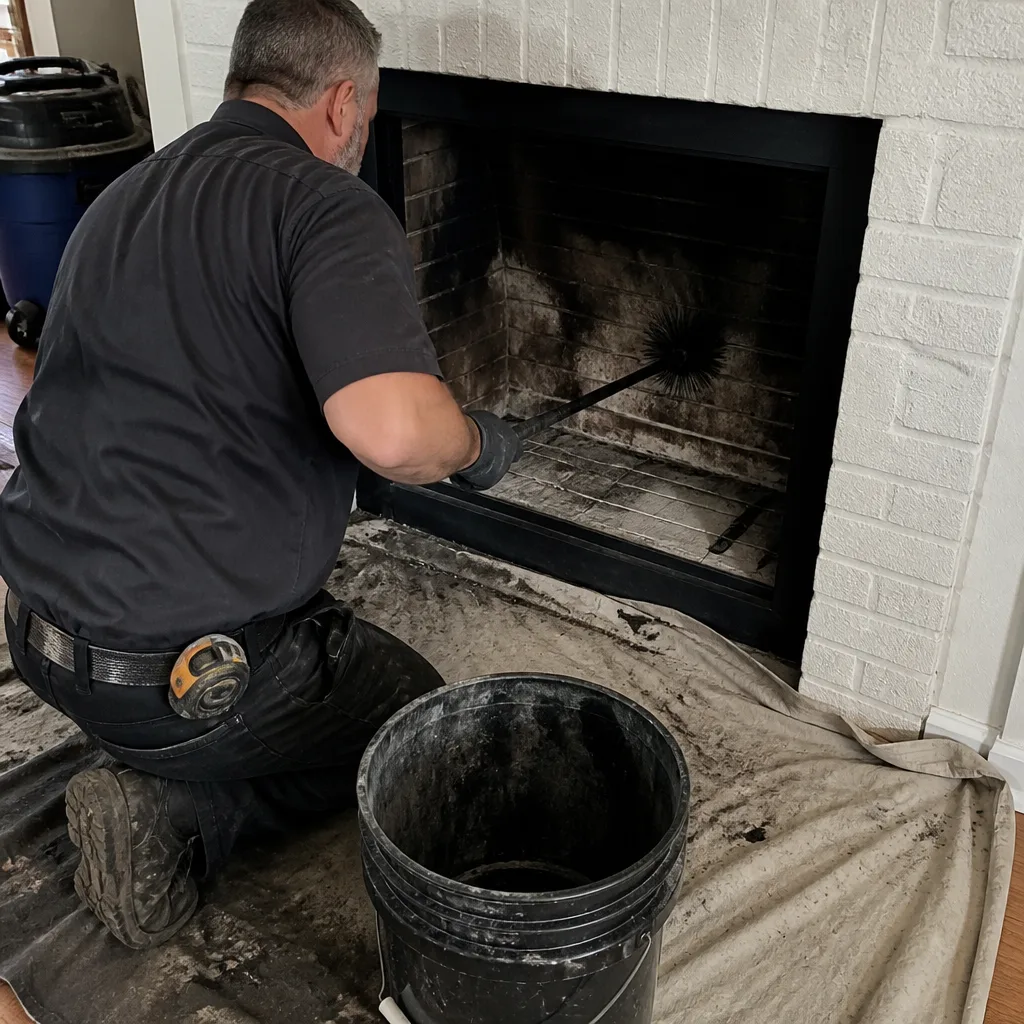
Level 1 sweep and inspection to the NFPA 211 annual standard - flue, crown, cap, and flashing checked and photographed
Chimney sweep logs do not sweep chimneys. They loosen some creosote - which then falls where a brush and vacuum still have to collect it.
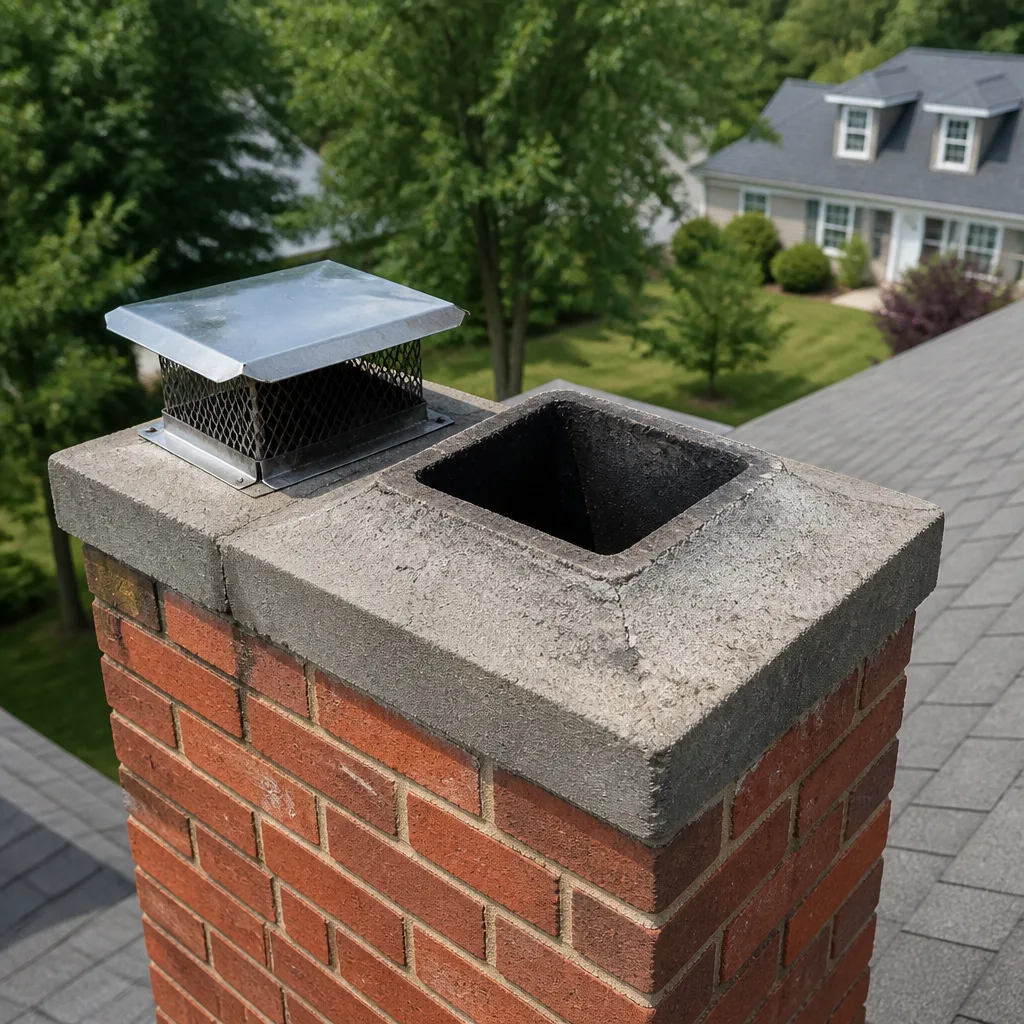
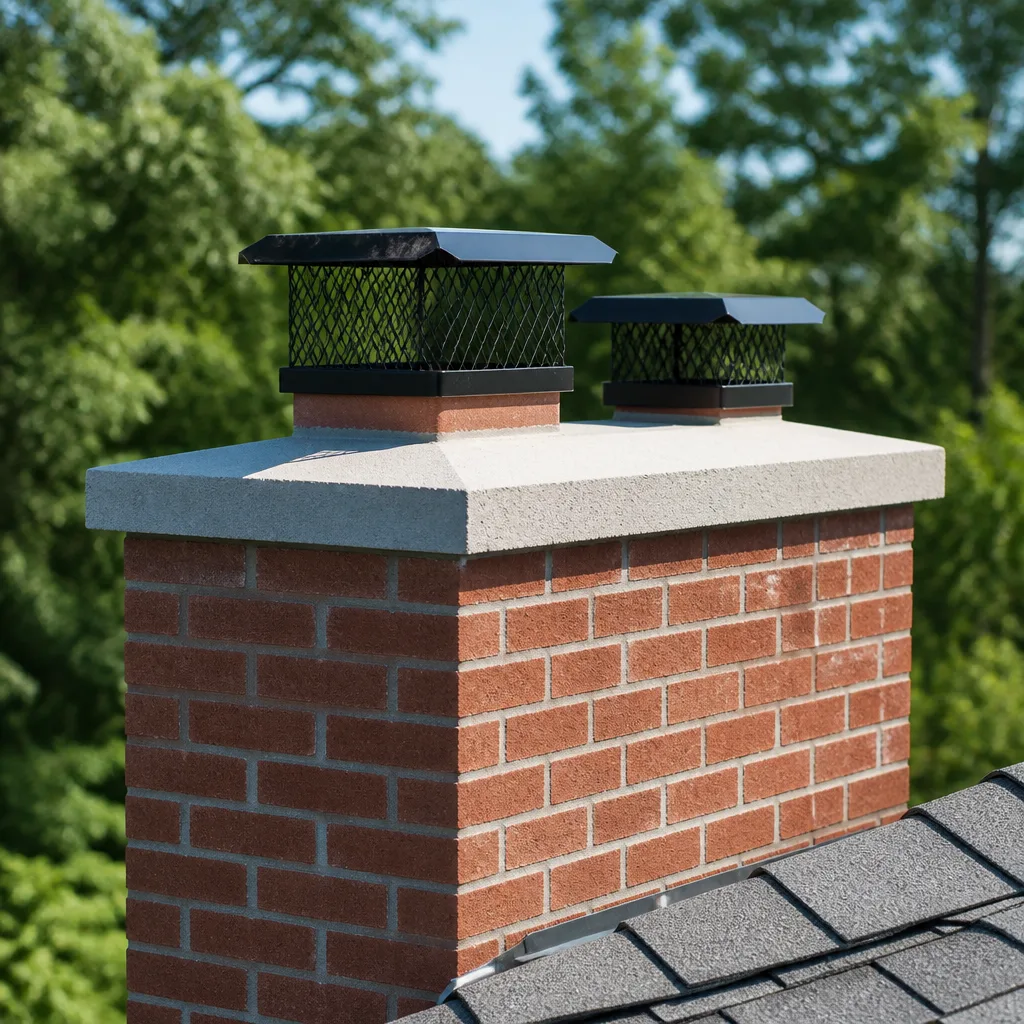
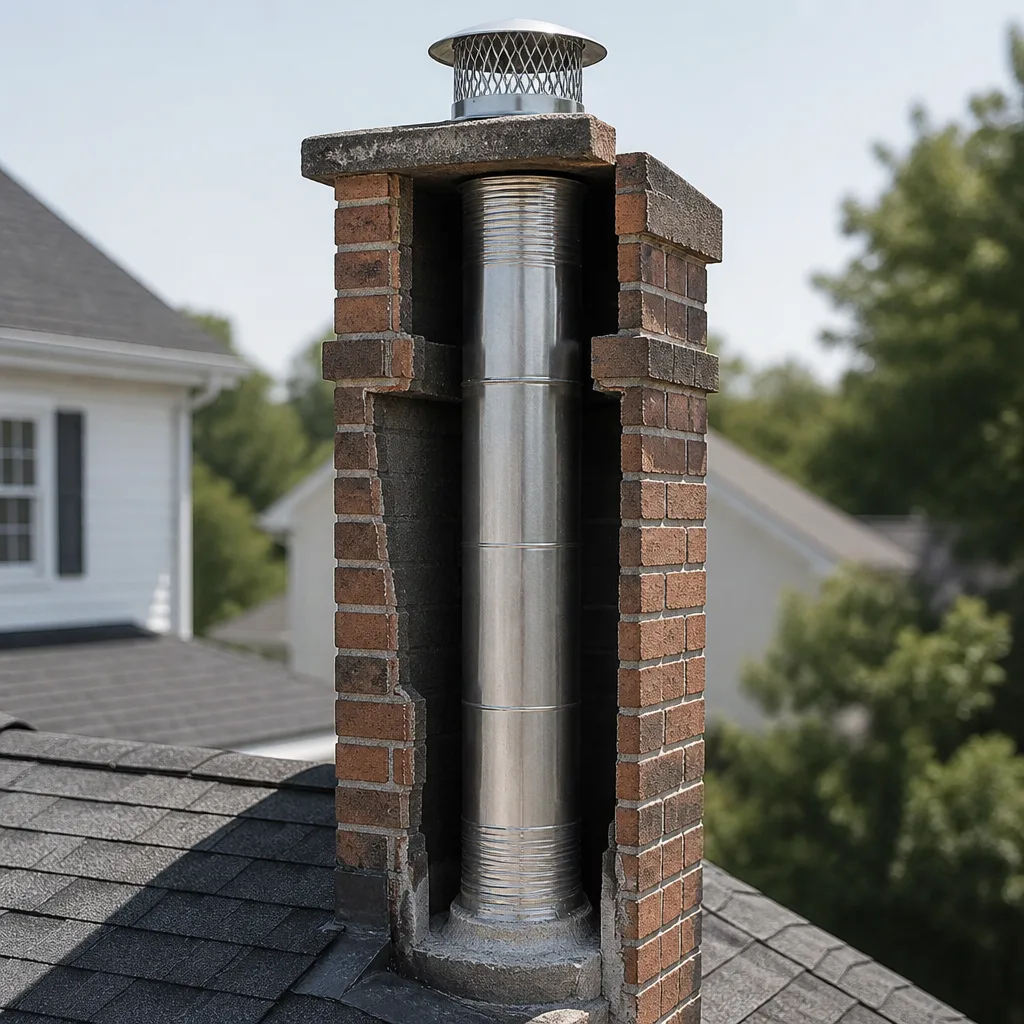
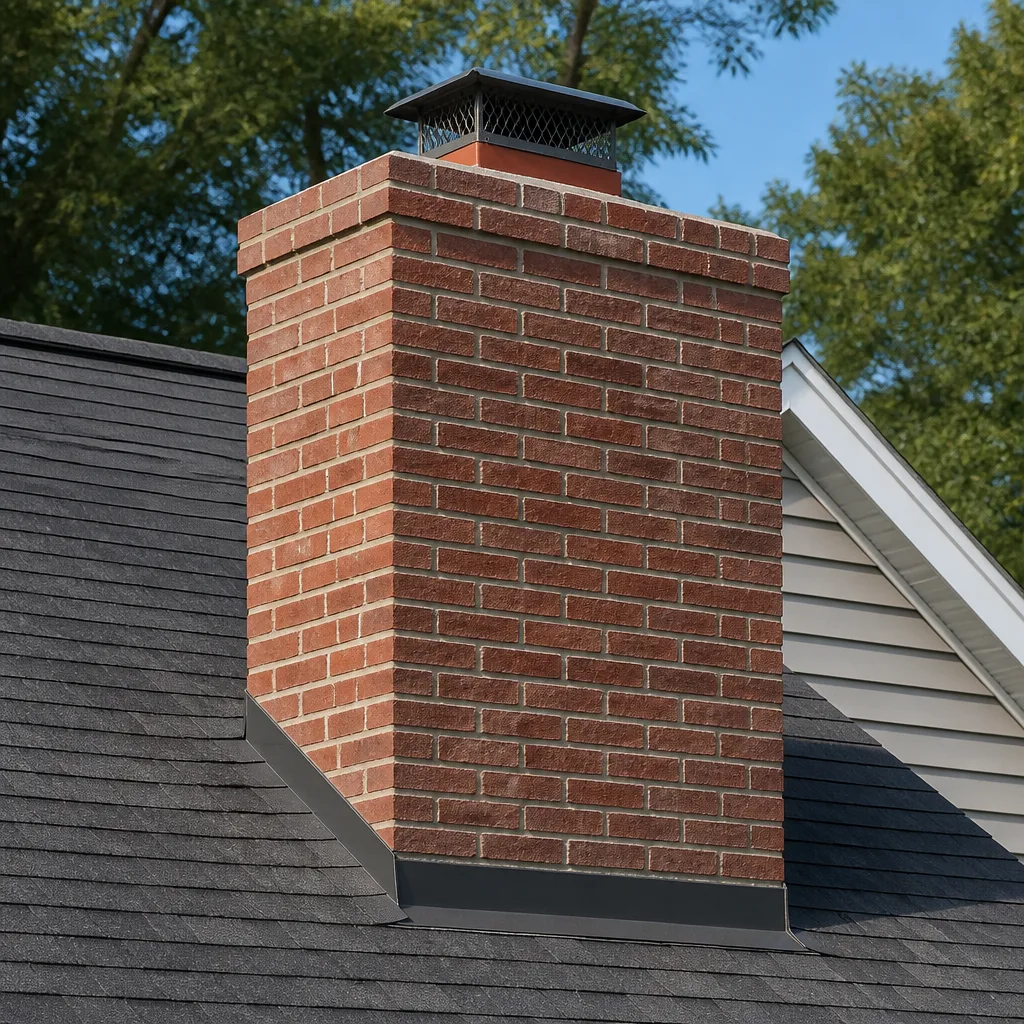
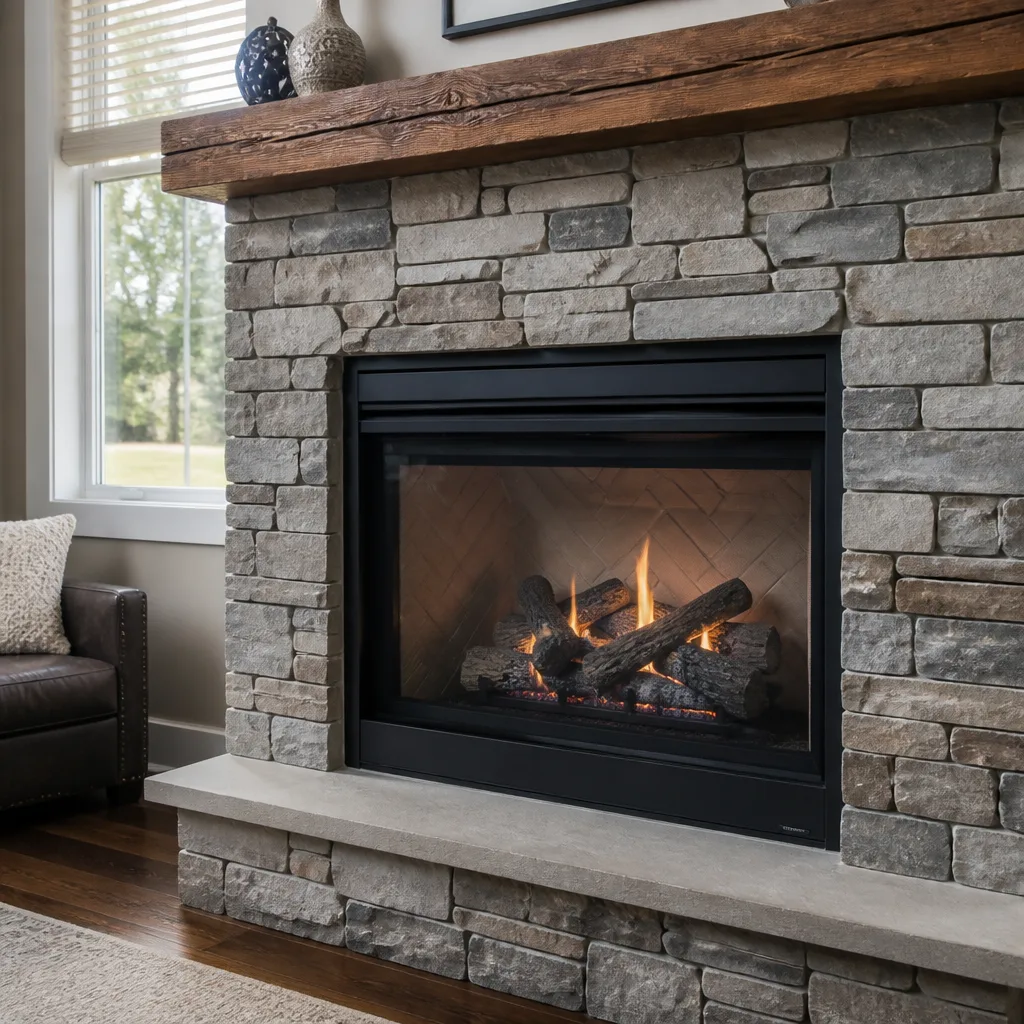
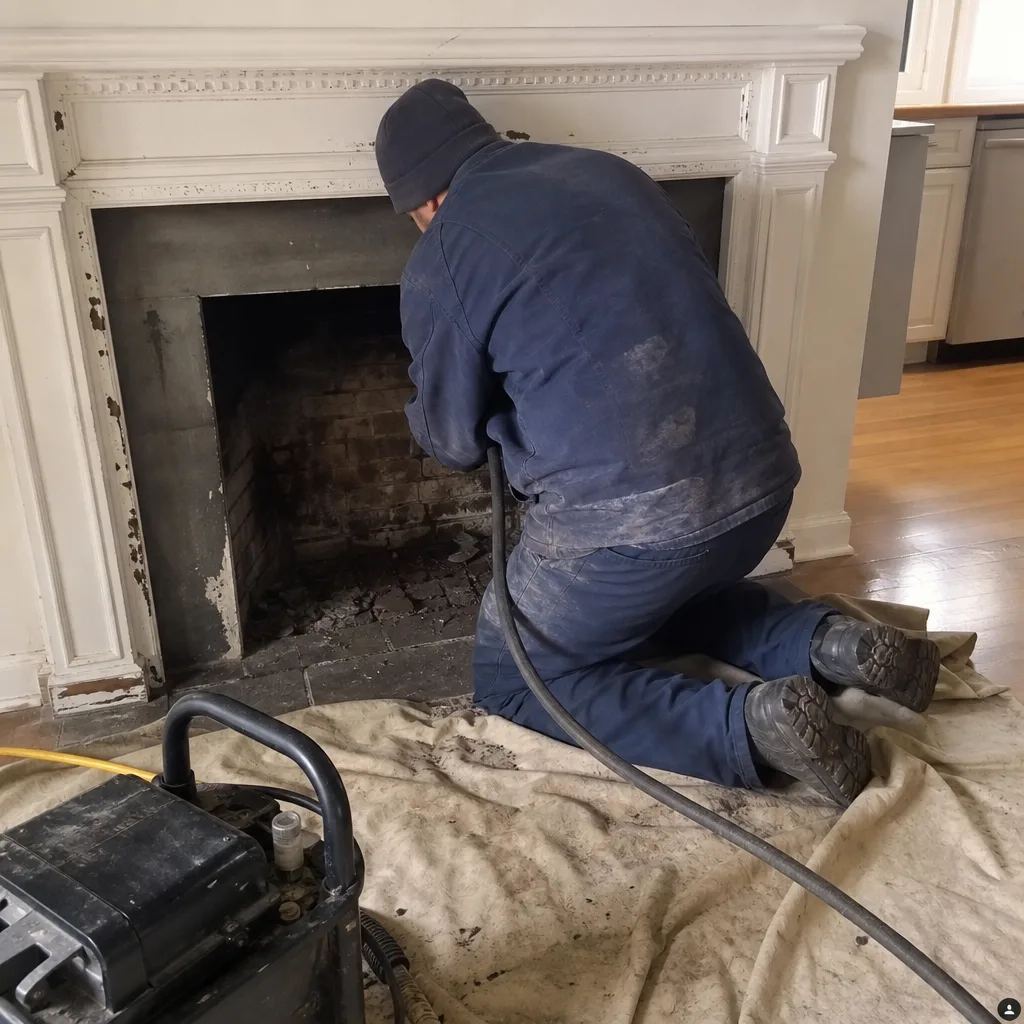 Before
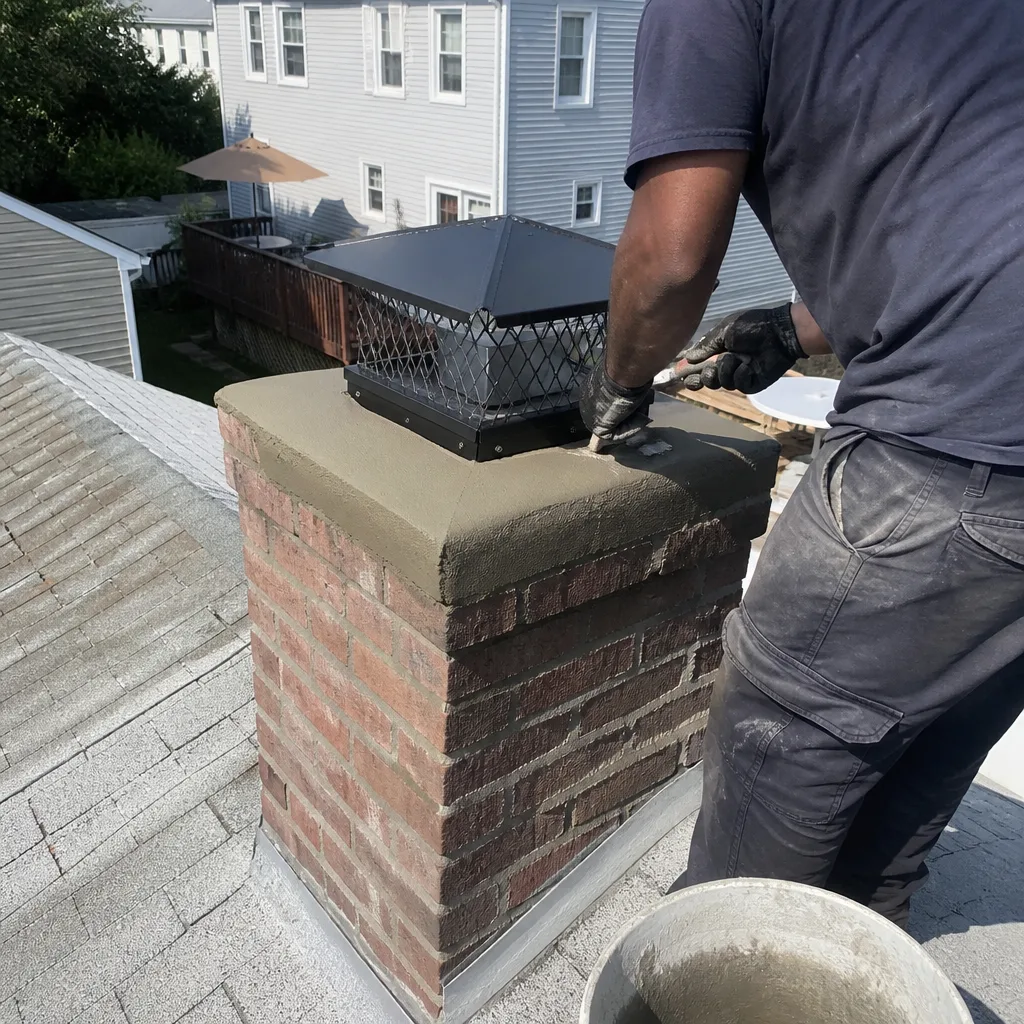 After
After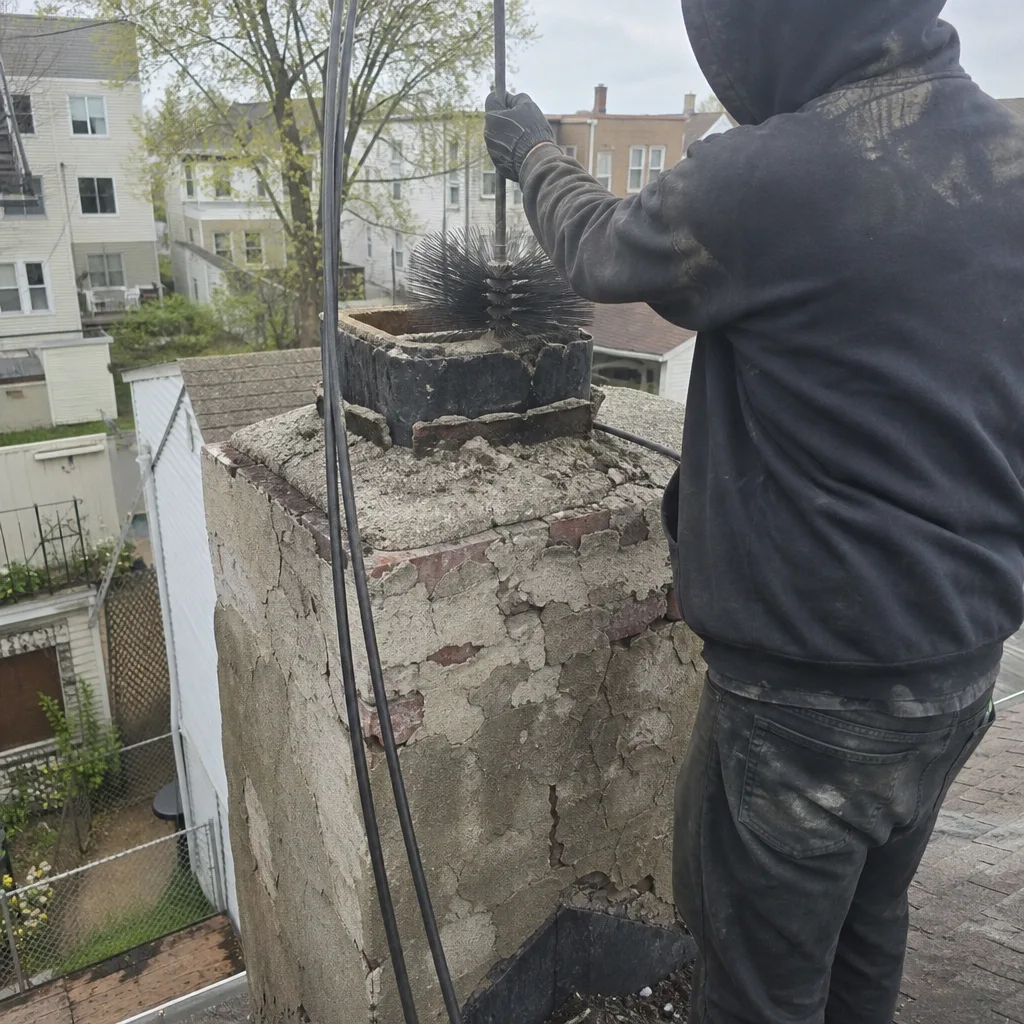 Before
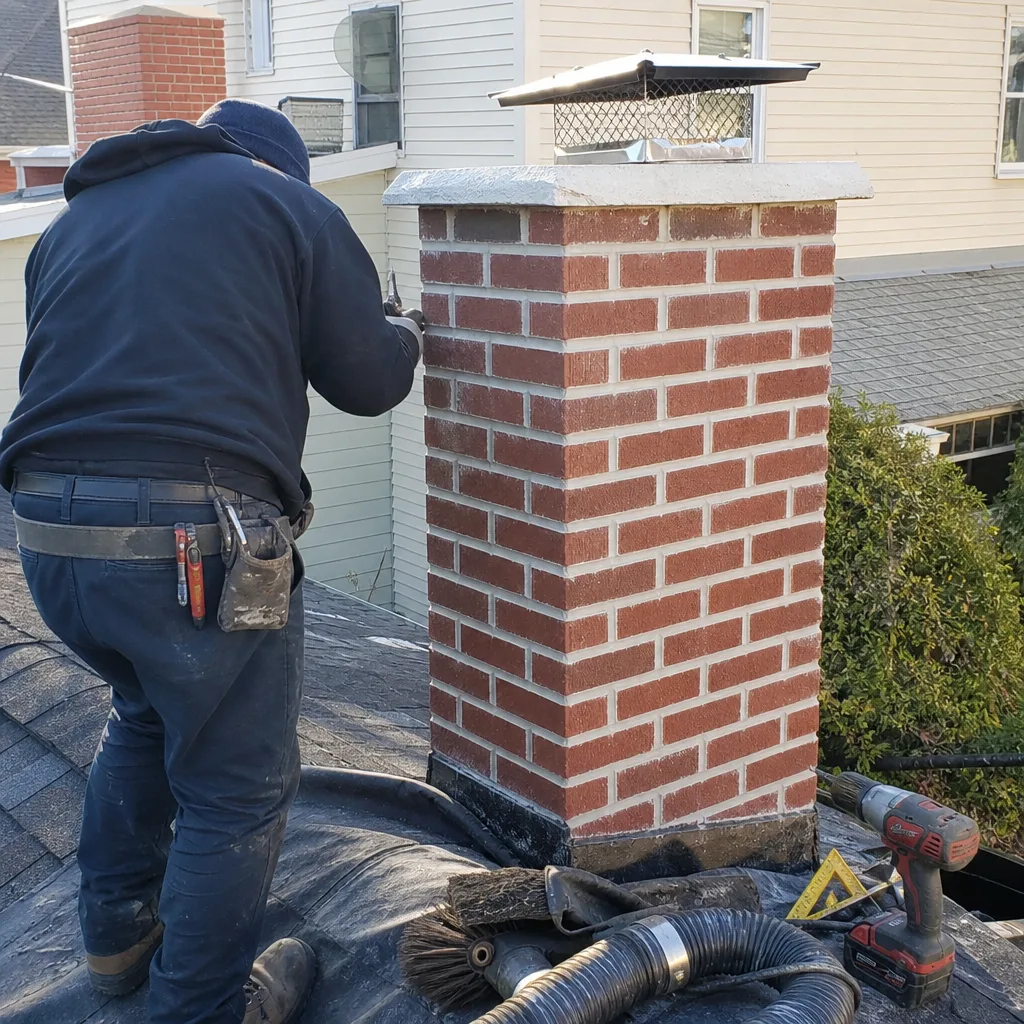 After
After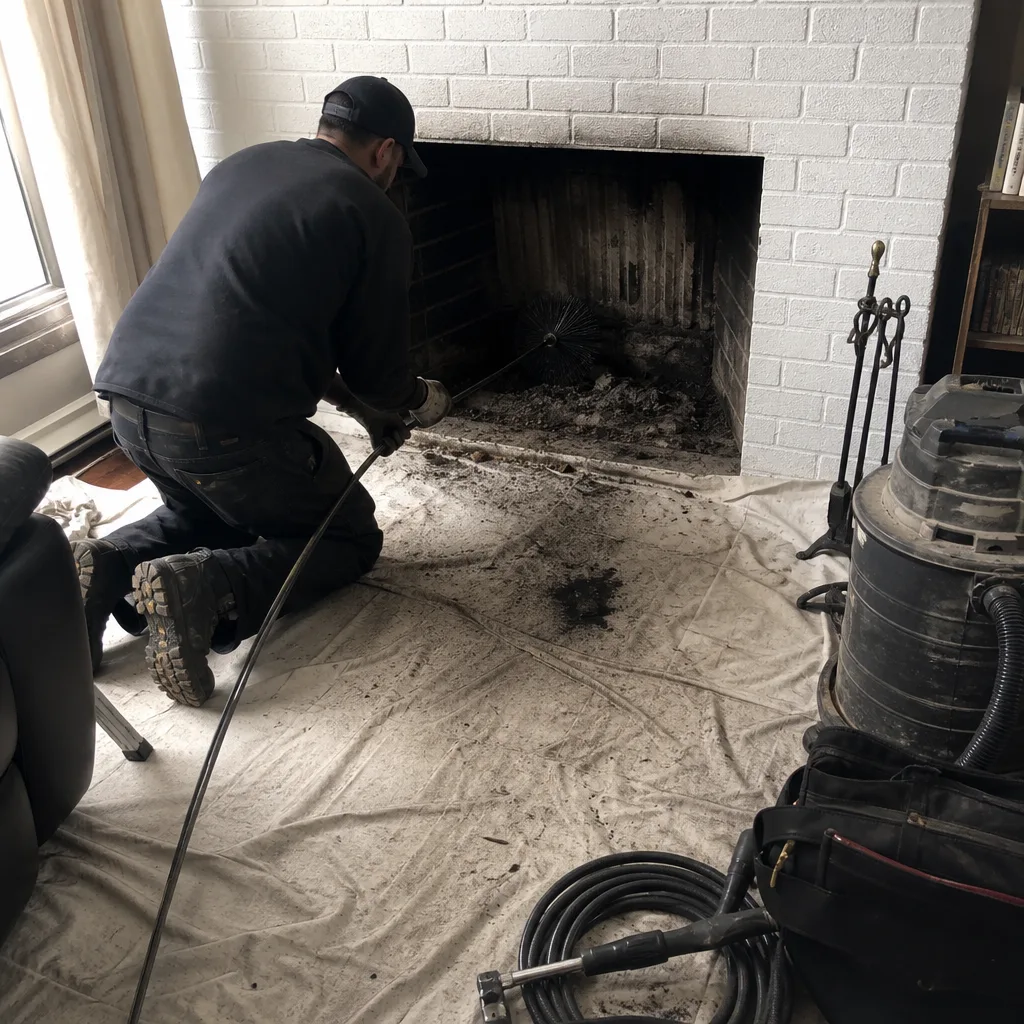 Before
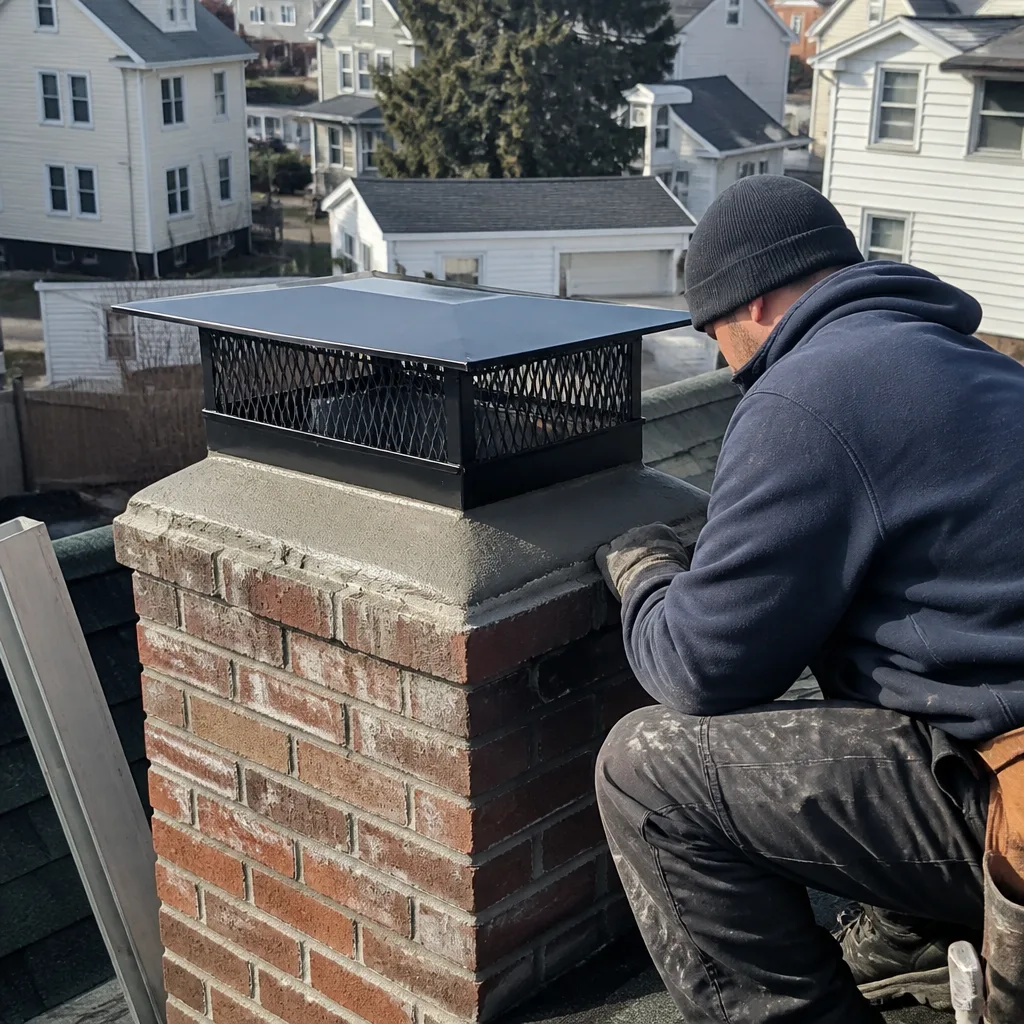 After
AfterGelco Flue Liner Replacement: The Jersey City Owner’s Guide
We stock and install Gelco-compatible flue liner replacements throughout Jersey City, with most complete relines running between $2,400 and $4,800 installed depending on liner diameter, flue height, and the condition of the existing clay tile. We carry the liner sections on our trucks for the most common Gelco configurations, so if your measurements are standard, we can often complete the swap in a single visit. Most Jersey City homeowners discover their Gelco liner has failed during an annual sweep, when the camera shows a crack, a separated seam, or corrosion that wasn’t visible from the rooftop. Others find out the hard way: a living room that smells like a campfire every time the furnace kicks on, or a fireplace that won’t draft no matter how long they hold a match to the flue.
We are an independent service provider in Jersey City, not affiliated with Gelco, but we have installed and replaced their liner systems for over a decade. Here’s what you need to know before you spend a dollar.
Which Gelco Models This Applies To
Gelco manufactured stainless steel chimney liners in both rigid and flexible configurations, with inner diameters running from 4 inches up to 12 inches. Most Jersey City homes we service with Gelco systems fall into the 5.5-inch, 6-inch, or 7-inch range for wood-burning fireplaces, and 4-inch or 5-inch for gas furnace and boiler vents. The liner’s wall thickness matters more than most homeowners realize: Gelco’s heavier-gauge liners (0.006 inch and up) hold up far better in New Jersey’s freeze-thaw cycle than their lighter corrugated models, which tend to develop pinhole corrosion near the top plate where water sits during the winter.
To identify your Gelco liner, look for the embossed stamp on the liner’s end cap or the data plate near the appliance connection. The stamp includes the diameter and a series code. If you can’t find it, we can identify the liner during a camera inspection without you needing to climb anything. When the time comes to replace, you have two honest choices: a genuine Gelco replacement liner (if your series is still available) or a quality aftermarket equivalent from DuraFlex or HeatShield, which we also stock. For most Gelco systems over ten years old, we recommend the aftermarket equivalent: it meets the same UL 1777 listing for solid-fuel applications and costs about 20 percent less than OEM when it’s still in production. The exception is when your Gelco liner was part of a warranty claim or a recent certified installation, in which case the OEM part preserves the existing warranty.
Signs Your Gelco Flue Liner Replacement Is Failing
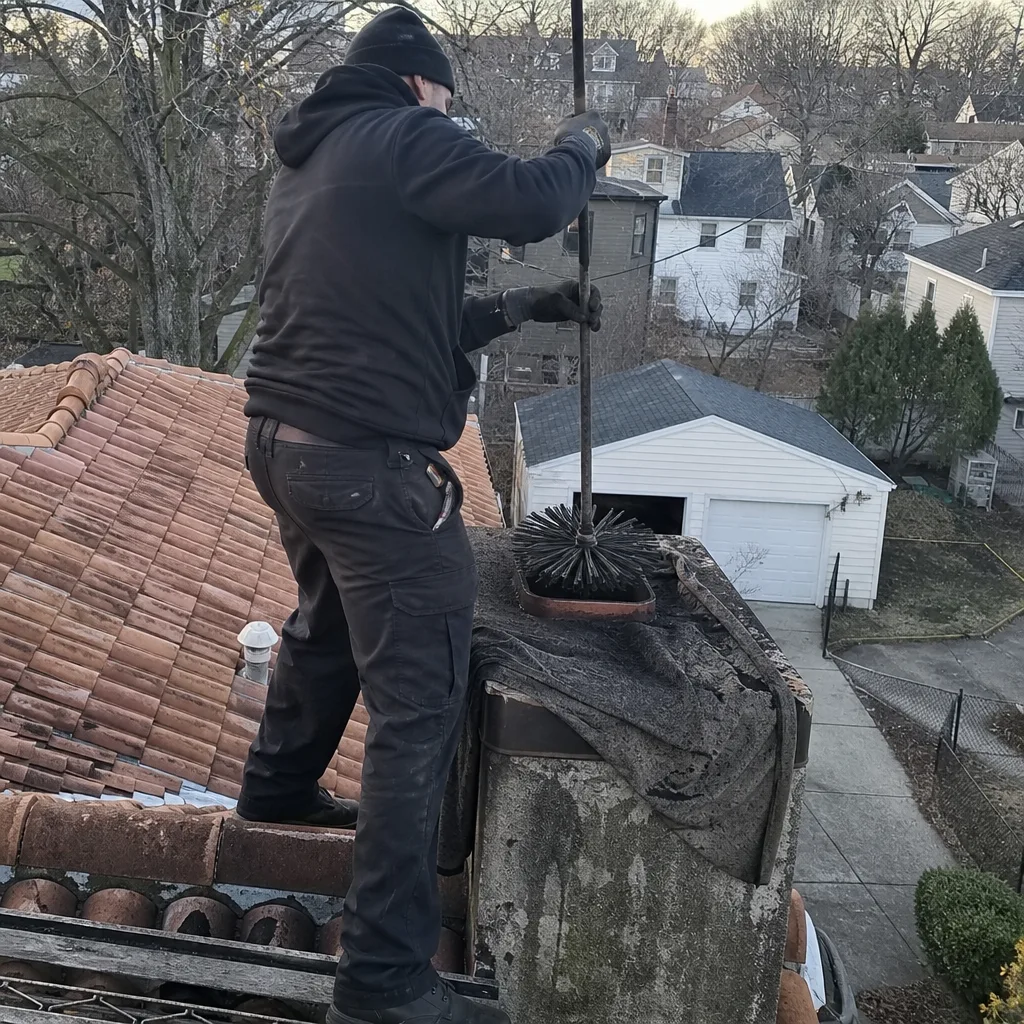
- Water streaks or rust on the exterior brick face. This usually means the liner has separated at a seam or the top cap is failing, and moisture is migrating from the flue into the masonry. In Jersey City’s winter, that water freezes and expands, widening the breach every year.
- A smoky smell in the house when the fire isn’t lit. A cracked liner lets flue gases seep into the air gap between liner and chimney wall, and from there into rooms. The odor tends to get stronger on windy days when the stack pressure changes.
- Flaking metal or small stainless steel fragments in your ash pit or on the smoke shelf during a cleaning. This is spalling, and it tells us the liner’s inner wall is starting to peel. Once that starts, the damage accelerates fast.
- Draft problems that were never there before. A Gelco liner with a partial collapse or a creased flex section will not carry smoke cleanly. You’ll notice the fireplace struggling to light, or smoke rolling back into the room even with a clean flue.
- Your CO detector activates near the fireplace or furnace closet. This is the one you don’t argue with. A compromised liner sends carbon monoxide into living spaces instead of up and out. If this happens, stop using the appliance and call us the same day.
 Before
 After
AfterReplacement Cost & What’s Included
For a standard single-story Jersey City row house or brownstone, a full Gelco-compatible liner replacement runs between $2,400 and $3,200 in most cases. Taller flues, hard-to-access rooftops, or liners that need an insulation wrap push the top of the range toward $4,800. Every quote we write is a flat price on paper before work starts, so you’ll never see a labor charge buried after the fact. It’s Haven Standard Clause 1: written price, written scope, written warranty, handed to you before anyone touches a tool.
What’s included in that number:
- Removal and disposal of the failed Gelco liner
- The new liner, whether Gelco OEM or a DuraFlex/HeatShield equivalent, cut to your flue’s exact length
- Top plate and rain cap replacement where required
- Connection at the appliance or fireplace damper
- Camera inspection after installation, with photos included under Clause 4 of the Haven Standard
- Our 365-Day Done Right Promise: if the installation isn’t right, we make it right
DIY or Call Us?
You can safely check a few things yourself: look at the exterior of the chimney for water streaks, note whether the smell is worse on certain days, and listen for any rattling in the flue on a windy afternoon. What you cannot do safely is pull a failed Gelco liner out of a chimney and feed a new one in without the right equipment and experience. A liner drops down a two or three story flue under its own weight, and if it catches on old clay tile or a protruding mortar joint, it kinks. A kinked flex liner is scrap the moment it happens, and that’s a several hundred dollar mistake before you even start.
Climbing onto a Jersey City roofline to set the top plate isn’t a weekend ladder job, especially on the flat-roof brownstones near Hamilton Park that Corrine Halstead knows well. We’ll do the whole swap, document it on camera, and hand you the warranty before we leave. Call (862) 272-3868 and we’ll get it booked.
FAQs
In our experience across Jersey City, a Gelco liner in a wood-burning fireplace lasts 12 to 18 years on average, while liners serving gas appliances can reach 20 to 25 years if the draft is balanced and the top cap stays sealed. The shorter wood-burning lifespan comes from creosote acidity and the thermal cycling of hot fires in a cold chimney. Call (862) 272-3868 and we’ll camera your liner to see exactly where yours stands.
Small pinholes near the top plate can sometimes be addressed with a stainless steel patch sleeve, but a separated seam, a collapse, or corrosion along more than a foot of the liner means replacement is the only safe option. We’ll show you the camera footage before we quote a number, so you’ll see exactly what we see. Call (862) 272-3868 for a free estimate.
Most standard Jersey City replacements are done in four to six hours, including setup, removal, installation, and the post-install camera scan. Taller chimneys or liners that need insulation wrap add an hour or two. We’ll give you a written time window in the quote, and if we’re running late, you’ll get a text from the named technician before we arrive.
We carry the most common Gelco-compatible diameters (4 inch through 7 inch) in our Jersey City trucks, along with DuraFlex and HeatShield equivalents, so if your measurements are standard we can start the same day. Oddball sizes or heavier-gauge liners may take a day or two to source. Call (862) 272-3868 and we’ll confirm what’s on hand for your flue size.
Written by Corrine Halstead, Owner, Level Two Chimney Jersey City at Level Two Chimney Jersey City, serving Jersey City and nearby areas.