
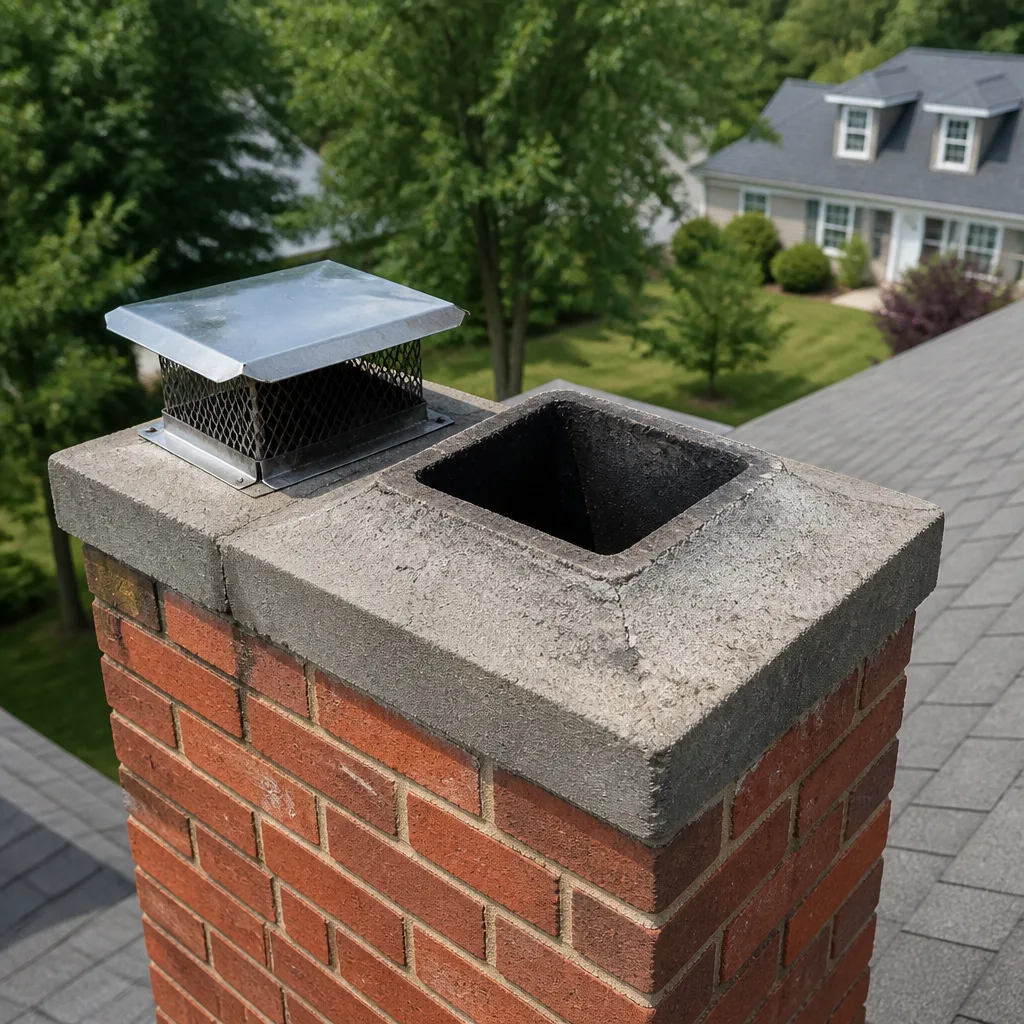
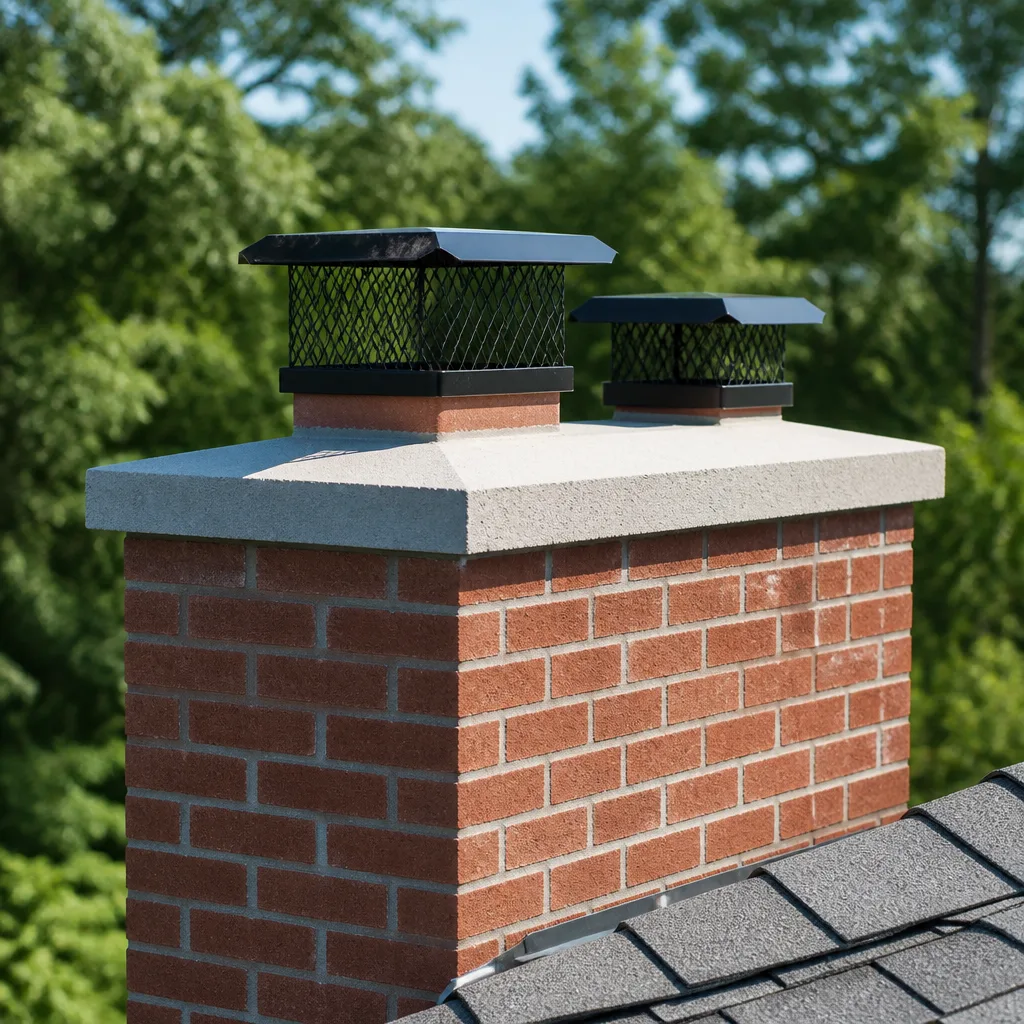
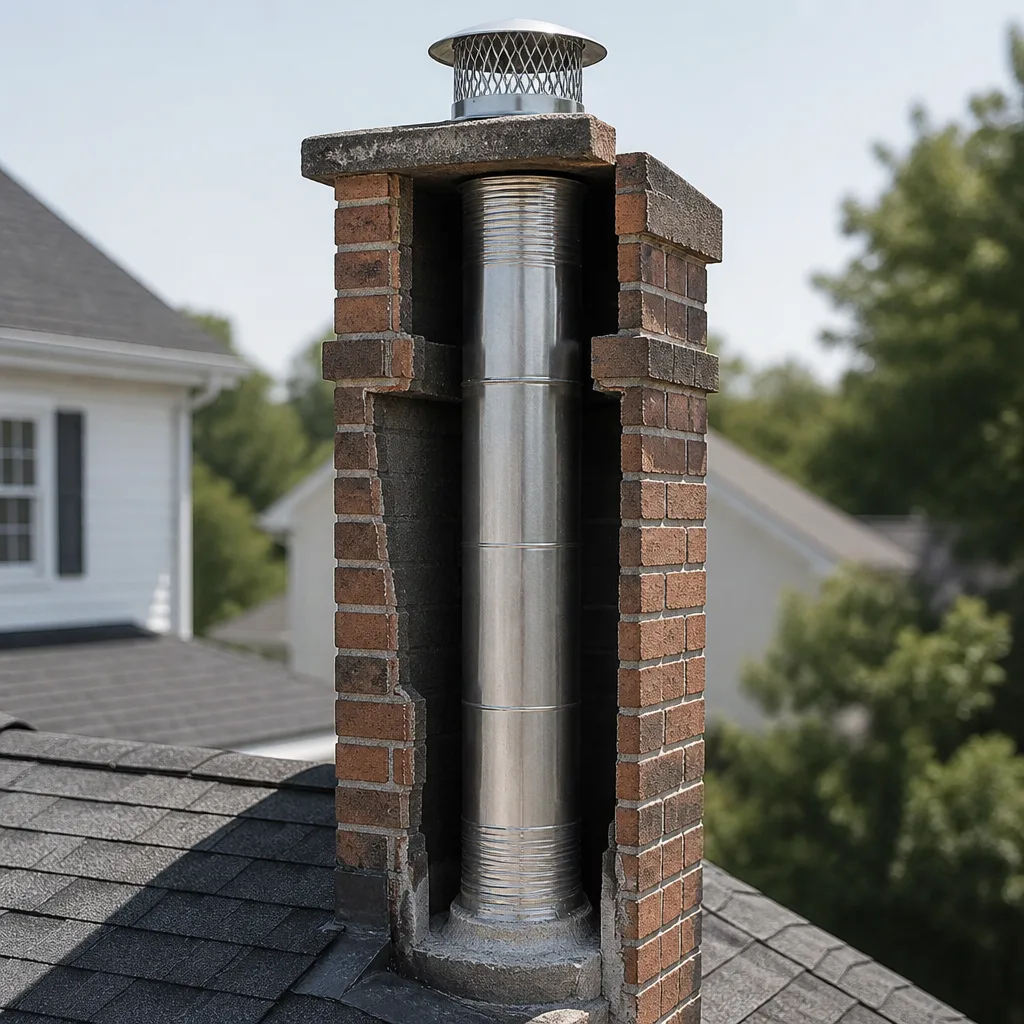
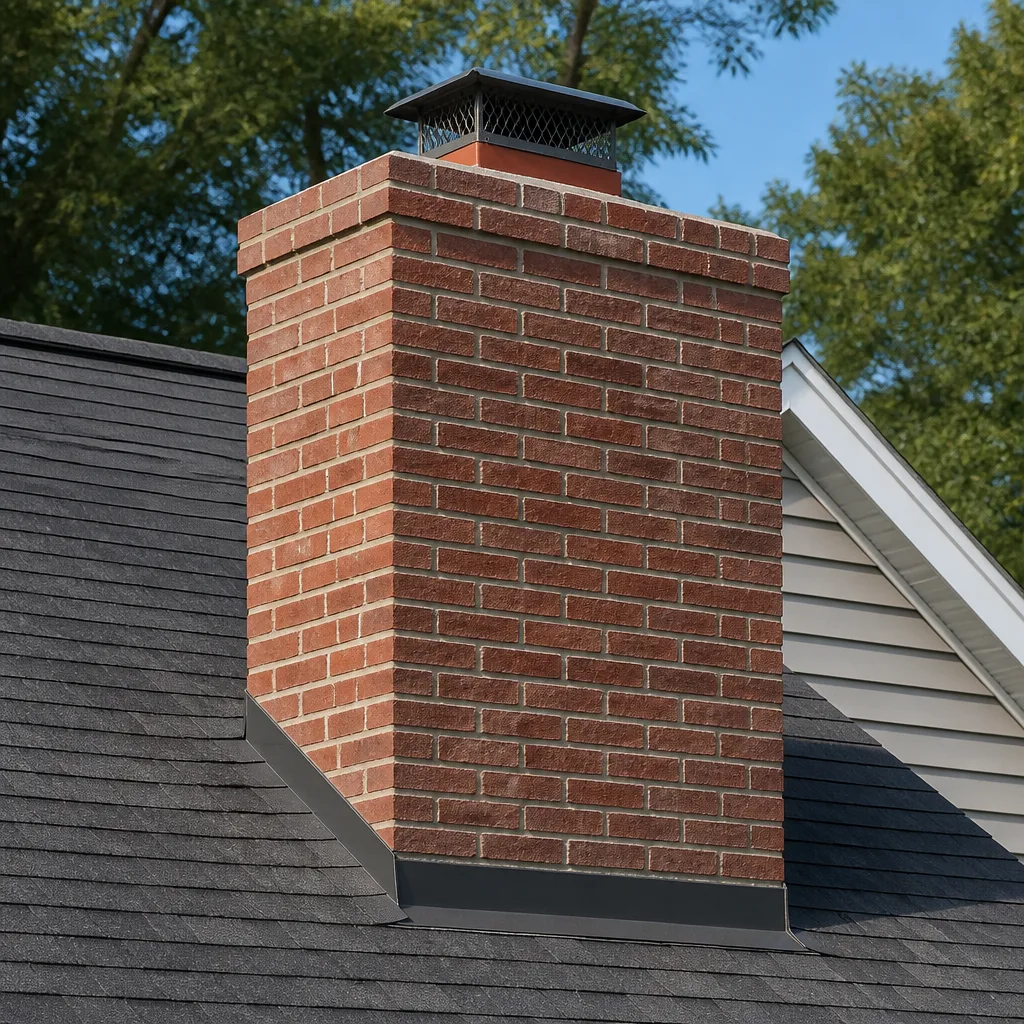
Level 1 sweep and inspection to the NFPA 211 annual standard - flue, crown, cap, and flashing checked and photographed
Chimney sweep logs do not sweep chimneys. They loosen some creosote - which then falls where a brush and vacuum still have to collect it.
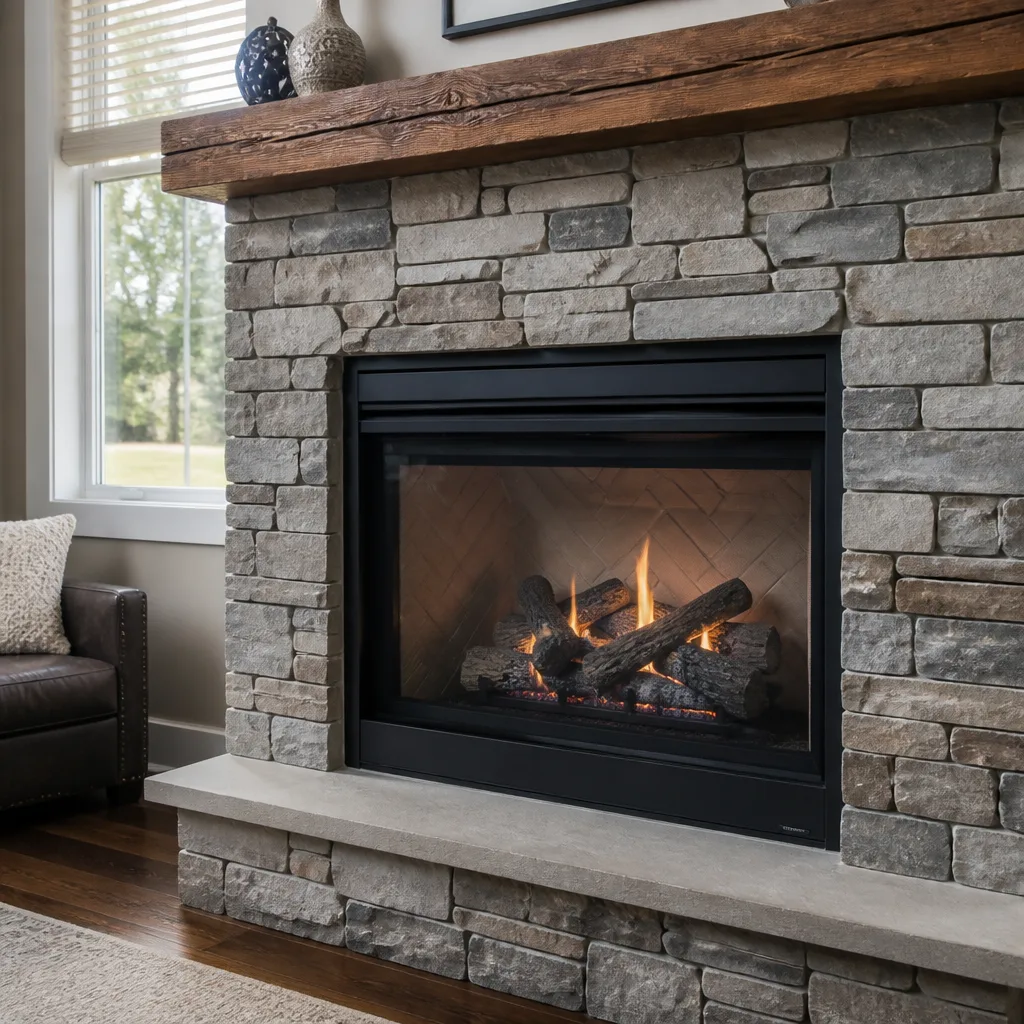
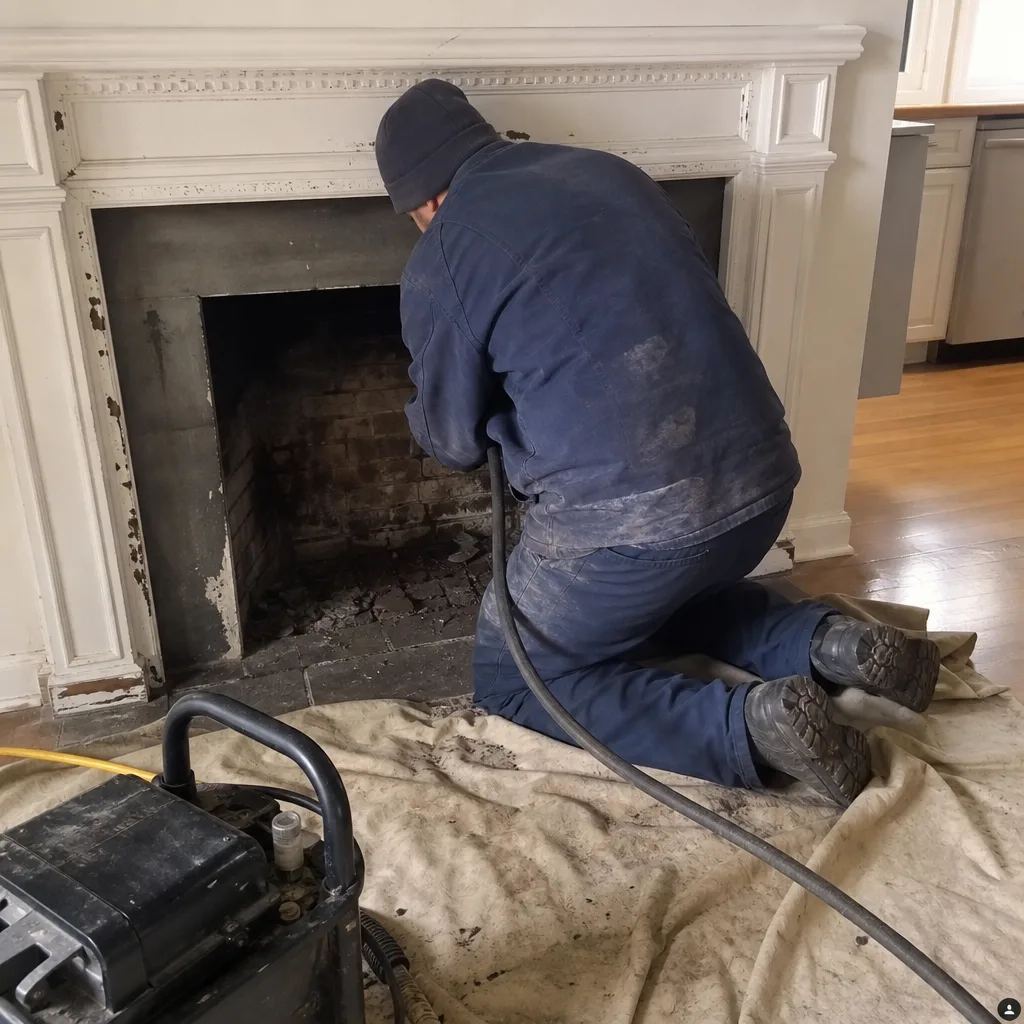 Before
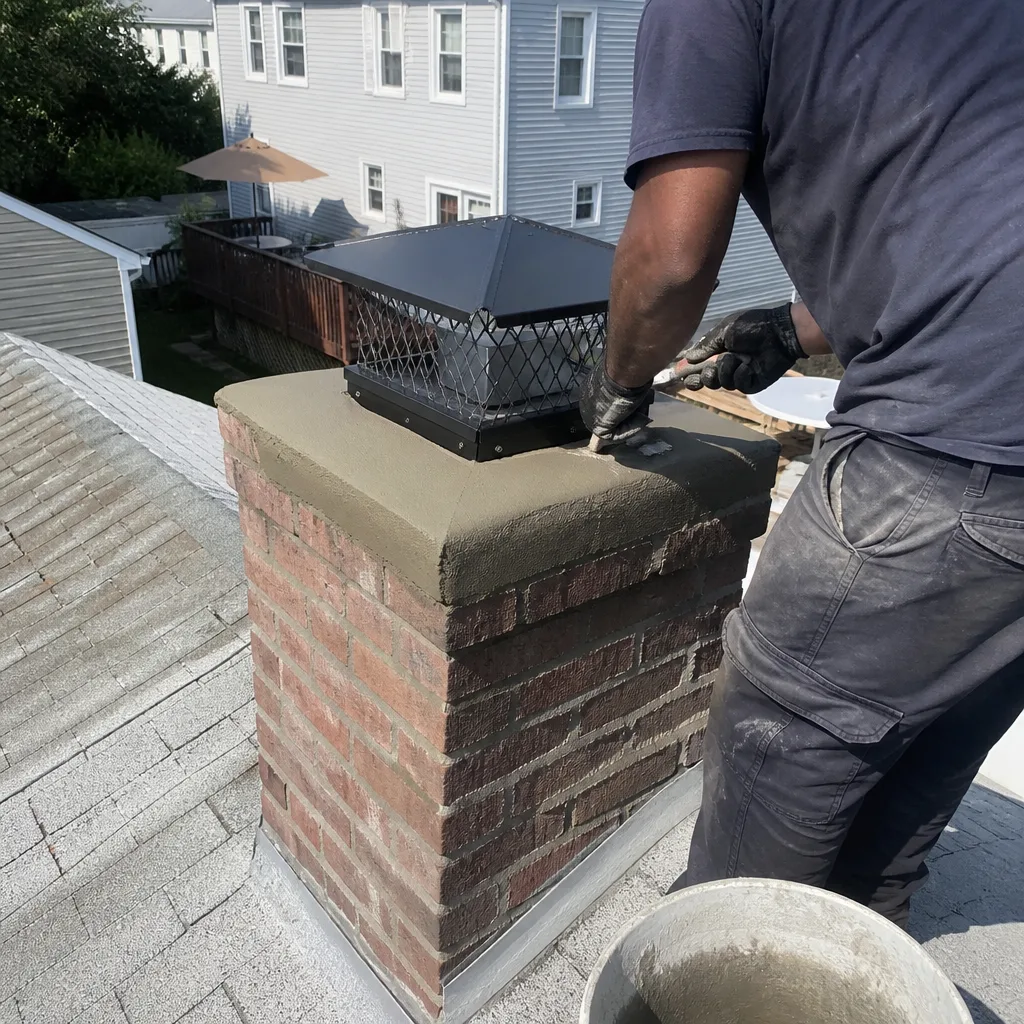 After
After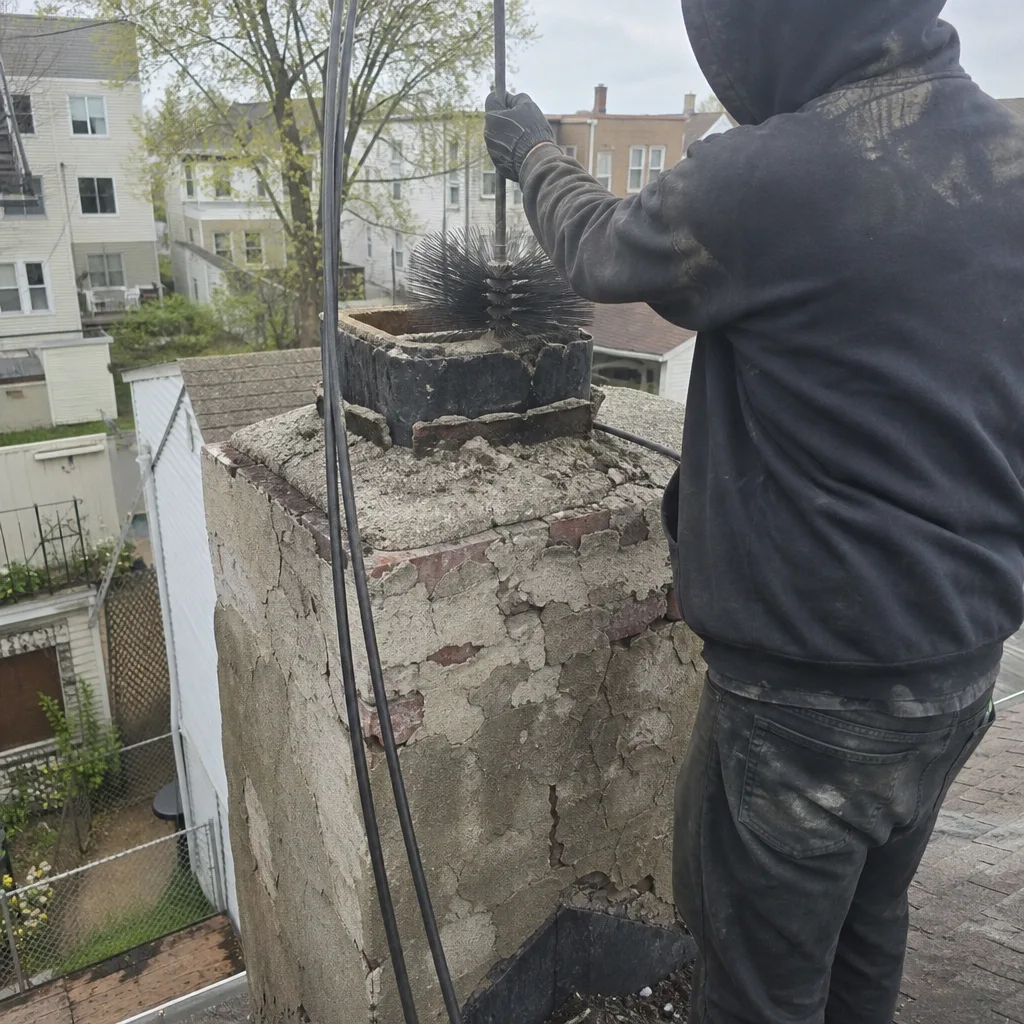 Before
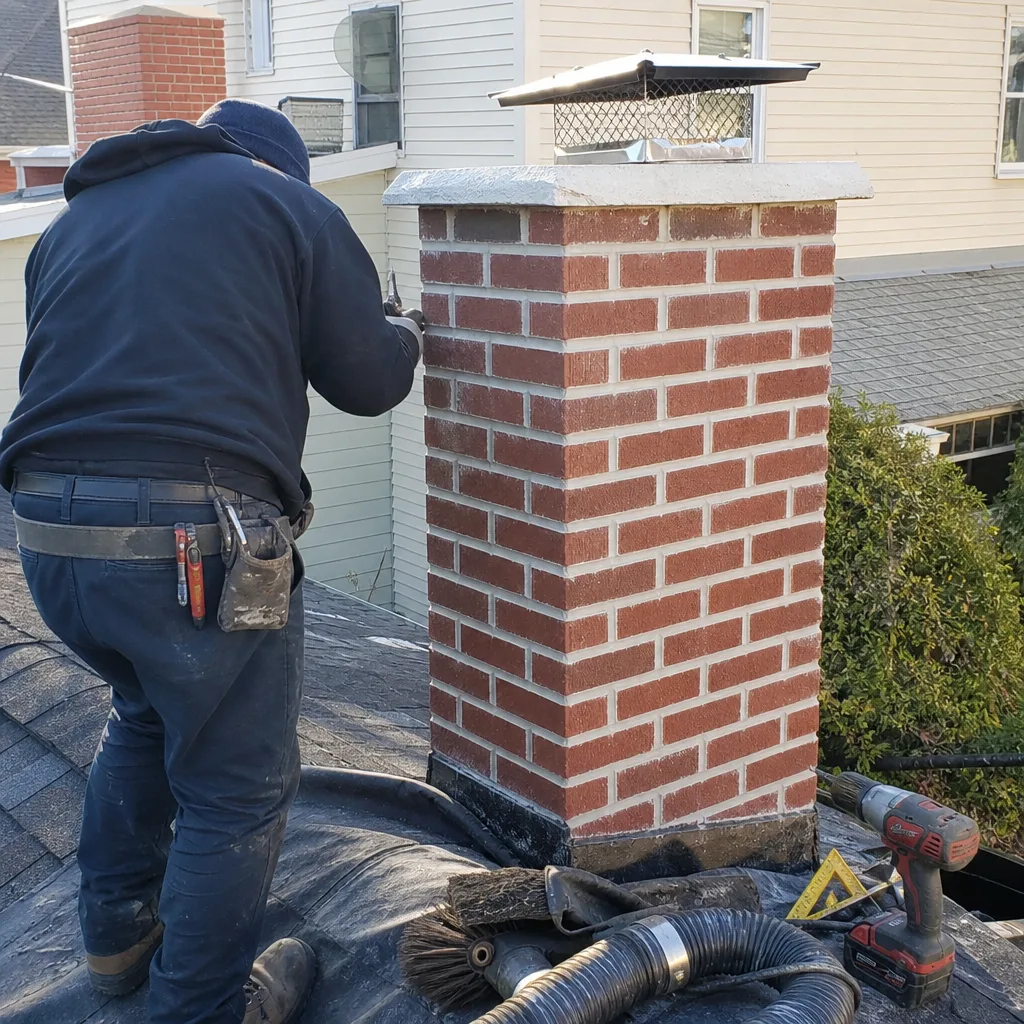 After
After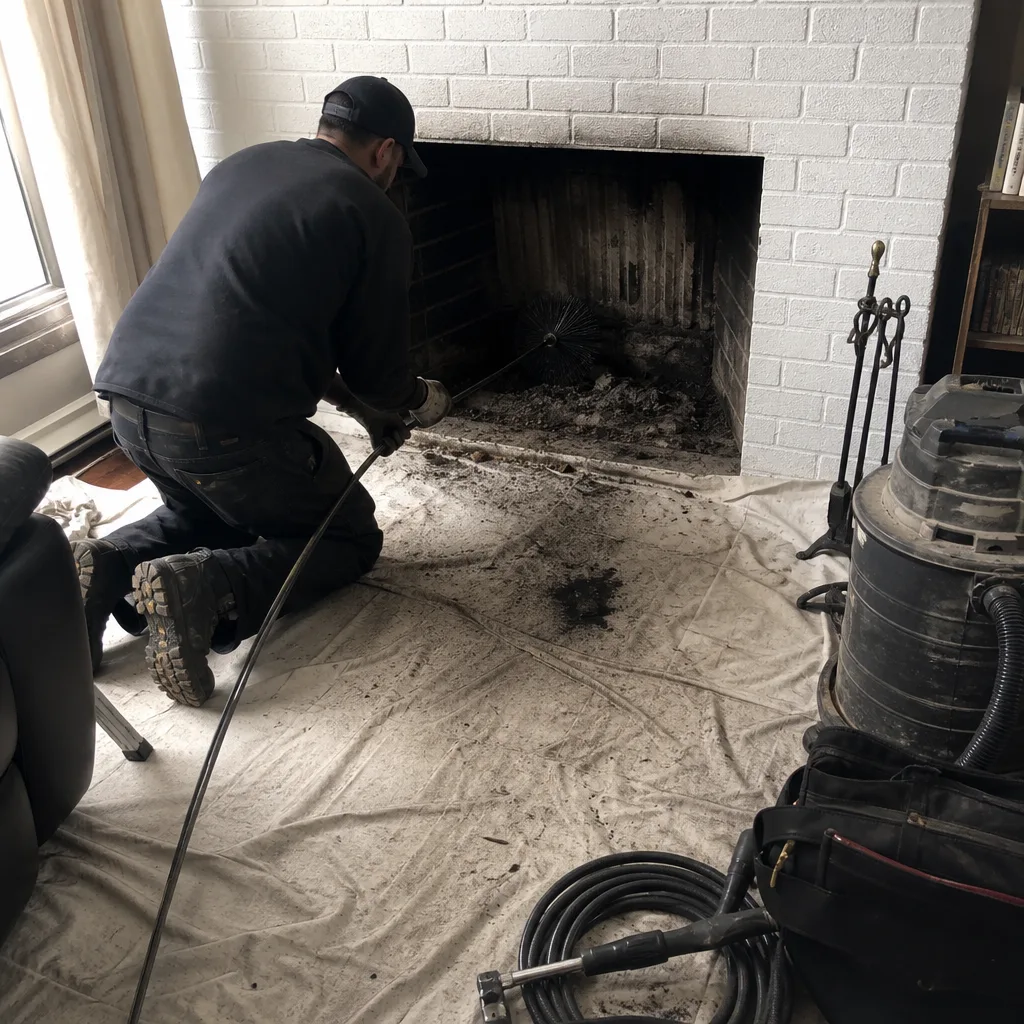 Before
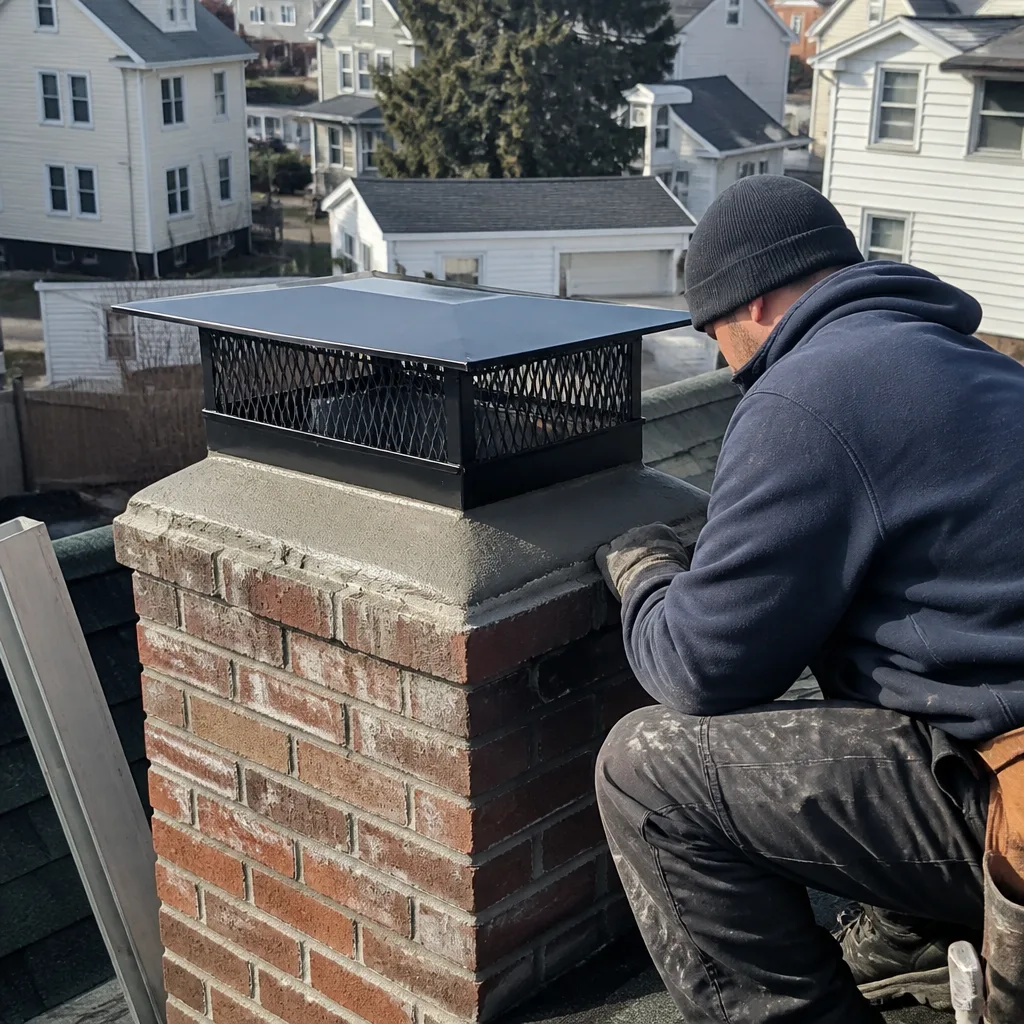 After
AfterSoot Removal in Jersey City, NJ
Our How Much Does Chimney Cleaning & Sweep Cost? (2026 Price Guide) - Jersey City, NJ explains that soot removal in Jersey City typically runs between $149 and $349, depending on how much buildup is present, which flue sections are affected, and whether the smoke chamber needs attention alongside the firebox. Most visits are completed the same day, and every job starts with a written price – not a verbal estimate after the tech is already in your home.
If you’re seeing a dark film on the firebox walls, catching a smoky smell when the fireplace isn’t running, or noticing blackened brick above the damper, soot has accumulated past the point where it’s just cosmetic. Soot is fine carbon particulate, and in older Jersey City row houses and brownstones – many with original clay tile flue liners that date back decades – it can pack into crevices and tile joints faster than most homeowners expect. Left alone, it feeds the heavier creosote buildup that creates a real fire risk.
Level Two Chimney Jersey City has been doing this work since 2009. Corrine Halstead and the team have inspected and cleaned more than 38,000 chimneys, every one of them documented with a camera and a written price before anyone picked up a brush. If you’d like to start with a free estimate, call us at (862) 272-3868 – a live person answers, seven days a week. This page is part of our full Chimney Cleaning & Sweep in Jersey City service, which covers everything from routine annual sweeps to Class III creosote removal.
Why Soot Builds Up Faster in Jersey City Homes
Jersey City sits in a dense urban corridor with a housing stock that skews older than most people realize. The Heights, Greenville, Journal Square, and Bergen-Lafayette neighborhoods are full of attached row houses built between the 1880s and the 1940s. That architecture means narrow flue chases, frequent bends, and clay tile liners that have seen a century of thermal cycling. A few things happen as a result.
First, draft is often weaker than it should be. Taller adjacent buildings and narrow street canyons affect air pressure at the chimney top, which means combustion gases linger longer in the flue before exiting. Slower-moving gases deposit more particulate on the liner walls. Second, a lot of local homeowners burn during the shoulder seasons – October through November and March through April – when outdoor temperatures are mild and fires burn cooler and less completely. Cool fires produce more soot per cord of wood than hot, well-established fires. Third, many original flues in Jersey City were sized for coal or large wood-burning stoves and were later adapted for gas inserts or smaller wood appliances; the mismatch in flue diameter slows the draft further.
None of this is a criticism of how anyone heats their home. It’s just the local context that shapes what we find when the camera goes down.
When You Need Soot Removal
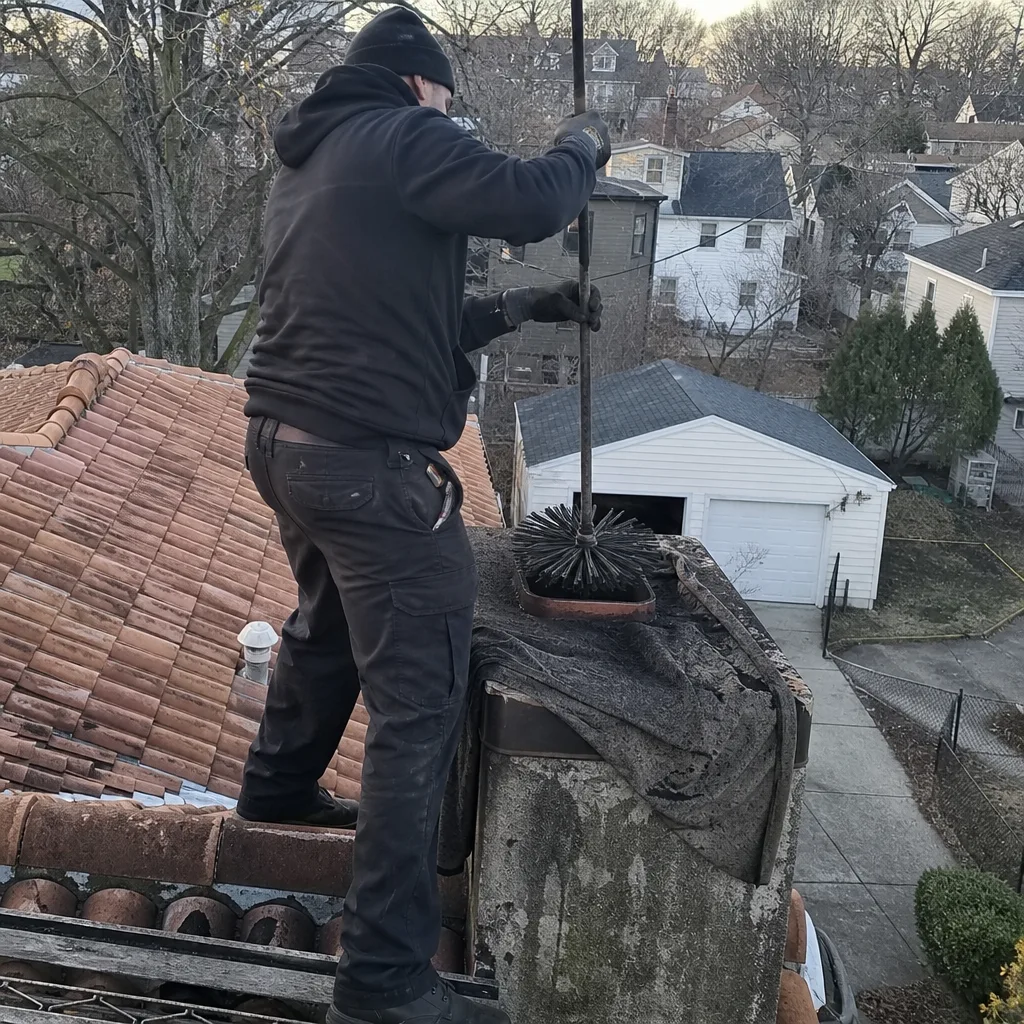
- You see a black or dark gray film on the firebox walls or the back of the damper. A thin layer of gray ash is normal after a fire; a dense, oily-looking black coating is soot accumulation that should come out before the next burn season.
- There’s a smoky or musty smell in the room when the fireplace hasn’t been used recently. Soot is porous and absorbs moisture. During Jersey City’s humid summers, a soot-lined flue will off-gas a stale, acrid odor that works its way into living spaces – especially in attached homes where the chimney shares an interior wall.
- The firebox brick or mortar joints are staining darker season over season. Soot migrates into porous masonry. Once it’s in the mortar joints, it takes a targeted cleaning to pull it out – routine vacuuming won’t do it.
- You’ve recently switched fuel types or appliance types. Converting from gas to wood, or installing a new insert into an older masonry fireplace, often disturbs residue that had been sitting stable for years. That dislodged material needs to come out.
- Your fireplace has been sitting unused for more than two seasons. Abandoned flues in Jersey City frequently collect both soot from previous use and windblown particulate through an uncapped or poorly capped flue top. A camera inspection usually reveals exactly which problem you’re dealing with.
- Your HVAC system or adjacent rooms smell of smoke, especially in winter. In row houses and multi-unit buildings, a soot-heavy flue can back-draft into shared wall cavities. If the smell is showing up in a bedroom or hallway near the chimney chase, the flue is the first place to look.
 Before
 After
AfterOur Soot Removal Process
- Written scope and price before we start. Under Haven Standard Clause 1 – what we call “Have it in writing” – you receive a written price and written scope of work before anyone opens a drop cloth. No verbal estimates, no “we’ll see what it looks like once we get in there.” If the price changes because we find something the initial assessment couldn’t reveal, we stop and tell you first.
- Camera-scan inspection of the flue. We run a camera down the liner before the brushes go in. This is a full NFPA 211 Level 2 visual – we’re looking at liner condition, joint integrity, soot depth, and whether there’s any creosote layering beneath the soot. In Jersey City clay tile flues, this step regularly catches hairline cracks or spalling tile that would go undetected with a flashlight. The footage is documented and stays on file as part of your job record.
- Firebox and damper area protection. We seal the firebox opening with a drop cloth and negative-pressure containment. Soot is fine enough to float into the room during brushing if the opening isn’t controlled. Jersey City brownstones and condos often have hardwood floors and open floor plans right next to the fireplace, so this step matters more than it might in a house where the hearth is in a utility room.
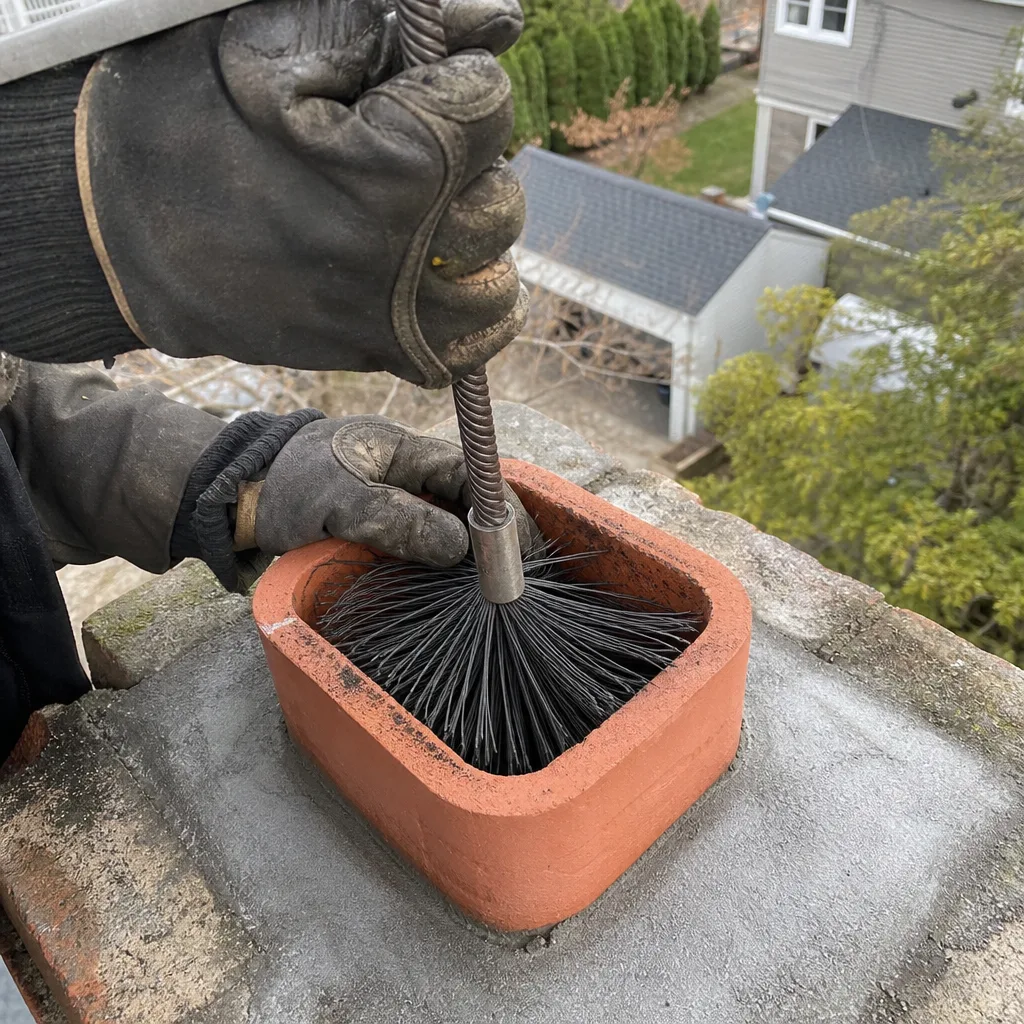
- Rotary brush sweep from the top down. Our technicians work from the chimney cap down through the flue, using brushes sized to the specific liner diameter noted in the pre-work inspection. Soot falls into the firebox chamber, where our vacuum system – fitted with a HEPA filter – captures it before it can re-enter the room.
- Smoke chamber and smoke shelf cleaning. The smoke chamber is the area directly above the damper that funnels combustion gases into the flue. It’s a ledge-heavy space where soot and debris collect heavily, and many Jersey City chimneys we service show significant buildup there even when the flue itself is relatively clear. We clean it as part of the standard soot removal scope, not as an upsell.
- Post-clean camera pass and photo documentation. After cleaning, the camera goes back down. We confirm the liner is clear, photograph the firebox and smoke chamber, and give you a written record of what was found, what was removed, and what the liner condition looks like now. This is Haven Standard Clause 4 – documented photo record on every visit, included as standard. You leave with something you can hand to your insurance carrier or building inspector if they ever ask.
Soot Removal Pricing in Jersey City
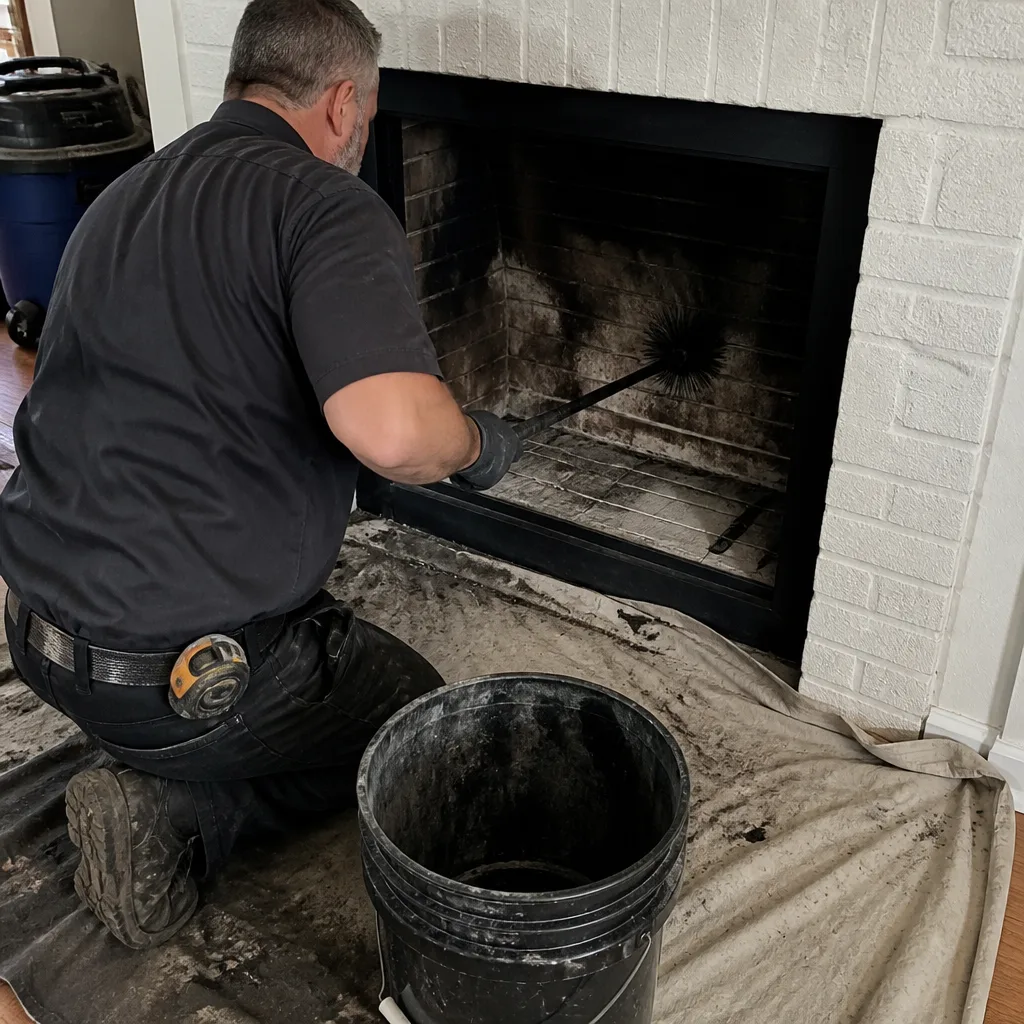
Soot removal in Jersey City runs from $149 to $349 for most residential jobs. Here’s how the range breaks down:
| Scope | Typical Price Range |
|---|---|
| Single flue, light soot accumulation, standard firebox | $149 – $199 |
| Single flue, moderate soot, smoke chamber cleaning included | $199 – $269 |
| Single flue, heavy soot with early-stage creosote, extended smoke chamber work | $269 – $349 |
| Second flue on same visit (row houses with dual-flue chimneys) | Add $99 – $149 |
A few things affect where your job falls in that range. Flue height matters – a three-story brownstone in The Heights has a longer run than a single-story bungalow in Greenville, and longer flues take more time. Access matters too: some Jersey City roof configurations require additional setup to reach the chimney top safely. And if the camera scan turns up something beyond soot – say, a displaced tile joint or a smoke chamber that needs HeatShield resurfacing rather than just brushing – we’ll quote that separately, in writing, before touching it.
The camera inspection, photo documentation, and written price are included in every visit. They are not add-ons. If a competitor has given you a written estimate and you want a second set of eyes on it, our Free Second Opinion is available – bring the written quote and we’ll review it honestly.
Call (862) 272-3868 for a free estimate. A written price is waiting on the other side of that call, not a follow-up visit before we’ll tell you anything.
What Happens If Soot Is Left Alone
Soot itself isn’t the fire hazard that Class II or Class III creosote is, but it’s the precursor. Fresh soot is light, powdery, and relatively easy to brush out. When it’s exposed to heat repeatedly and mixed with the tars that come off wood combustion, it transitions into the first stage of creosote – a sticky, dark coating that’s significantly harder to remove and significantly more flammable.
In the Jersey City market, we see this progression most often in homes where the fireplace is used occasionally but doesn’t get an Annual Sweep. Three or four fires a season doesn’t sound like heavy use, but if those fires are burning green or unseasoned wood – common in urban areas where buying well-seasoned firewood takes more effort – the soot accumulates faster and converts to creosote sooner. By the time the homeowner notices a problem, the simple soot removal job has become a creosote treatment job at a higher price point.
There’s also a structural concern specific to older clay tile liners. Soot is slightly acidic. Over years, it contributes to mortar joint deterioration between flue tile sections. A liner with compromised joints is a liner that’s letting combustion gases – including carbon monoxide – seep into the surrounding masonry and potentially into living spaces. The camera scan catches this early. A flashlight inspection doesn’t.
Soot vs. Creosote: What’s the Difference
We get this question at least a few times a week, so it’s worth spelling out plainly.
Soot is the fine black carbon particulate that deposits on liner walls and firebox surfaces during any wood or gas combustion. It’s dry, powdery, and brushes out easily when it hasn’t had time to bake onto surfaces. Creosote is what soot becomes when it’s heated repeatedly and the volatile tars in wood smoke condense and stick. It progresses through three stages – Class I (flaky, brushable), Class II (tar-like, requires chemical treatment), Class III (hardened, glazed, requires professional-grade removal or replacement of the liner).
What you typically find in a Jersey City home that burns wood a few times a week through the winter is a mix: fresh soot from recent fires sitting on top of early-stage Class I creosote from previous seasons. Routine Chimney Cleaning & Sweep services prevent the Class I from advancing. If the flue hasn’t been cleaned in several years, a camera inspection will tell us exactly what we’re dealing with before we quote the work.
This is part of why the camera step isn’t optional for us. Quoting a soot removal job without looking at the liner is guessing. We don’t quote guesses.
FAQs – Soot Removal
How much does soot removal cost in Jersey City?
Soot removal in Jersey City runs $149 to $349 for most single-flue residential jobs. The low end covers light accumulation with a straightforward sweep and smoke chamber cleaning. The high end applies when soot is heavy, the smoke chamber needs extended work, or early creosote layering is present alongside the soot. A second flue on the same visit typically adds $99 to $149. Every quote is written before work begins – call (862) 272-3868 and we’ll give you a number, not a visit request.
Is soot removal the same as a chimney sweep?
Soot removal is one component of a full chimney sweep. A standard sweep covers the flue liner from top to bottom, the smoke chamber and smoke shelf, and the firebox – and soot removal happens as part of that process. If soot is your specific concern and the flue is otherwise in good condition, the scope of work is essentially the same: camera inspection, brush sweep, smoke chamber cleaning, and post-clean documentation. You can read more about the full scope on our Chimney Cleaning & Sweep in Jersey City page.
Can soot removal be done as a same-day appointment in Jersey City?
Yes, in most cases. Soot removal for a single-flue fireplace typically takes between 60 and 90 minutes from setup to cleanup. We schedule same-day appointments when the calendar allows, and we always send a text when the technician is on the way. Call (862) 272-3868 to check current availability – someone will pick up, not a voicemail.
What do I get in writing after a soot removal visit?
You receive a written price and scope before work starts (Haven Standard Clause 1), and after the job is done, you get a documented photo record of the pre-clean and post-clean camera inspection, a written record of what was found and what was removed, and confirmation of the liner condition at job completion (Haven Standard Clause 4). That documentation is yours to keep and is useful if your insurance carrier or a building inspector ever asks about chimney maintenance. Everything is standard, not an upsell.
Is it safe for me to clean soot myself?
Light surface soot on the firebox face – brick or glass – can be wiped down with appropriate cleaners without professional help. But sweeping the flue liner and smoke chamber yourself carries real risk: working near the flue opening stirs fine particulate into the air, and without a camera, you won’t know whether there’s creosote beneath the soot or whether the liner has damage that needs attention before the next fire. For anything beyond surface cleaning, a trained tech with a camera and proper containment equipment is the right call. The cost of getting it wrong is higher than the cost of the service.
What’s Included on Every Level Two Chimney Visit
- Written price and written scope of work delivered before work begins (no surprises mid-job)
- NFPA 211 Level 2 camera-scan inspection of the flue liner, pre- and post-clean
- Documented photo record on completion – included as standard under Haven Standard Clause 4
- Background-checked, uniformed technician with a text sent when they’re on the way
- 365-Day Done Right Promise: if the work isn’t right, we make it right
- Free Second Opinion available on any written competitor estimate
- Live phone support at (862) 272-3868 – answered by a person, not a voicemail
Materials used on repair or resurfacing work are sourced from suppliers including Olympia Chimney and Copperfield, procured through Haven’s buying network to keep pricing honest rather than marked up at the point of sale.
Schedule Your Soot Removal in Jersey City
If your firebox has visible soot buildup, you’re catching a smoky smell between burns, or you haven’t had the flue inspected in more than a year, search Chimney Cleaning & Sweep Near Me in Jersey City, NJ or call (862) 272-3868 today. A live person will answer, give you a realistic price range for your situation, and get a written quote to you before any appointment is confirmed. Corrine Halstead and the Level Two Chimney Jersey City team have been doing this work since 2009, and the job record from your visit – camera footage, photos, written scope – goes on file the same day it’s done. No guesswork, no surprises.
You can also learn more about what a full annual sweep covers on our home page, or go deeper into the complete service on our Chimney Cleaning & Sweep in Jersey City page.
Written by Corrine Halstead, Owner at Level Two Chimney Jersey City, serving Jersey City.