
Last updated September 20, 2026
Level 1 sweep and inspection to the NFPA 211 annual standard - flue, crown, cap, and flashing checked and photographed
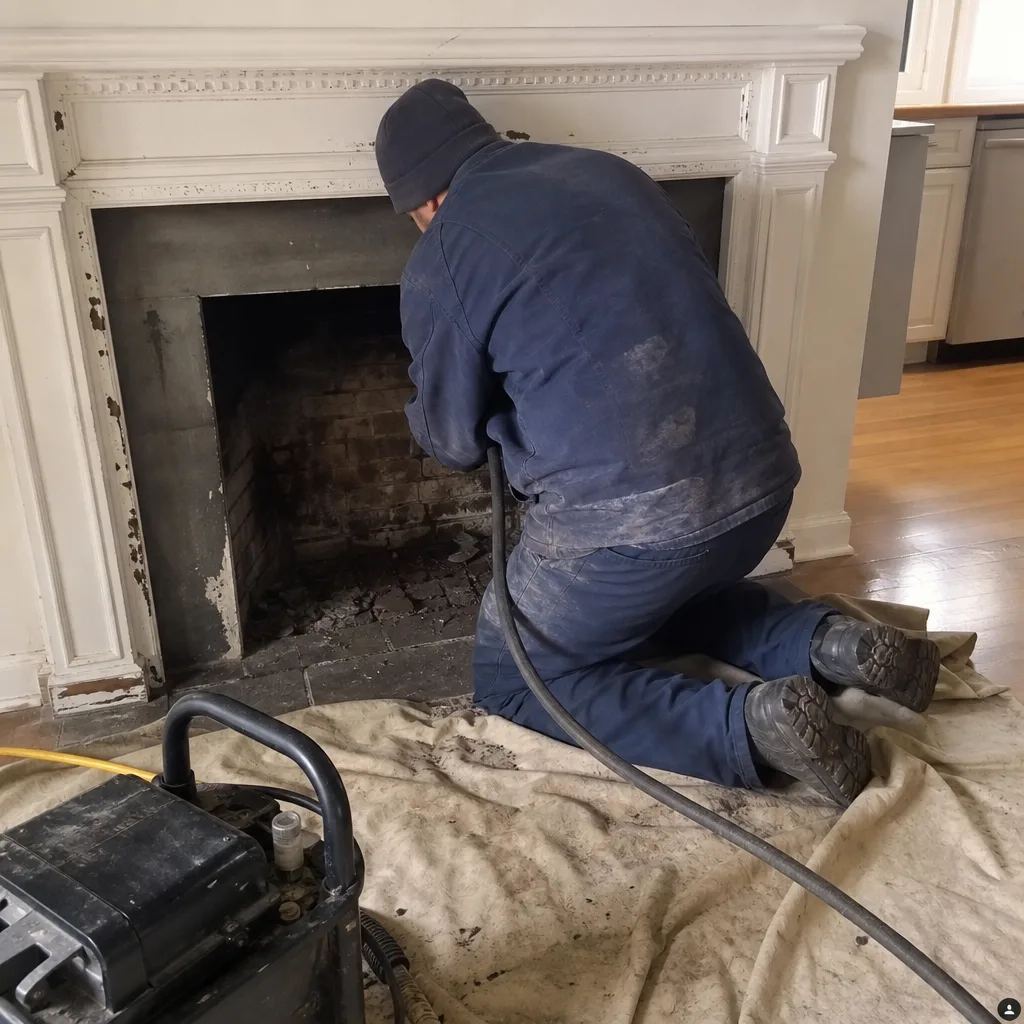
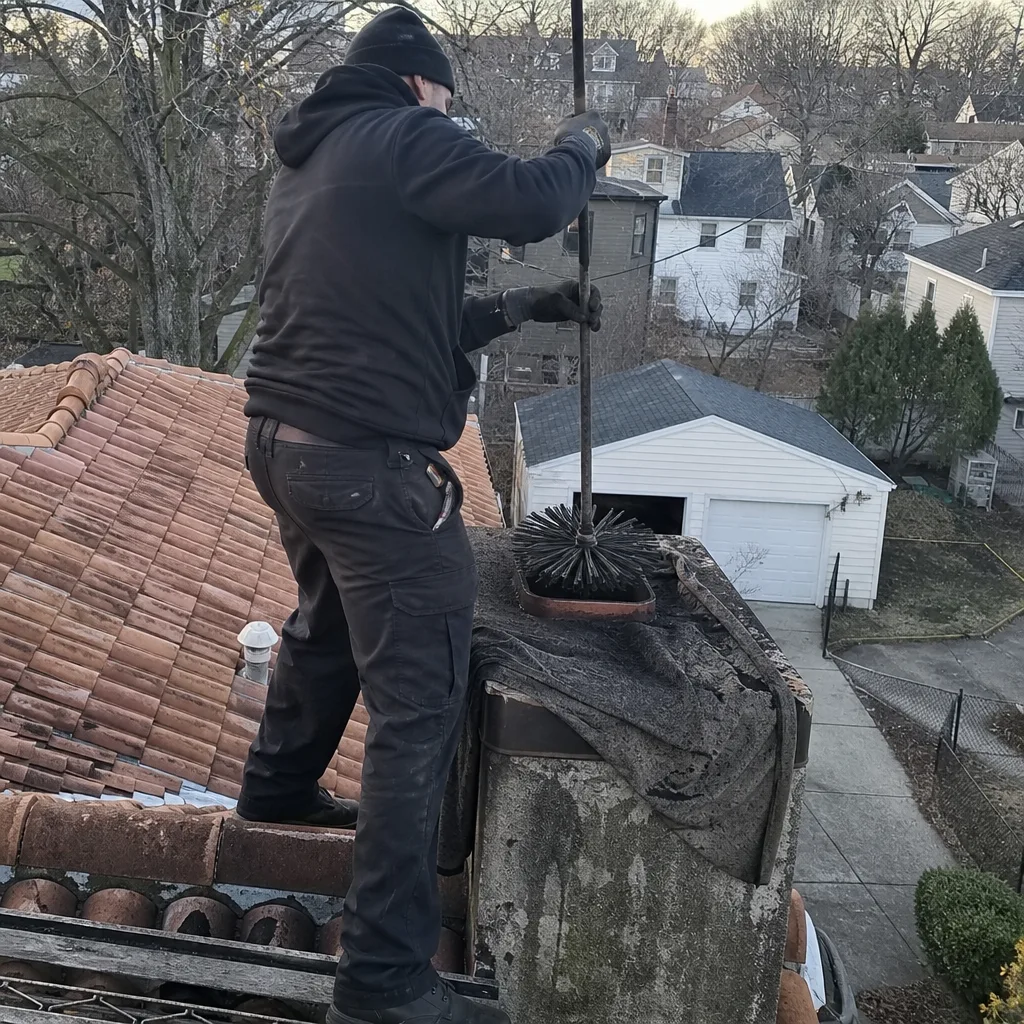
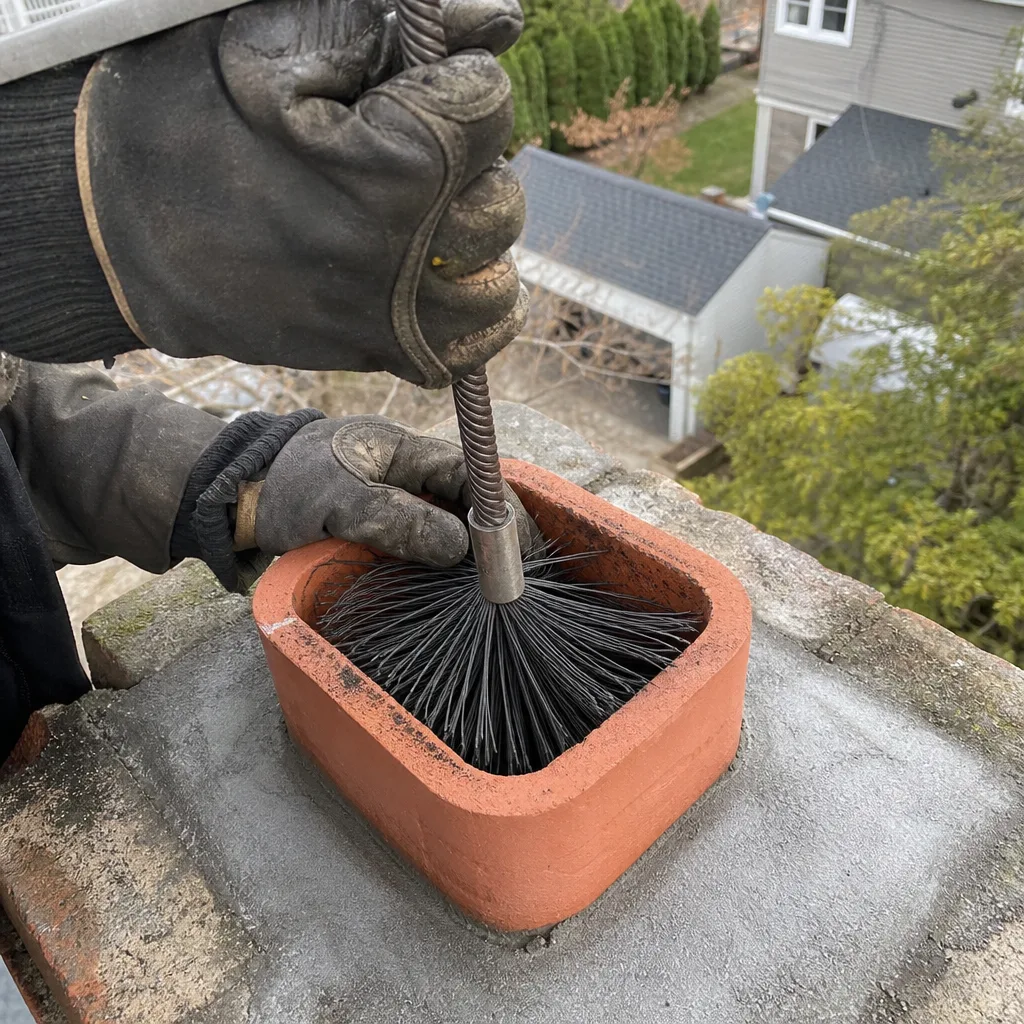
Chimney sweep logs do not sweep chimneys. They loosen some creosote - which then falls where a brush and vacuum still have to collect it.
 Before
 After
After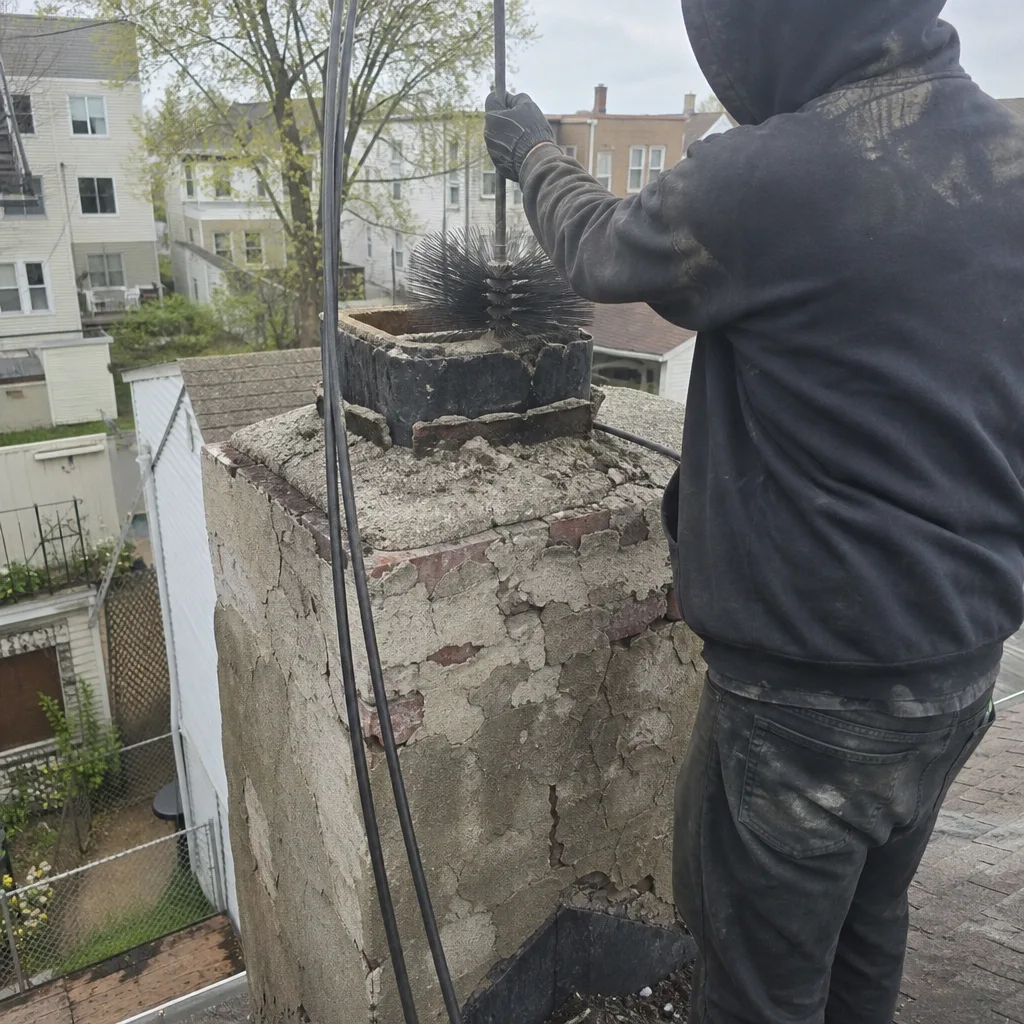 Before
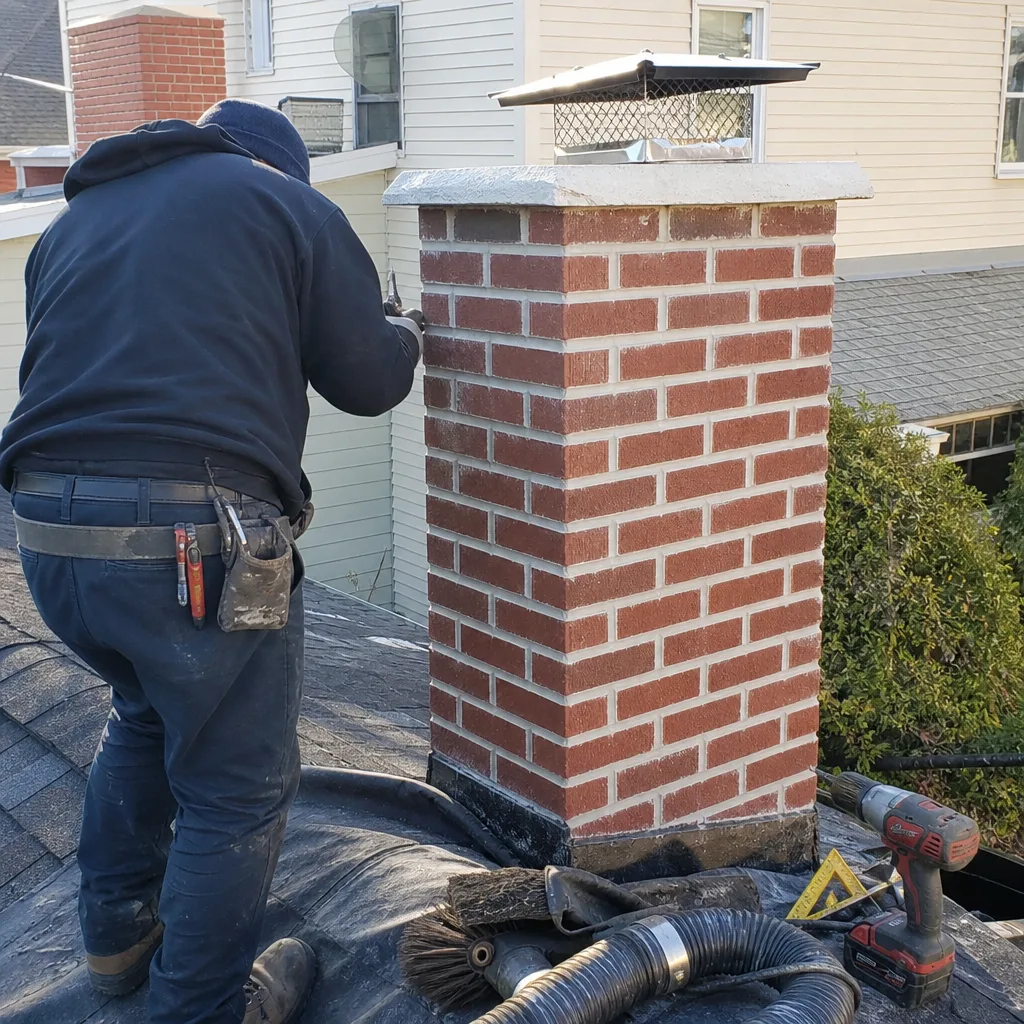 After
After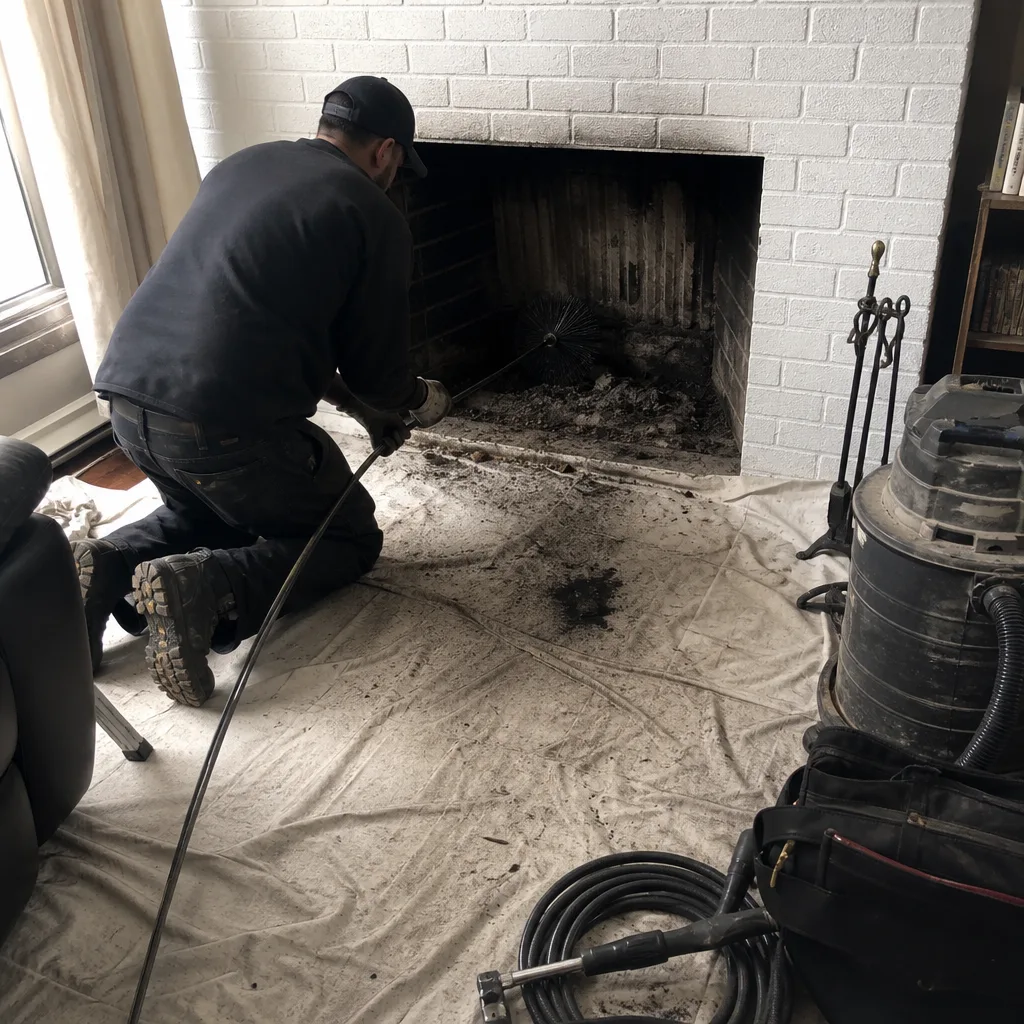 Before
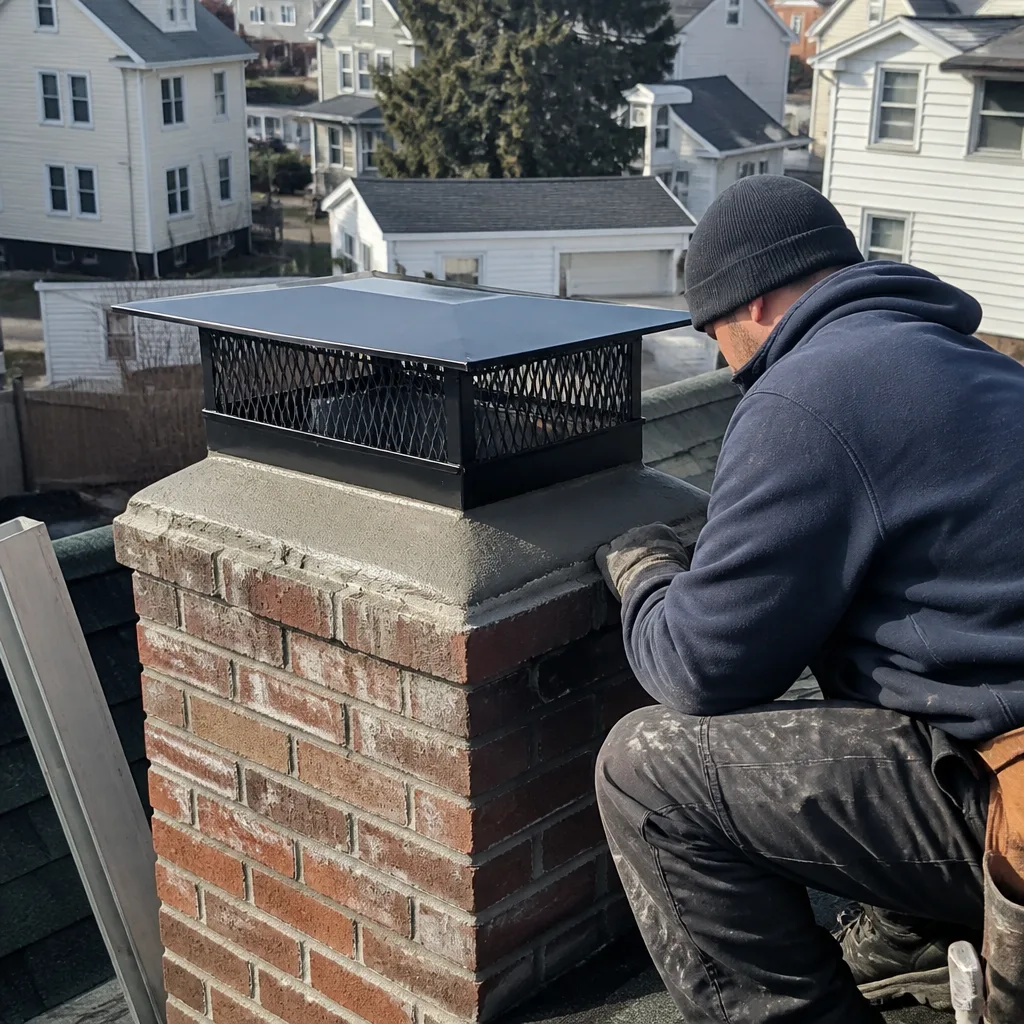 After
AfterChimney Cleaning Warning Signs: A Jersey City Homeowner’s Reference Guide
Most chimney guides read like a grocery list of problems with no sense of which one is about to hurt someone. A white stain on your exterior brick and a brown stain on your living room ceiling are both “warning signs,” but they exist in completely different universes of urgency. This guide, along with our more guides & resources, sorts the warning signs into three columns: use with caution, stop use immediately, and camera inspection before any further use. If you own a home in Jersey City, where most housing stock predates 1950 and dozens of rowhouse flues share party walls, you need to know which column you’re in.
Quick Answer
Chimney warning signs in Jersey City fall into three urgency tiers: signs you can monitor while using the fireplace cautiously (light efflorescence, minor cap rust), signs that mean stop using the fireplace immediately (smoke rollout, brown ceiling stains above the firebox, odor in an adjacent rowhouse unit), and signs that require a camera inspection before the next fire (spalling brick, flashing separation, delayed ignition). If you see smoke entering the room, smell something burning when nothing is lit, or notice staining on the ceiling above the firebox, stop using the fireplace and schedule a Level 2 camera inspection. For interior signs in particular, delay is how a $300 cleaning becomes a $4,000 liner replacement.
Table of Contents
- Exterior Signs You Can See From the Sidewalk
- Interior Signs During Use
- Jersey City Rowhouse-Specific Signs
- The Three Urgency Tiers, Explained
- What to Photograph Before You Call Any Contractor
- What a Level 2 Camera Inspection Actually Finds
- Common Mistakes to Avoid
- When to Call a Professional
- Frequently Asked Questions
- The Bottom Line
 Before
 After
AfterExterior Signs You Can See From the Sidewalk
You don’t need a ladder to spot most exterior chimney problems in Jersey City. You need to know what you’re looking at and which of the three urgency columns it belongs in. Start with a walk around your property on a dry day. Bring your phone.
Spalling Brick
Spalling is when the brick face flakes, chips, or crumbles away, leaving a recessed, rough surface. It happens because water gets into the brick, freezes, expands, and pushes the face off. Jersey City winters do this efficiently. The problem snowballs: every spalled brick is a new entry point for water, and the damage accelerates with each freeze-thaw cycle. Urgency tier: camera inspection before any further use. Spalling means water is getting into places it should not be, and a flue liner crack may be developing out of sight. That’s a fire-safety issue, not a cosmetic one.
Efflorescence (White Staining)
Efflorescence is that chalky white deposit that appears on brick and mortar. It’s not the brick dissolving; it’s salt minerals left behind when water migrates through the masonry and evaporates. In our Jersey City inspections, we see heavy efflorescence on north-facing chimney faces and on chimneys in the Heights and Downtown where rowhouses are tight together and rainwater doesn’t dry quickly. Urgency tier: use with caution, but track it. Light efflorescence that appears after heavy rain means water moves through the chimney. It’s a slow warning. But if the white staining thickens, spreads, or is joined by brick faces flaking away, you’ve moved into the camera inspection tier. One note: never scrub efflorescence with water. You push the salts back in, and the cycle repeats worse.
Chimney Cap Deterioration
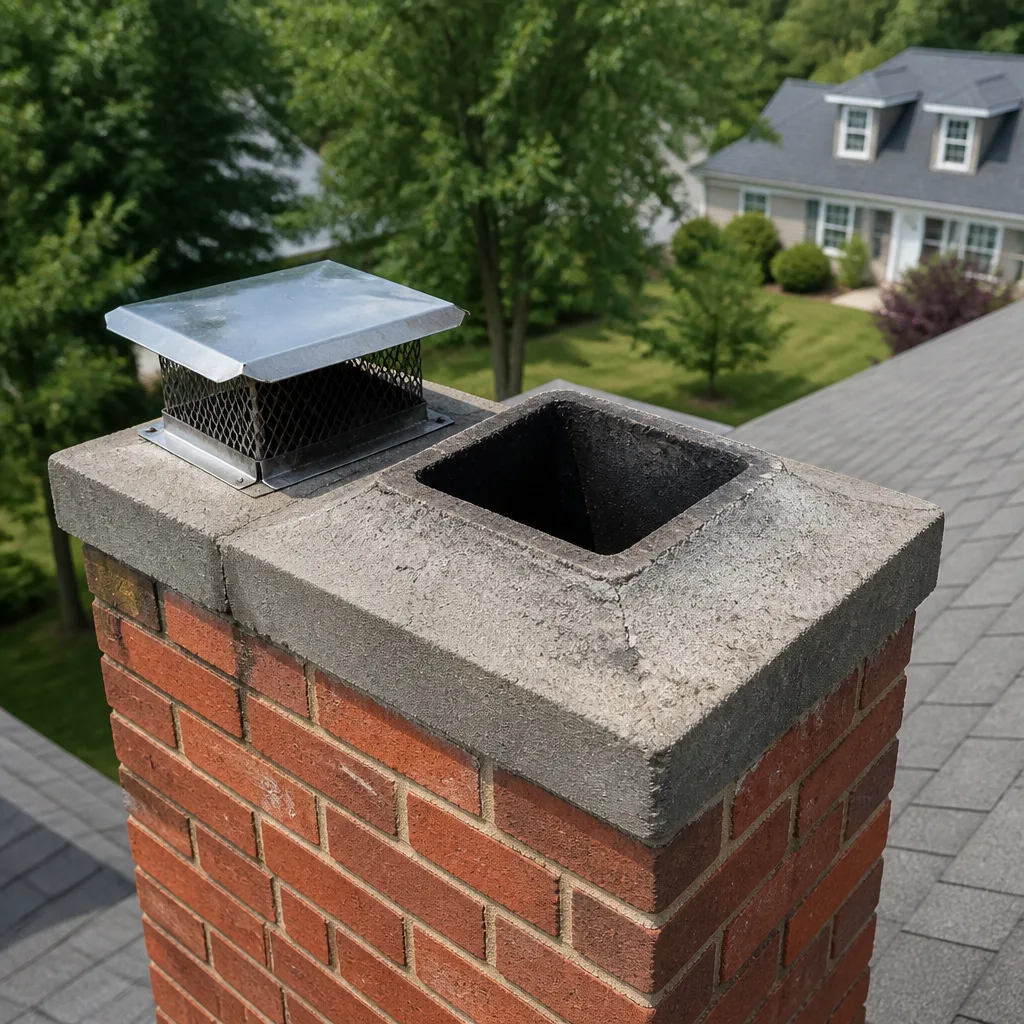
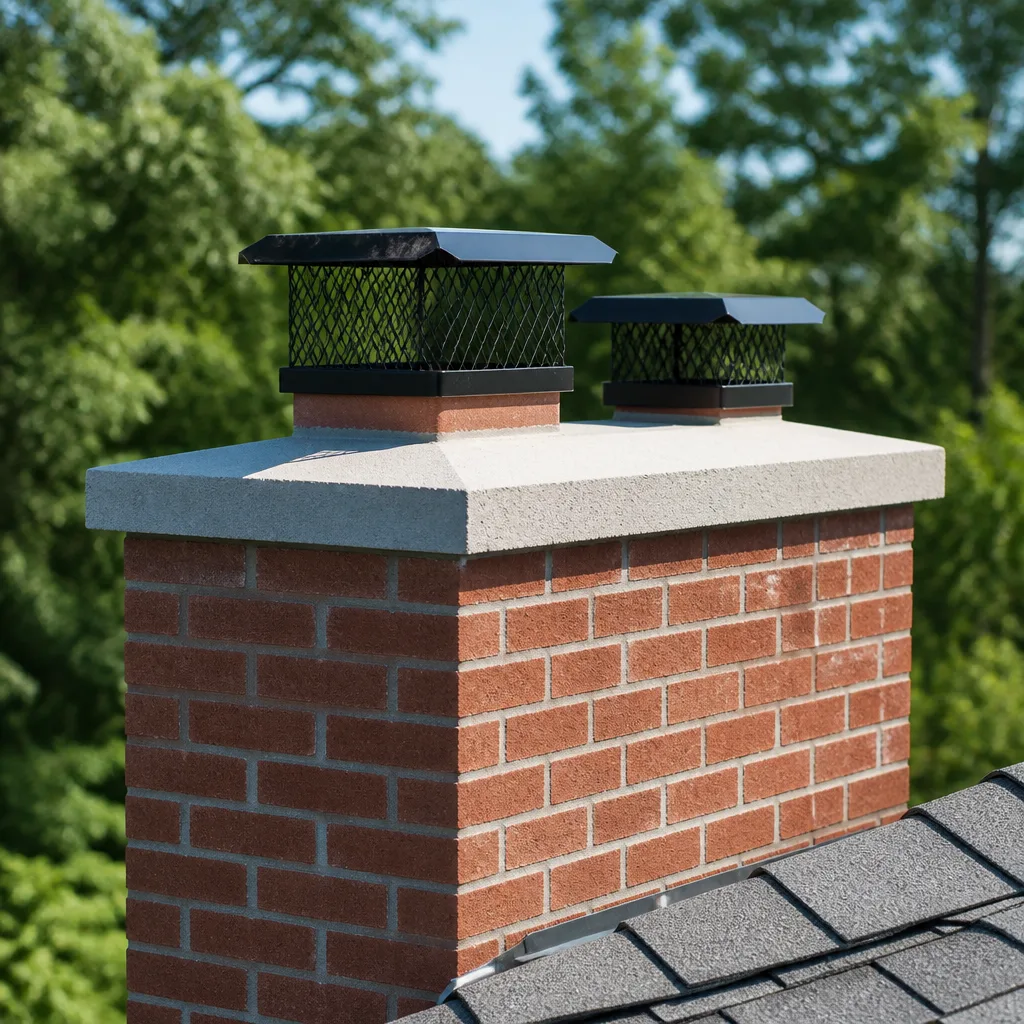
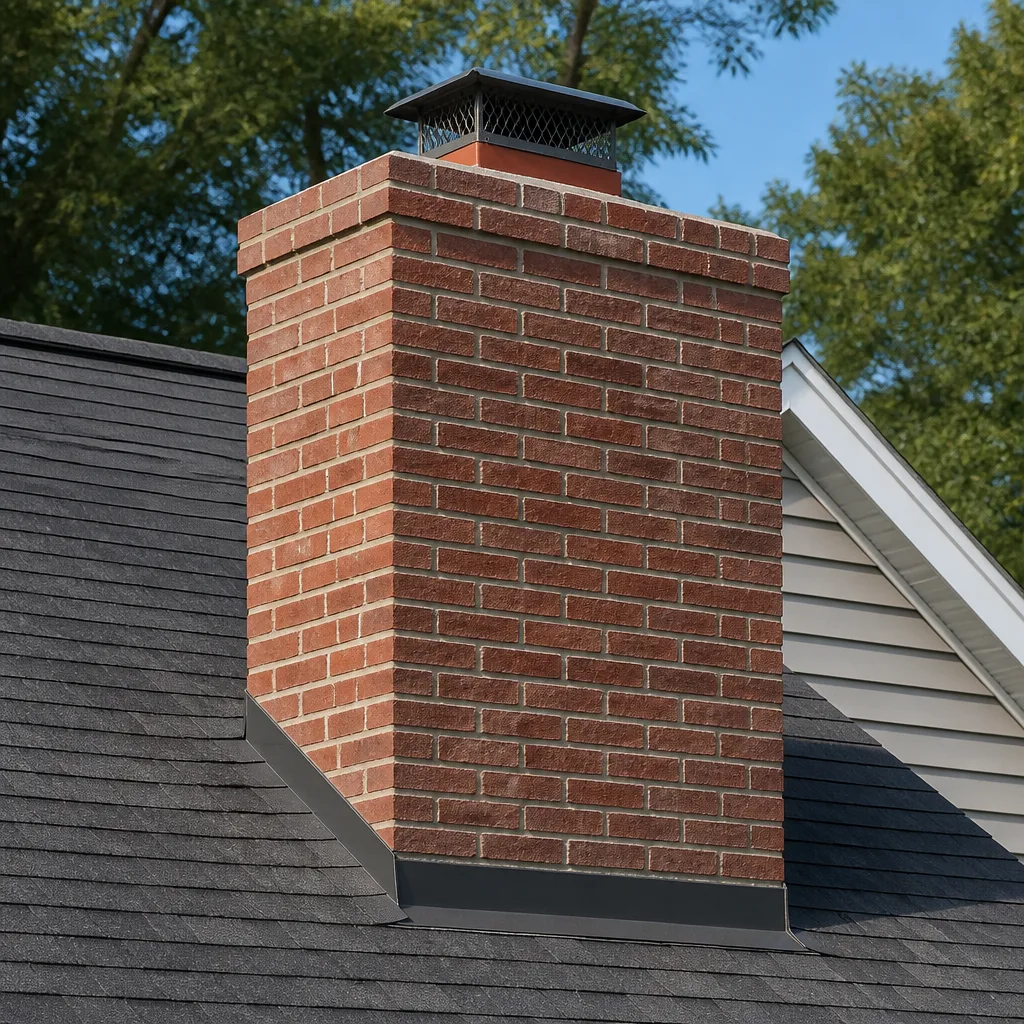
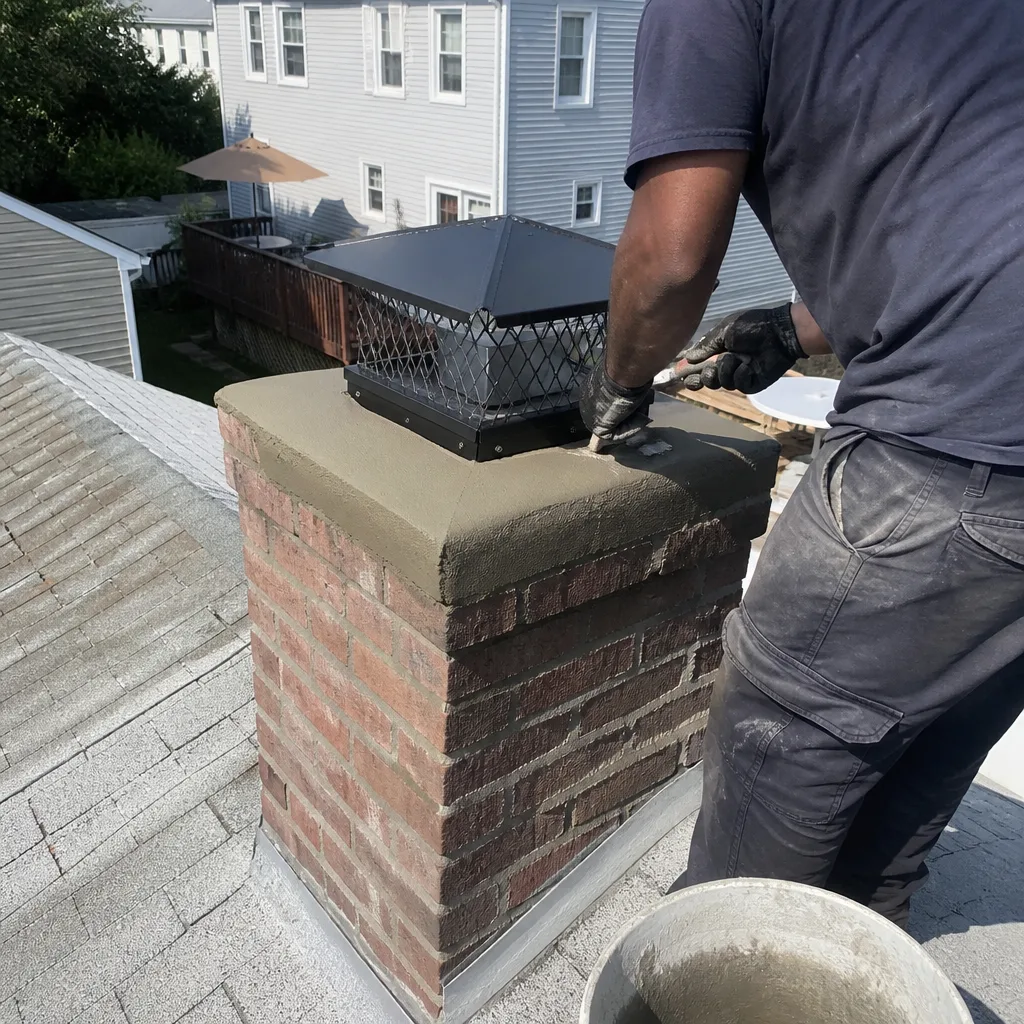
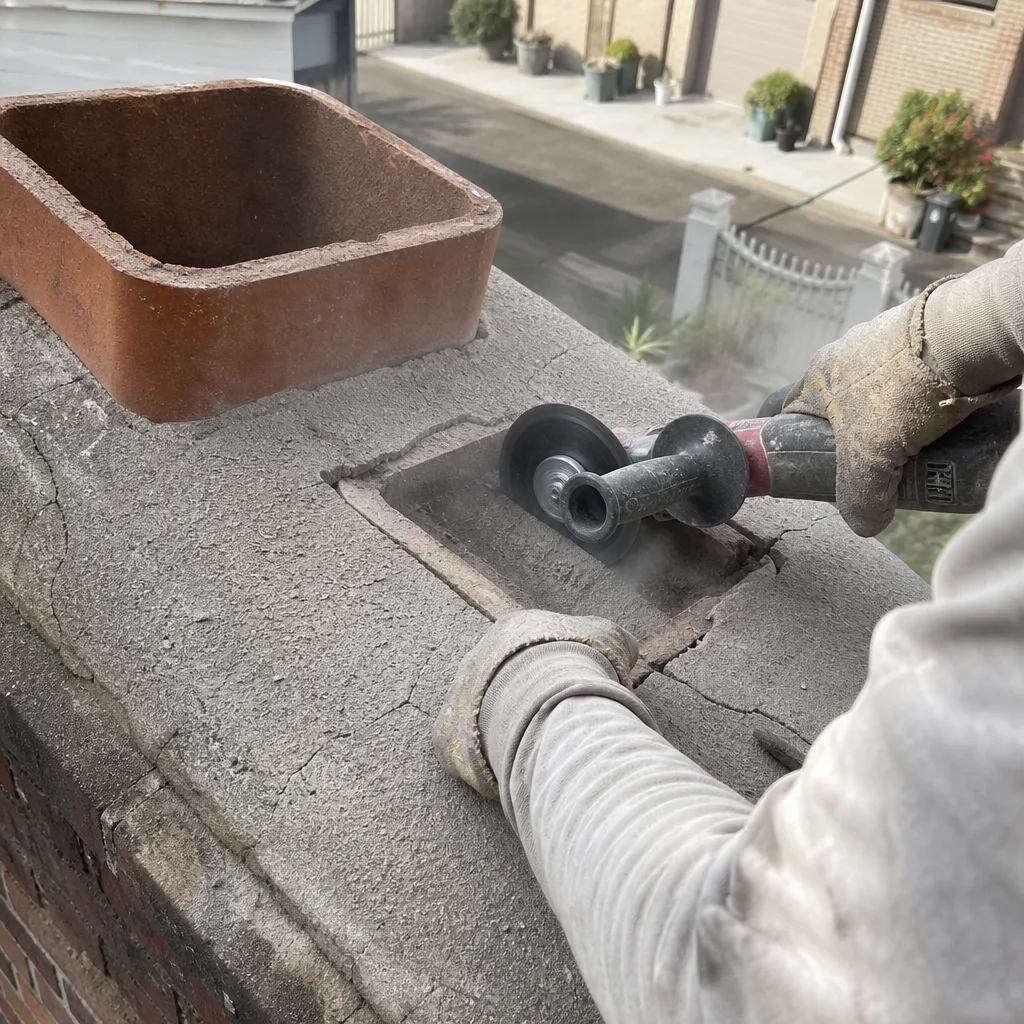
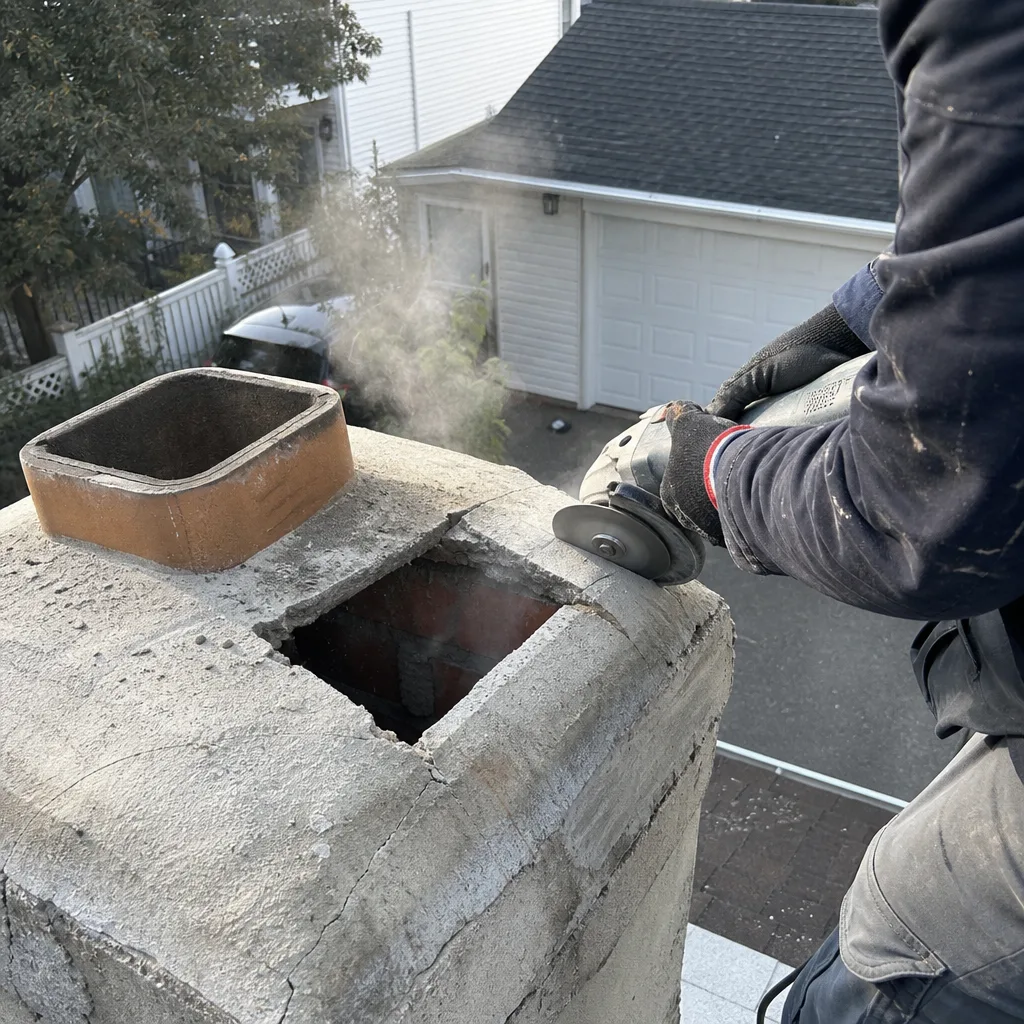
The cap is the concrete slab or metal lid at the top of the chimney that keeps water and animals out. When it cracks, rain runs into the chimney itself, not the exterior. In Jersey City, metal caps rust through fast near the waterfront and along the Hackensack River corridor. Urgency tier: depends on what’s wrong. Surface rust on a metal cap is a caution-tier sign if the cap still seats properly. A cracked concrete cap or a rusted-through metal cap that’s letting water run directly into the flue is a camera-inspection-tier sign, because water entering the flue can damage the liner and the firebox below. We inspect caps on every Chimney Cleaning & Sweep in Jersey City visit, and the cap is the most common thing we replace on homes built before 1970.
Flashing Separation
Flashing is the sheet-metal seal where the chimney meets the roofline. When it separates from the chimney or the roof, it’s no longer a seal. You may see curled edges, cracks in the old caulk line, or a gap you can slide a credit card into. Urgency tier: camera inspection before any further use. Flashing separation lets water run along the chimney chase into the attic and down interior walls. In Jersey City rowhouses, this water often shows up in the adjacent unit first because of how the party wall and shared roofline interact. Left alone, flashing separation rots roof decking and breeds exactly the mold problems no homeowner wants to find.
Interior Signs During Use
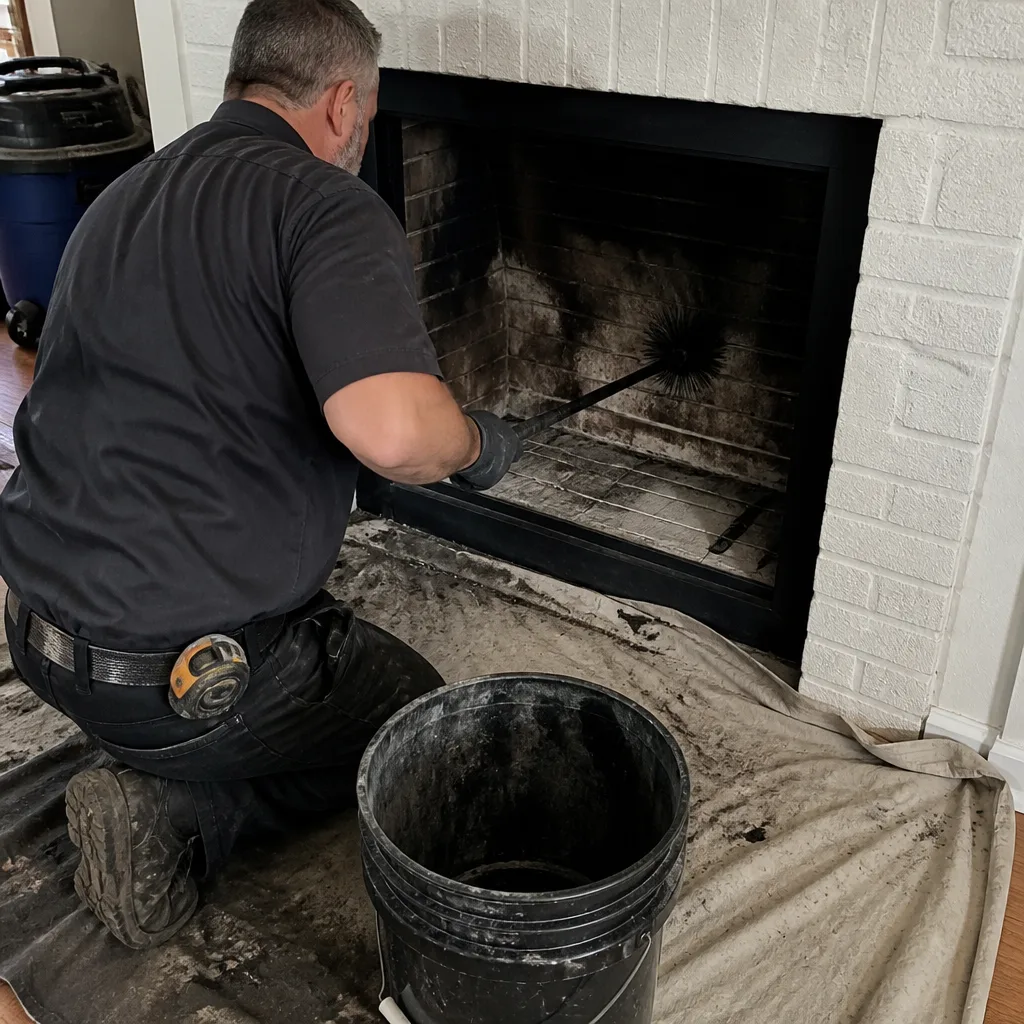
These are the signs that appear while you’re burning a fire. They matter more than exterior signs because they involve live combustion and moving air inside your home. If you experience any of the three signs below, treat them seriously.
Smoke Rollout
Smoke rollout is exactly what it sounds like: smoke enters the room instead of going up the flue. It typically happens when you open the fireplace doors or when a new log shifts. Urgency tier: stop use immediately. Smoke rooms happen for a handful of reasons: a blocked flue, a closed damper, a flue that’s too cold to draft, or a firebox that’s too small for the opening. But the dangerous version is a flue obstruction or a liner breach, which is invisible from the firebox. If smoke enters the room even once, do not use the fireplace again until a camera inspection has been done. Smoke in your living space is a carbon monoxide exposure event waiting to be worse.
Delayed Ignition
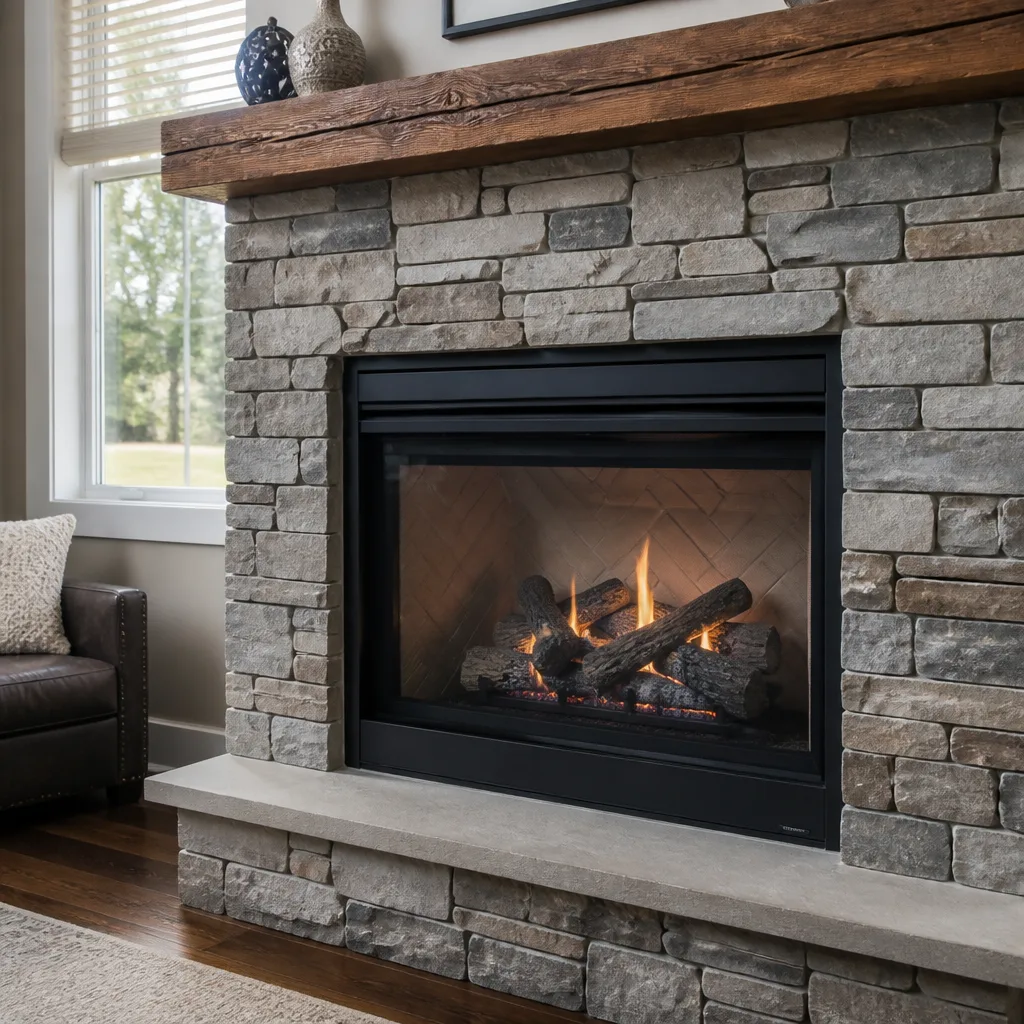
Delayed ignition is the small “whoomph” or pop when gas fireplace burners light late. It means gas is pooling before the igniter catches. Urgency tier: stop use immediately, then camera inspection. Delayed ignition can be caused by dirty burner ports, but it can also indicate a draft or venting problem that’s interfering with gas flow. Either way, you do not want gas accumulating inside a firebox. This is a shut-the-gas-valve-and-call situation. We tell our Jersey City gas fireplace customers: if it doesn’t light in the first two seconds, stop pressing the igniter and call for a service visit.
Odor During or After Burning
A wood smell while the fireplace is running is normal. A campfire smell in the house in July, or a sharp, acrid smell while the fire is going, is not. Urgency tier: camera inspection before any further use. Off-season odor usually means creosote has built up and is off-gassing into the house, often because the damper isn’t sealing or a downdraft is pulling air down the flue. The acrid smell during burning can mean a flue-liner crack is letting hot gases into the chimney cavity. In Jersey City rowhouses, this is when we find out whether the flue liner is original clay tile from the 1940s, which is exactly what you’d expect in neighborhoods like Greenville or Bergen-Lafayette.
Jersey City Rowhouse-Specific Signs
Rowhouses in Jersey City present a chimney condition almost no national guide covers: shared flues and party-wall chimneys. When homes were built side by side, builders often ran flues through a common chimney stack. In many cases, two fireplaces were meant to vent through separate flues in the same masonry chase. Over decades of renovation, flues get orphaned, sealed, or accidentally connected.
The sign to watch for: smoke or odor in an adjacent unit. If your neighbor knocks to ask whether you’re burning something, or you smell your neighbor’s fire in your unit, that means combustion gases are crossing where they shouldn’t. It can be a cracked flue liner in the party wall, a breached smoke chamber, or a misconnected flue from an old renovation. Urgency tier: camera inspection before any further use. This is a carbon monoxide risk, and it’s invisible from the firebox. A Level 2 camera inspection is the only way to see what’s happening inside the flue without dismantling the wall. We’ve inspected rowhouse flues in Hamilton Park and Paulus Hook where decades of renovation left flues connected in ways no one knew about until a camera went down.
Another Jersey City-specific issue: mechanical ventilation. Modern range hoods, bath fans, and whole-house fans in renovated brownstones depressurize the house. That means the air inside wants to leave so badly that it pulls down the chimney instead of letting it draft up. If your fireplace only smokes when the kitchen hood is on, that’s a depressurization problem, not a dirty flue.
The Three Urgency Tiers, Explained
Here is the full reference table. We built this because most guides throw every warning sign in a pile and leave you to sort out which one means “call someone this week” and which one means “mention it at the next annual sweep.”
Tier 1: Use With Caution
These signs indicate a developing problem. You don’t need to stop using the fireplace if it’s functioning normally, but you should track these signs with photos and plan for service this season.
- Light efflorescence that appears seasonally and doesn’t grow
- Surface rust on a metal cap that still seats correctly
- Minor mortar cracks narrower than a nickel, with no spalling
- Mild off-season odor that clears when the damper is cleaned
- Ash buildup exceeding one inch at the base of the firebox
Tier 2: Stop Use Immediately
If any of these occur, do not use the fireplace again until a professional has inspected it.
- Smoke rollout into the room during normal operation
- Brown or dark staining on the ceiling above the fireplace
- Odor in an adjacent rowhouse unit while you’re burning
- Delayed ignition on a gas fireplace
- Visible flame or glow where the chimney meets the ceiling or attic
Tier 3: Camera Inspection Before Any Further Use
These signs don’t necessarily mean “evacuate now,” but they mean unresolved structural or flue-liner questions exist. A camera goes down before the next fire.
- Spalling brick on the exterior chimney face
- Flashing separation at the roofline
- Cracked or missing chimney cap allowing water entry
- Persistent off-season odor that’s getting stronger year over year
- Any sign shared with an adjoining rowhouse unit
What to Photograph Before You Call Any Contractor
If you’re going to call a chimney company in Jersey City, document what you’re seeing first. The customer who can show us photos gets a more accurate phone estimate, and photos give you a baseline to compare against after the work is done. Here’s what we ask for:
- Exterior shots of the full chimney chase, from roofline to crown. Take these from the sidewalk or back yard, not with a drone or ladder.
- Close-up photos of any staining, spalling, or cap rust. Get the phone within 12 inches if you can reach it safely from the ground.
- Flashing detail at the roofline, taken from the roof only if you can do so from an existing deck or window. Never climb a ladder with your phone in one hand.
- Interior firebox and damper area, with the fireplace doors fully open and a flashlight on.
- Any ceiling or wall staining above the fireplace, photographed from 3 to 4 feet back so the entire stain is visible.
- A video of any smoke rollout or delayed ignition. A 10-second cell phone video of the problem in action is the single most useful thing you can hand a technician.
This photo set does two things. It lets us give you a realistic scope over the phone, and it becomes your documented pre-service condition. When the job is done, you photograph the same spots again and compare. That’s what we mean by evidence over reassurance. Every job we do includes a documented photo record under Clause 4 of the Haven Standard. Your photos are the starting point; ours are the record.
What a Level 2 Camera Inspection Actually Finds
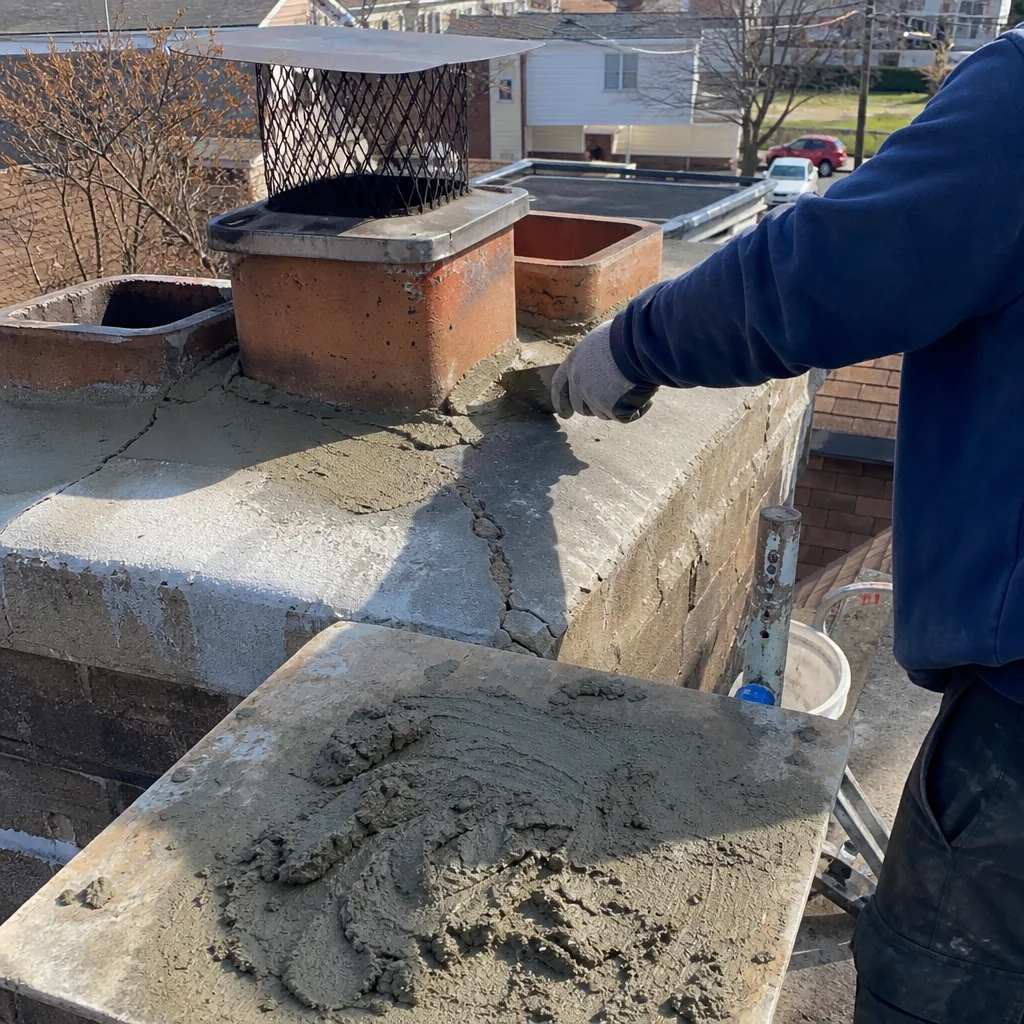
A Level 2 inspection is the standard codified by NFPA 211, and it goes far beyond a visual look. A camera goes down the full length of the flue, from the crown down through the smoke chamber, and records everything. Here’s what we’re looking for and what it means when we find it.
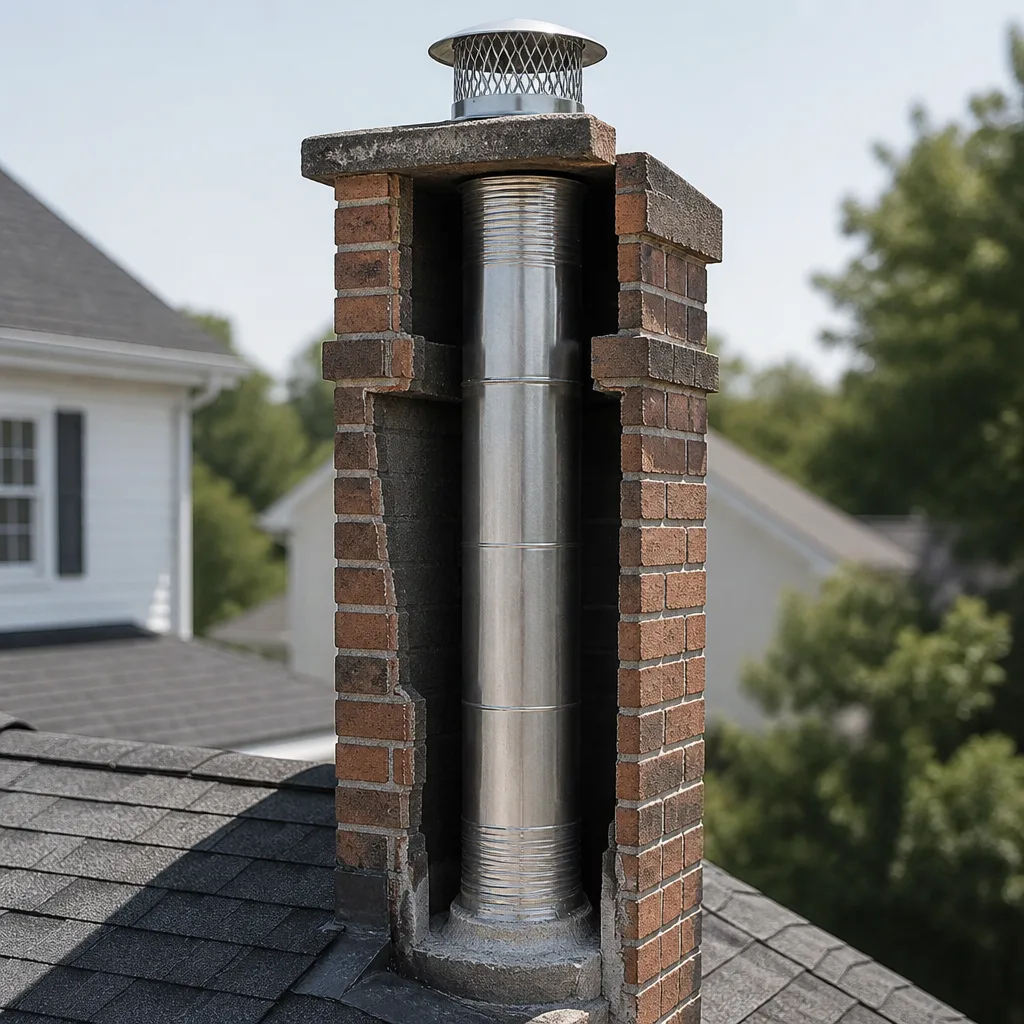
Flue liner cracks and gaps. Clay tile liners crack from decades of freeze-thaw cycles and thermal shock. The camera shows hairline cracks that a flashlight never would. A cracked liner means hot gases and creosote can reach combustible material in the chimney chase. This is the finding that most often moves a job from “clean it” to “line it.”
Class III creosote. Creosote buildup is classed by severity. Class III is the dense, glassy, tar-like form that forms when fires burn cool. It’s difficult to remove and highly combustible. A camera inspection doesn’t just find it; it tells us where it’s thickest. In Jersey City, we often find Class III creosote in flues that haven’t been cleaned in a decade and where previous owners burned green or unseasoned wood.
Smoke chamber damage. The smoke chamber is the angled area above the firebox that guides smoke up into the liner. In older Jersey City homes, smoke chambers are often built from corbelled brick without parging. That means rough brick, ledges, and gaps where creosote accumulates and where heat can penetrate. The camera tells us whether your smoke chamber needs parging.
Orphaned flue connections and breaches. In rowhouse renovations, we regularly find flues that were sealed off with sheet metal, flues that were illegally combined, and openings that were drywalled over without proper termination. The camera is the only way to identify these without opening walls.
If you want to understand what a full Level 2 inspection covers on a Jersey City home, see our Level Two Chimney Jersey City home page. The inspection standard isn’t an upsell; it’s the only way to know which urgency tier you’re actually in.
Common Mistakes to Avoid
- Burning a fire to “test” whether a warning sign is serious. If smoke rolled out once, the next test could be the one that fills your living room or introduces carbon monoxide. Stop and inspect instead.
- Painting over efflorescence or spalled brick. Paint traps water inside the masonry and accelerates freeze-thaw damage. Jersey City winters will tear through painted brick in a few seasons.
- Assuming a “sweep special” includes a flue inspection. A standard sweep removes creosote; it doesn’t tell you whether the liner is cracked. Ask specifically whether a camera is used and whether you receive photos.
- Ignoring odor in an adjacent rowhouse unit. It’s easy to write it off as “old building smell.” It’s not. It’s combustion gas crossing a boundary it shouldn’t cross.
- Waiting until fall to schedule service. Every Jersey City chimney company books out weeks in September and October. If you notice a Tier 2 or Tier 3 sign in March, schedule the inspection then. You’ll get a faster appointment and a written price you can budget.
- Using the fireplace damper to compensate for a drafting problem. If you’re cracking a window open every time you light a fire, you’re patching a depressurization issue. The camera inspection will tell you whether the flue itself is the problem.
- Accepting a verbal diagnosis without documentation. If someone tells you that you need a new liner but can’t show you a photo of the crack, get a second opinion. A Chimney Repair in Jersey City estimate should include documentation, not just a recommendation.
When to Call a Professional
Call same-week if you’ve experienced smoke rollout, odor in an adjacent rowhouse unit, delayed ignition, or any ceiling staining above the firebox. Those are not seasonal-sweep issues; they are safety issues. Call this season if you’ve documented spalling brick, flashing separation, or growing efflorescence, and you plan to use the fireplace this winter. Camera evidence changes the conversation. Level Two Chimney Jersey City offers free estimates in Jersey City, and every inspection ends with a written scope, a written price, and photo documentation. Call (862) 272-3868 to schedule.
Frequently Asked Questions
A chimney sweep in Jersey City typically costs $189 to $329 for a standard cleaning, with the final price depending on flue condition, creosote class, and whether a cap or damper needs adjustment. At Level Two Chimney Jersey City, we give you a written price before we start, not after the tech is in your home. Call (862) 272-3868 for an exact quote.
The National Fire Protection Association recommends a sweep once per year for wood-burning fireplaces, and we recommend the same for Jersey City homes with active fireplaces. If you burn more than two cords per season or burn unseasoned wood, you may need two cleanings per year.
Class III creosote is the dense, glossy, tar-like accumulation that forms when fires burn cool or incomplete. It’s highly combustible and usually requires mechanical removal rather than standard brushing. A camera inspection tells you whether Class III creosote is present and where it’s thickest.
You can remove loose ash and soot from the firebox, but cleaning the flue itself requires proper brushes, rods, and scaffolding knowledge. The flue is a vertical passage over a roof; a fall or a dropped tool can cause serious injury. Plus, a DIY sweep won’t give you the camera documentation that shows whether the liner is sound.
A camera inspection is the only way to know. Cracks, gaps, or spalling in a clay tile liner mean it should be replaced or lined. In Jersey City rowhouses, original liners from the 1940s and 1950s are often past their service life. We use liners from DuraFlex and Copperfield when a replacement is needed.
Document when you smell it and whether it corresponds with a neighbor’s fireplace use, then stop using your fireplace and schedule a camera inspection. This is a shared-flue or breach issue, and it’s not something to wait on. Call (862) 272-3868 and describe what you’re noticing.
Yes. A properly fitted cap keeps rain, leaves, and animals out of the flue. Most water damage we see in Jersey City chimneys starts with a deteriorated or missing cap. A full-width cap with a screen is the right answer for most local roof conditions.
The Bottom Line
Chimney warning signs in Jersey City sort themselves into three columns: use with caution, stop use immediately, and camera inspection before any further use. The first column is manageable; the second means no more fires until you know why; the third means evidence before action. Document what you see with photos, know which tier you’re in, and don’t let a neighbor’s smoke in your unit go ignored. If you’re seeing any Tier 2 or Tier 3 sign, hear from a professional who will put a camera down the flue and show you the findings. Level Two Chimney Jersey City does exactly that, and we’ve been documenting every inspection since 2009. For fireplace-specific questions, see our Fireplace Services in Jersey City page, or call (862) 272-3868 for a free estimate.
Written by Corrine Halstead, Owner at Level Two Chimney Jersey City, serving Jersey City since 2009.