
Last updated September 20, 2026
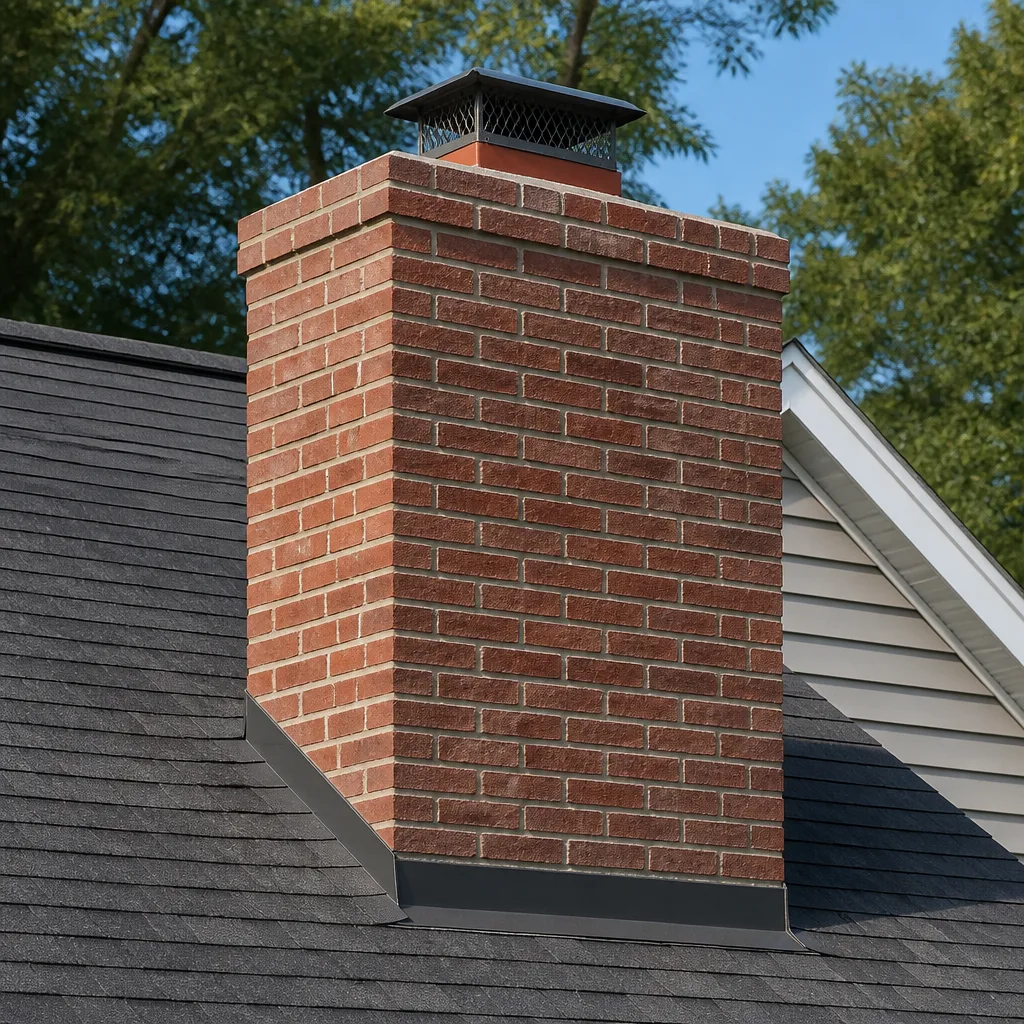
Level 1 sweep and inspection to the NFPA 211 annual standard - flue, crown, cap, and flashing checked and photographed
Chimney sweep logs do not sweep chimneys. They loosen some creosote - which then falls where a brush and vacuum still have to collect it.
 Before
 After
After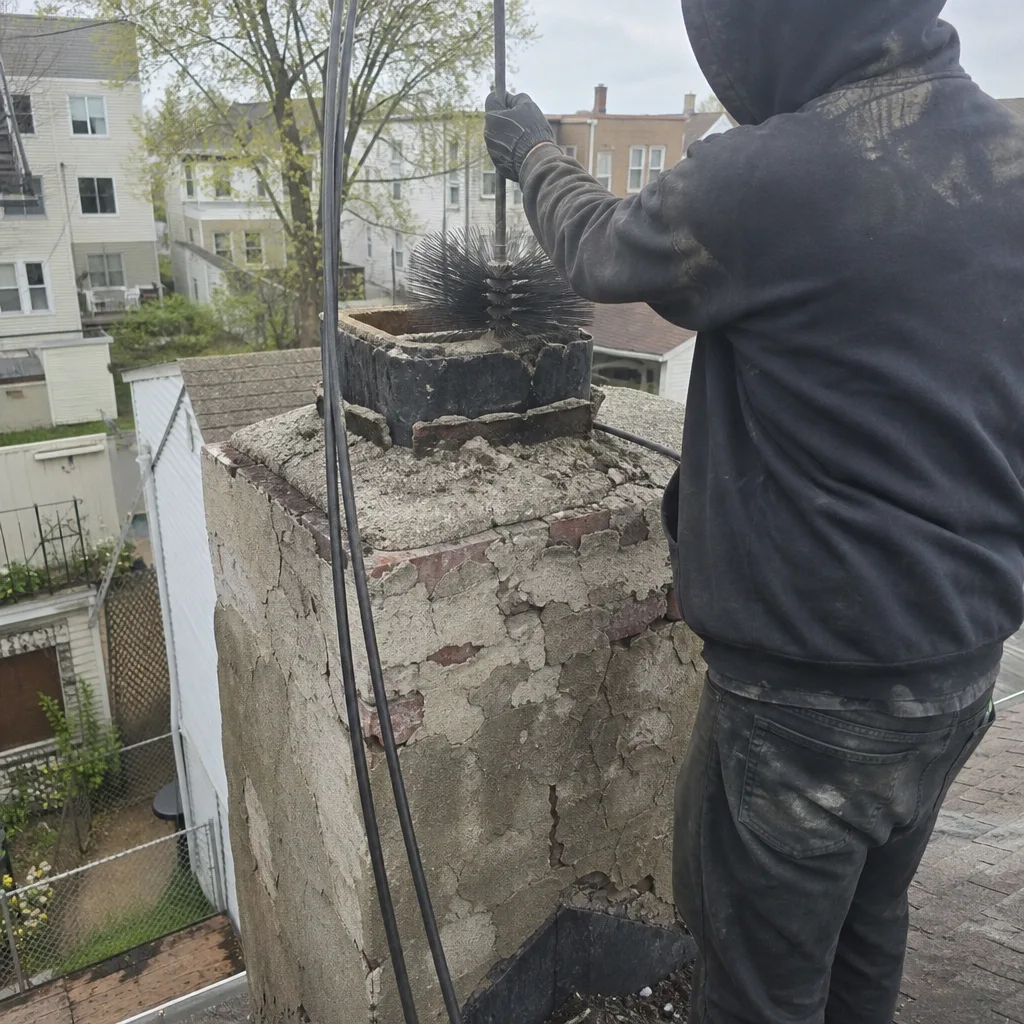 Before
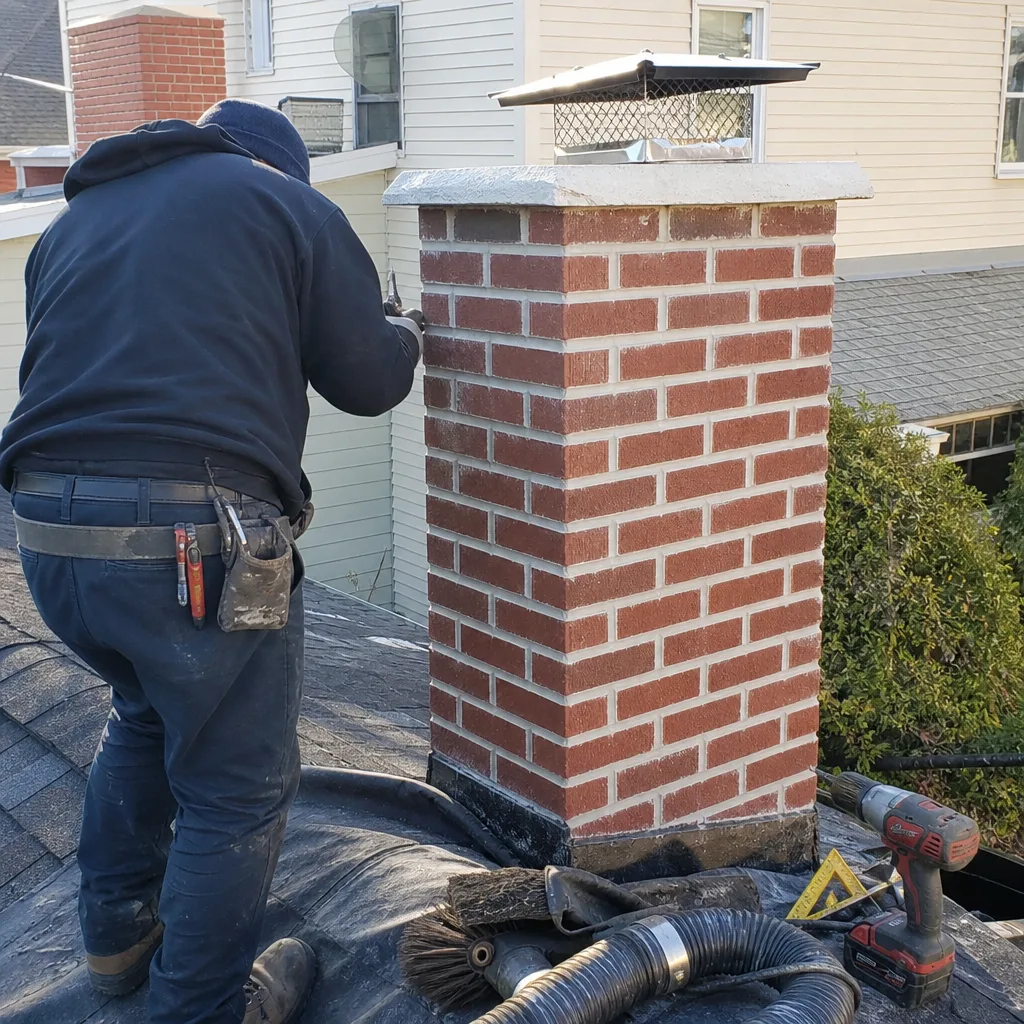 After
After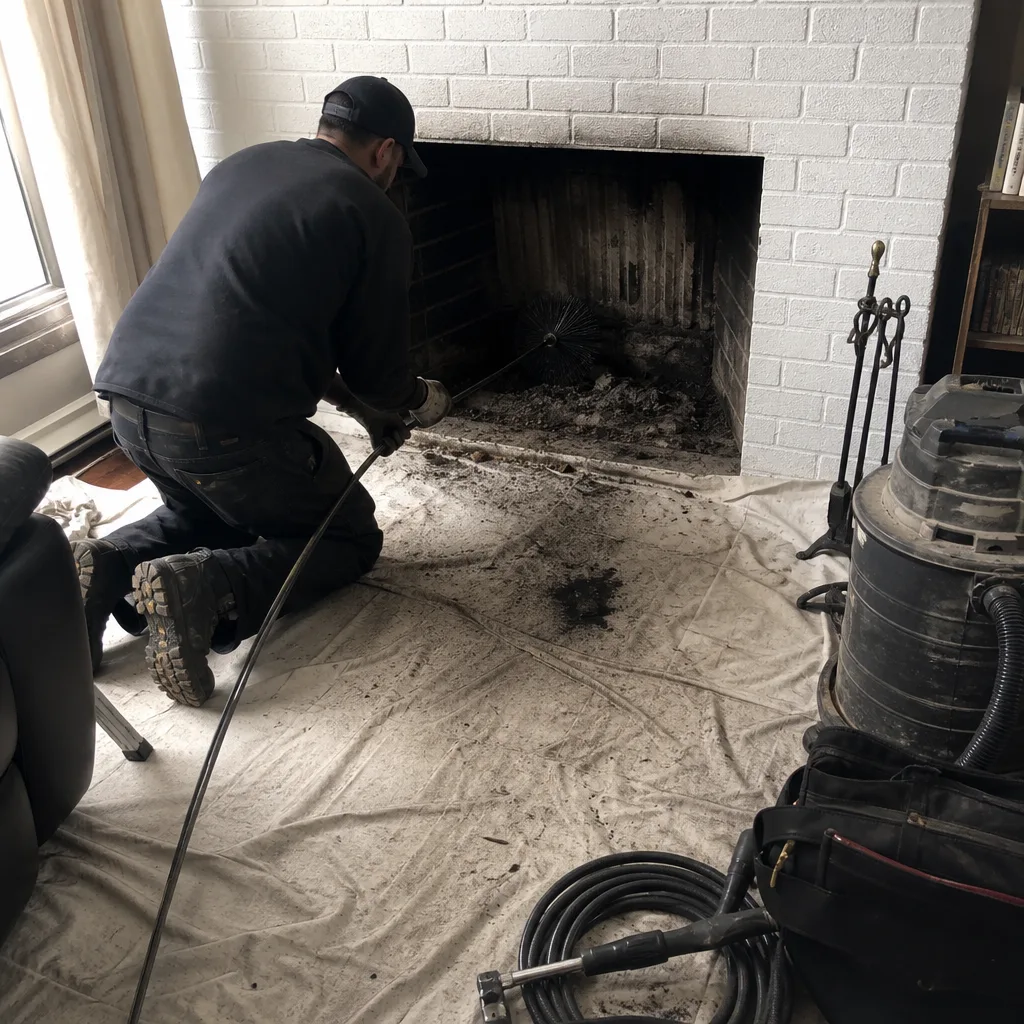 Before
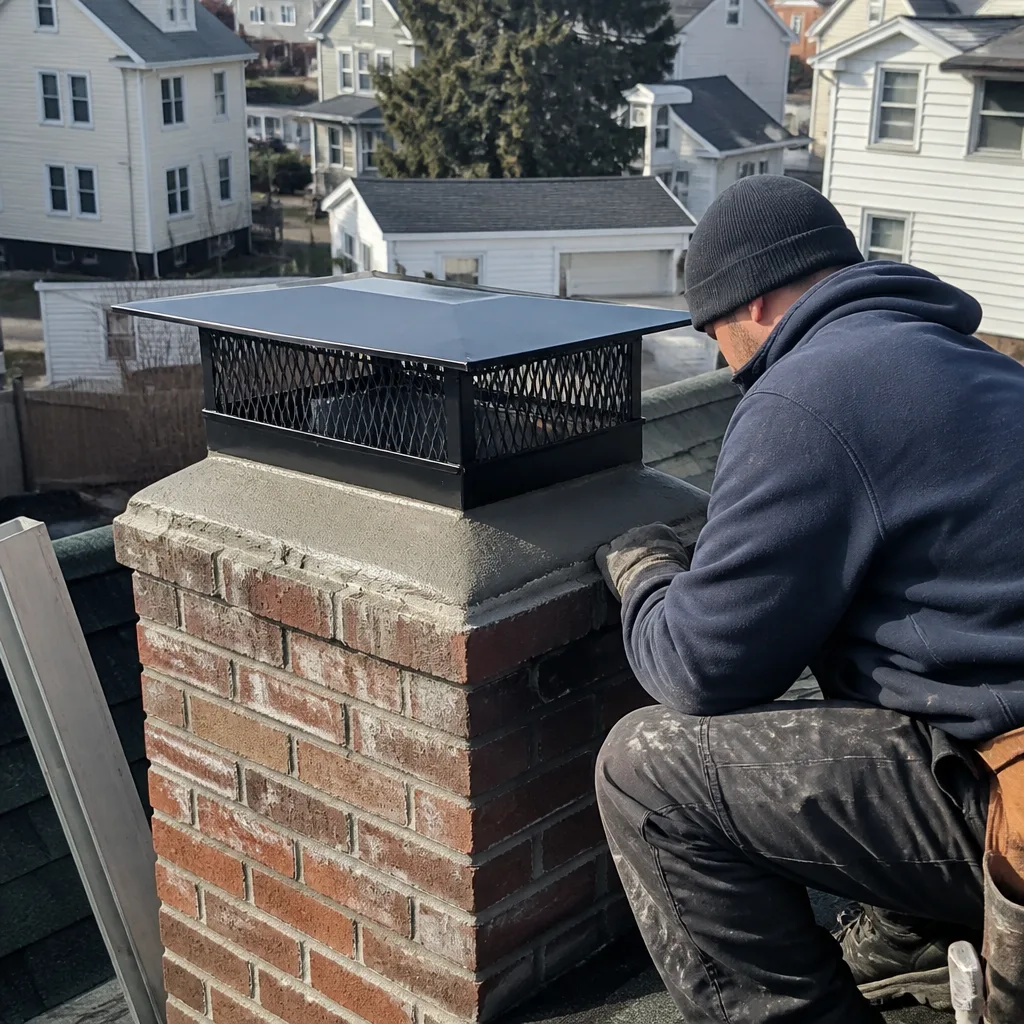 After
AfterThe Complete Guide to Chimney Cleaning in Jersey City
Jersey City has more than 9,000 attached rowhouses burning wood or gas, and the shared-wall construction means one neglected flue can put a neighbor’s home at risk, not just your own. Most homeowners here have never seen the inside of their chimney, and that’s the problem. This guide explains every step of chimney cleaning in Jersey City, and you can find more guides & resources on our blog covering what a sweep actually does, what it costs in this market, what the camera finds, and what paperwork you should hold when the job is done. You’ll learn how to read an invoice, spot a flashlight inspection, and know whether your rowhouse needs a different level of service than a detached home up in the Heights.
Quick Answer
Chimney cleaning in Jersey City typically costs between $200 and $380 for a standard sweep, with Level 2 camera inspections adding $120 to $250 depending on the flue and roof access. A real cleaning removes creosote from the flue walls, smoke chamber, and firebox, and you should receive a written record with photos when it’s finished. Level Two Chimney Jersey City includes the camera-scan inspection and documented photo record on every visit under Haven Standard Clause 4, with the written price delivered before any work starts.
Table of Contents
- What Chimney Cleaning Actually Is: The Real Steps
- Visual Sweep vs. Level 1 vs. Level 2: Which Inspection Applies to Your Home
- How Much Does Chimney Cleaning Cost in Jersey City?
- Why Jersey City’s Salt Air Changes the Cleaning Interval
- The Three Creosote Stages: What Each Looks Like on Camera
- How to Read a Sweep Company’s Invoice
- What Your Written Post-Service Record Should Contain (And Why It Matters for Hudson County Insurance)
- Common Mistakes to Avoid
- When to Call a Professional
- Frequently Asked Questions
- The Bottom Line
 Before
 After
AfterWhat Chimney Cleaning Actually Is: The Real Steps
A chimney sweep is not one action. It’s a sequence of five distinct steps, and each one addresses a specific failure point in your flue system. When we clean a chimney in Jersey City, we’re working through a documented process that hasn’t changed materially since the Haven Standard was introduced in 2009, because the physics of fire and creosote don’t change.
Here’s the sequence, in order:
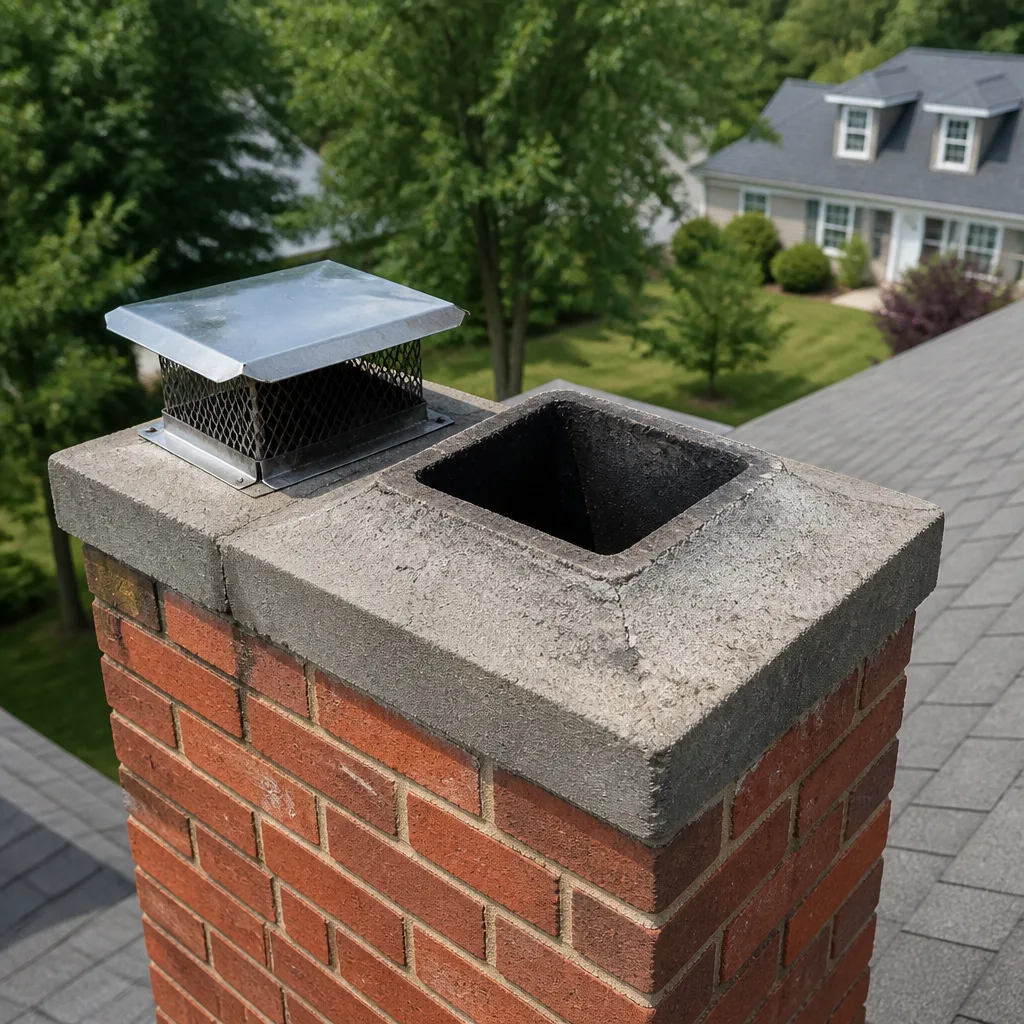
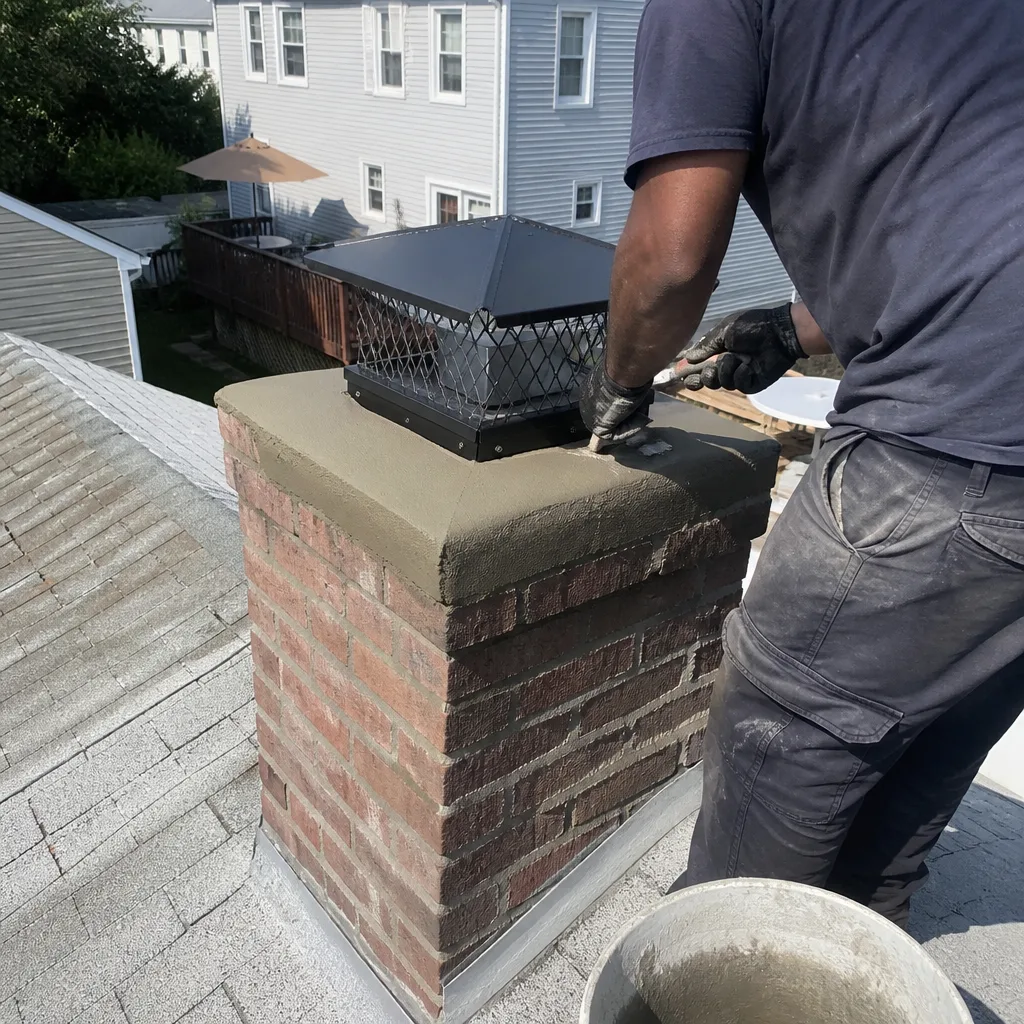
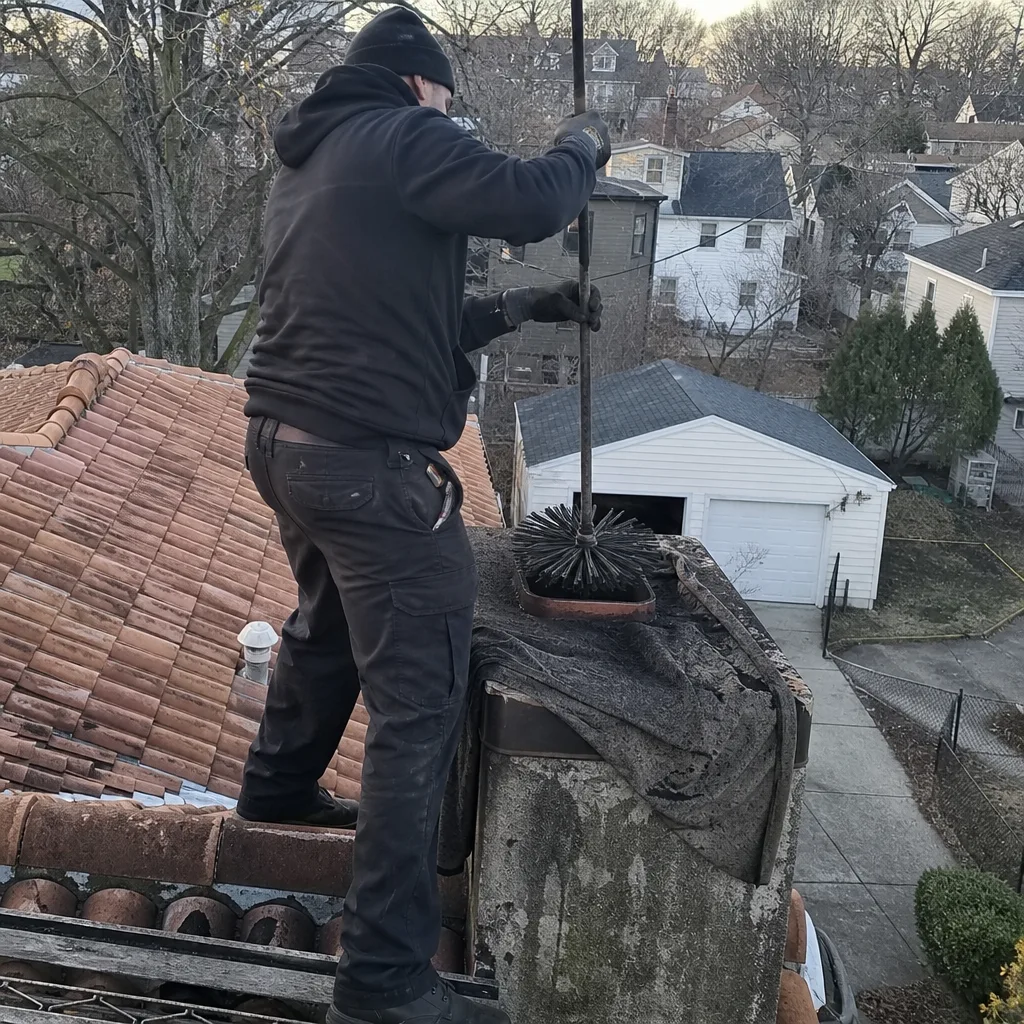
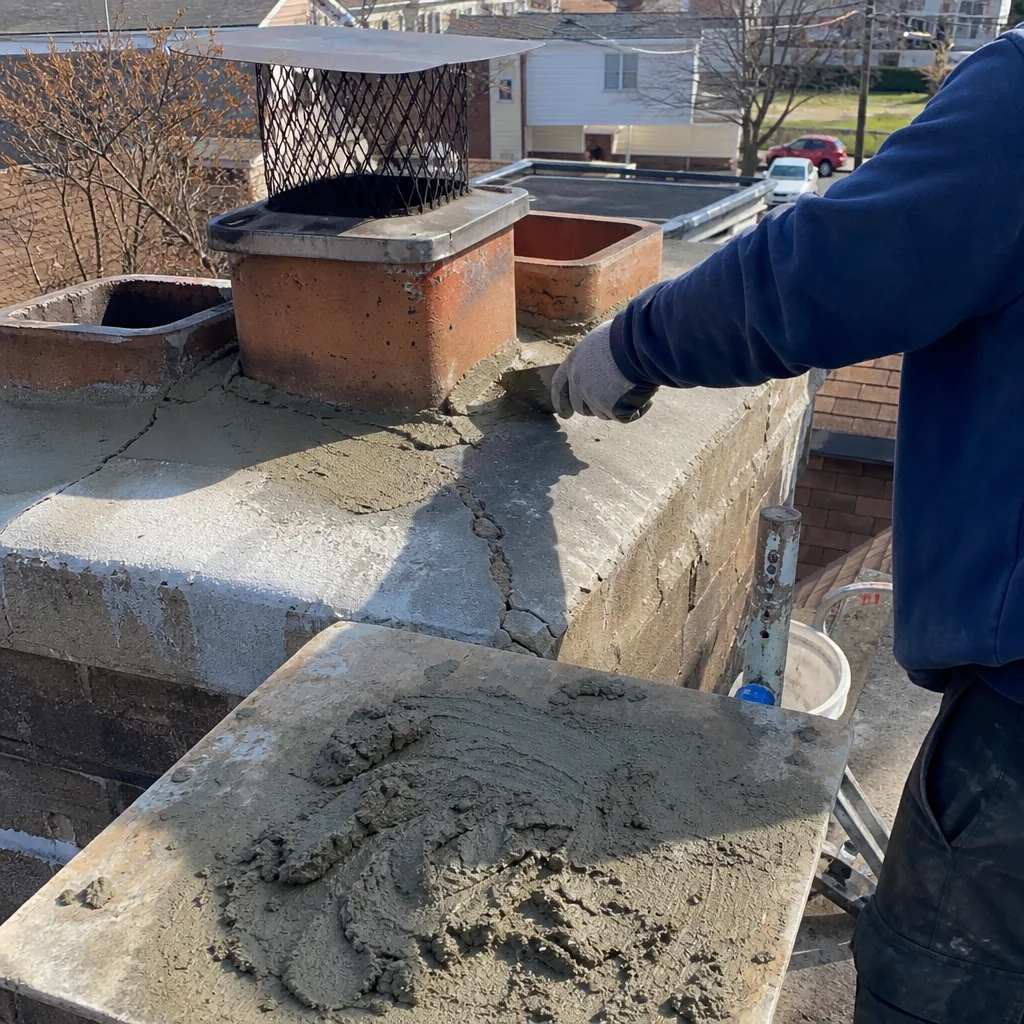
- Pre-inspection and exterior assessment. Before any brush touches the flue, we look at the crown, the cap, the flashing, and the masonry from the roof. In Jersey City, where older rowhouses share chimney stacks, this step also involves checking whether the flue is properly separated from the neighboring unit’s flue. A cracked crown or missing cap changes the entire job, because water intrusion accelerates creosote bonding and liner deterioration.
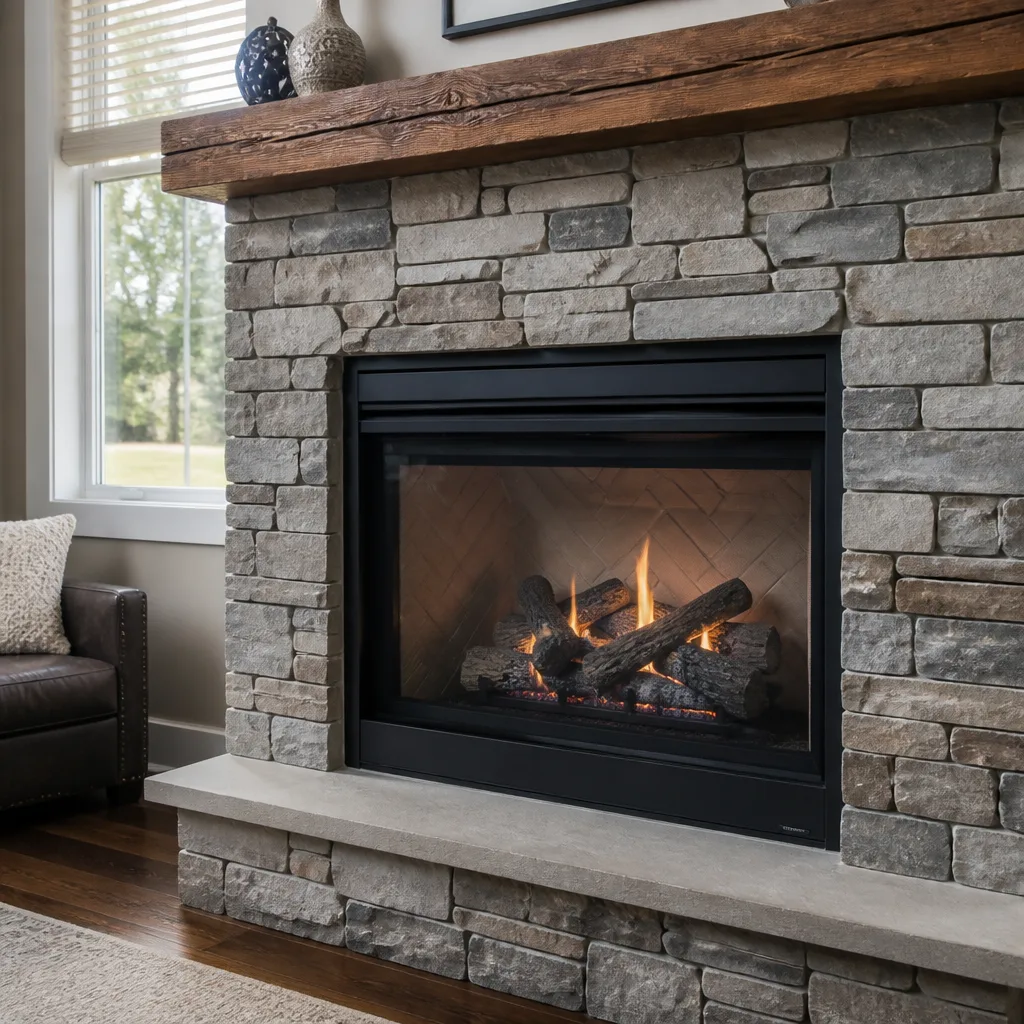
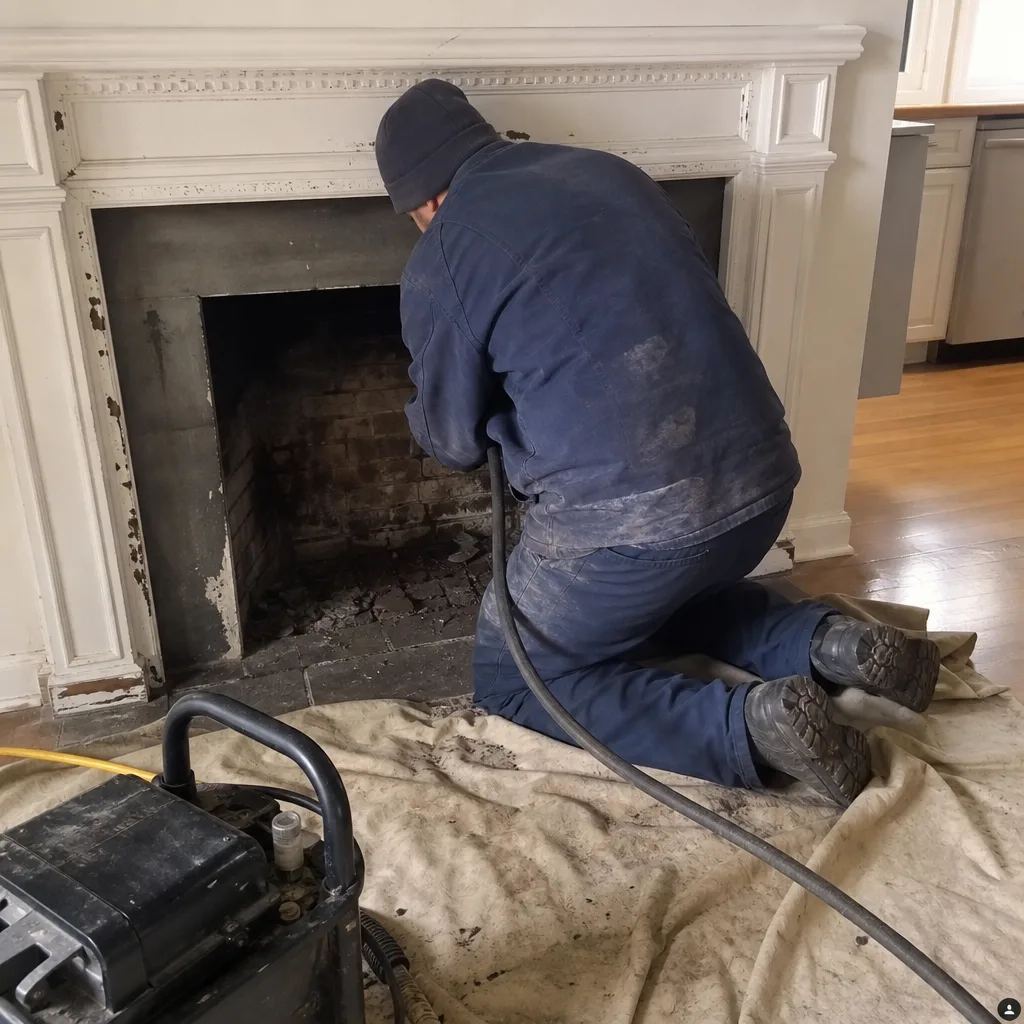
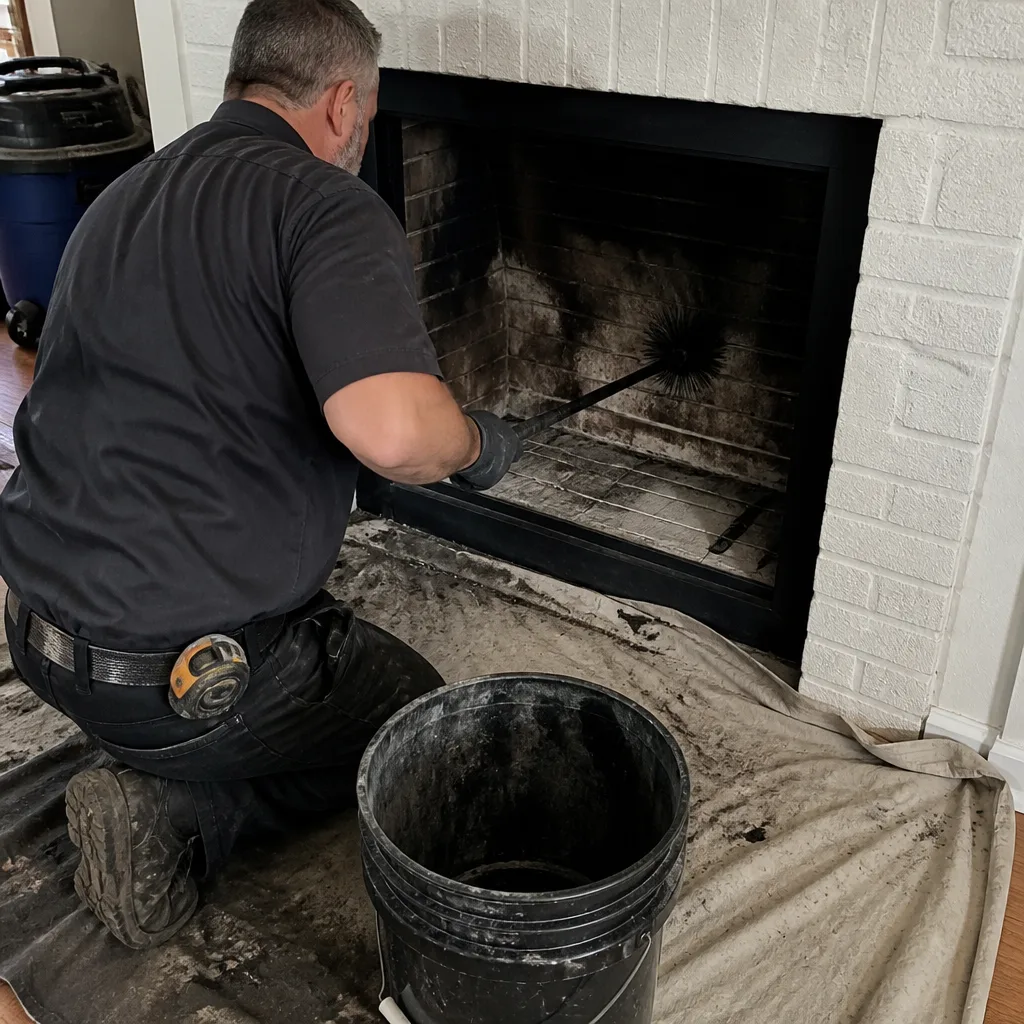
- Fireplace and firebox protection. The firebox floor gets sealed with drop cloths and a high-volume vacuum is positioned at the firebox opening. This is not theater. Without negative pressure, creosote dust migrates into the living space and onto furniture. We’ve seen homeowners in Paulus Hook and Van Vorst Park with soot dust on white sofas because a previous sweep skipped this step.
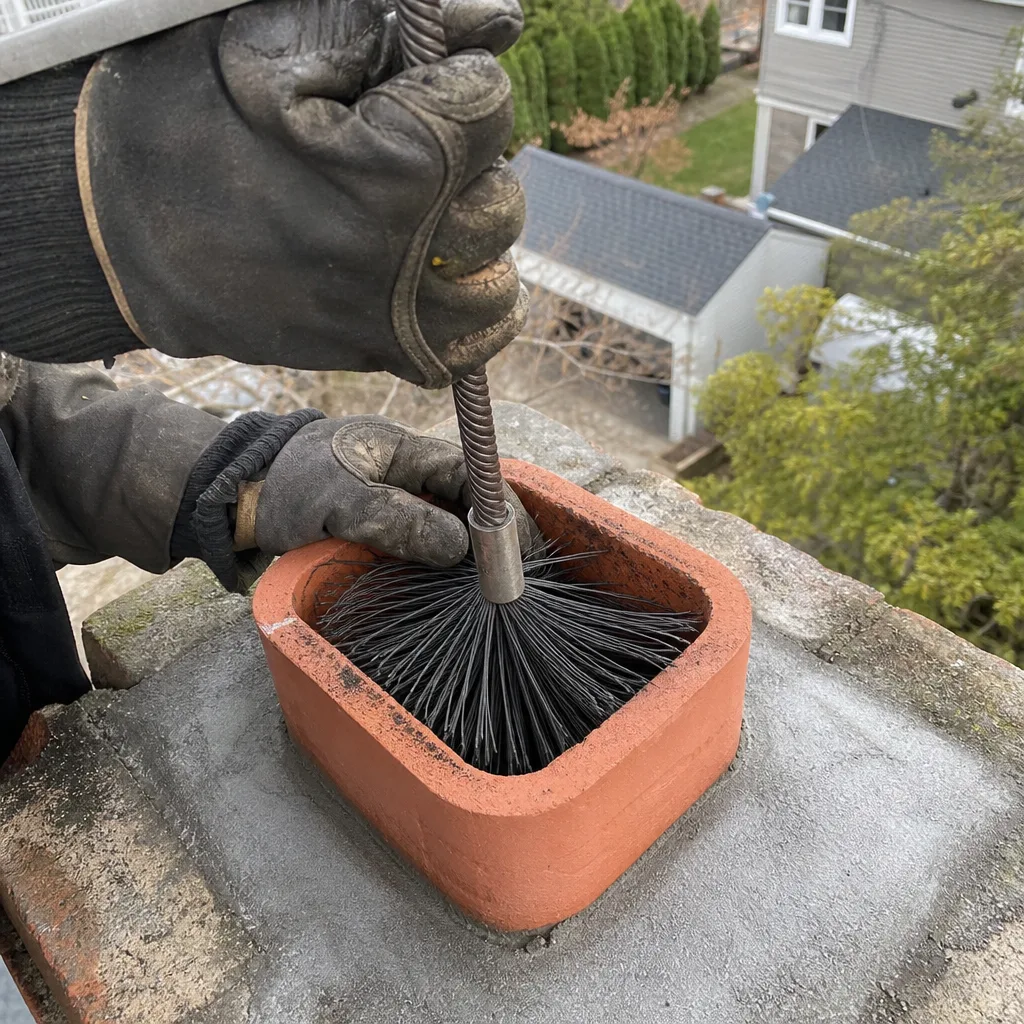
- Flue brushing. Wire or poly brushes sized to the flue diameter are run from the top down (or bottom up, depending on access and liner type). This dislodges creosote, soot, and any nesting material. In a typical Jersey City rowhouse flue, this takes anywhere from 12 to 20 passes to bring the walls back to bare clay or steel.
- Smoke chamber and firebox cleaning. The smoke chamber is the inverted funnel above the firebox, and it’s the most-overlooked surface in chimney cleaning. Creosote and soot accumulate on its corbeled walls because the airflow slows there, and a brush alone won’t clear it. This step requires hand tools and vacuuming from inside the firebox.
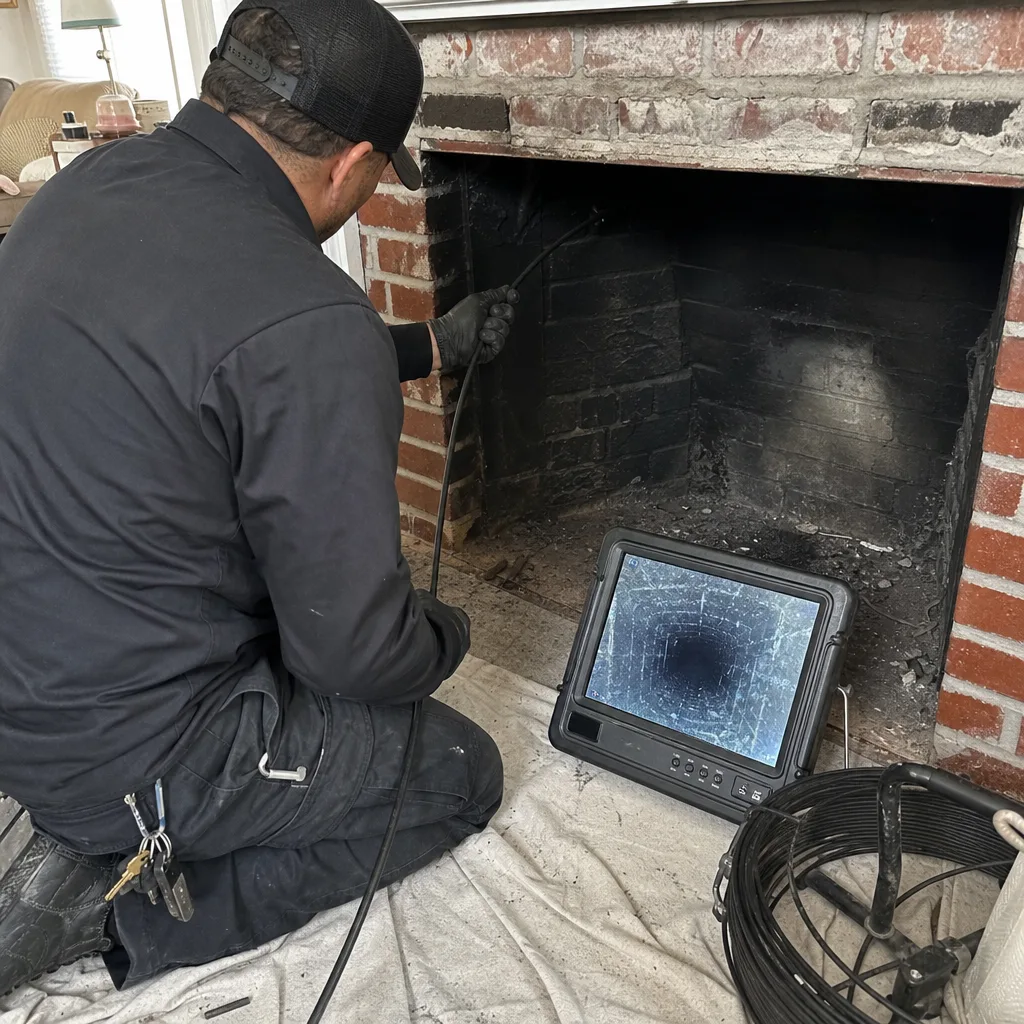
- Post-sweep camera verification. This is the step most sweep companies in Jersey City skip, because it adds time and requires a camera rig. We run the camera after the brushing to verify the flue walls are clean, the liner is intact, and no debris has fallen into the smoke chamber. The footage becomes part of the written record you receive, under Clause 4 of the Haven Standard.
If anyone offers to “clean” your chimney without the camera pass, you’re paying for the first half of the job and guessing about the second half. This isn’t an add-on in our shop, it’s the standard, and it has been since 2009, which is why our service page for Chimney Cleaning & Sweep in Jersey City spells out the full sequence rather than hiding it behind a phone call.
Visual Sweep vs. Level 1 vs. Level 2: Which Inspection Applies to Your Home
NFPA 211 defines three levels of chimney inspection, but in Jersey City’s housing stock, the distinction matters more than in most markets. The wrong level of inspection is the difference between a $250 visit and a $1,500 repair you didn’t see coming. Here’s how each level works, and who actually needs what.
Level 1: Visual inspection of readily accessible areas. This applies when the chimney is being used under the same conditions as before: same fuel, same appliance, same frequency. The technician checks the exterior, the firebox, the damper, and the accessible flue from the top and bottom, using a flashlight where the eye can reach. No camera goes down the flue. No smoke chamber inspection gets done from inside the flue. In a detached home in the Heights with a visible flue and a known maintenance history, a Level 1 is often adequate. In a 120-year-old rowhouse with a shared chimney stack, it’s guesswork.
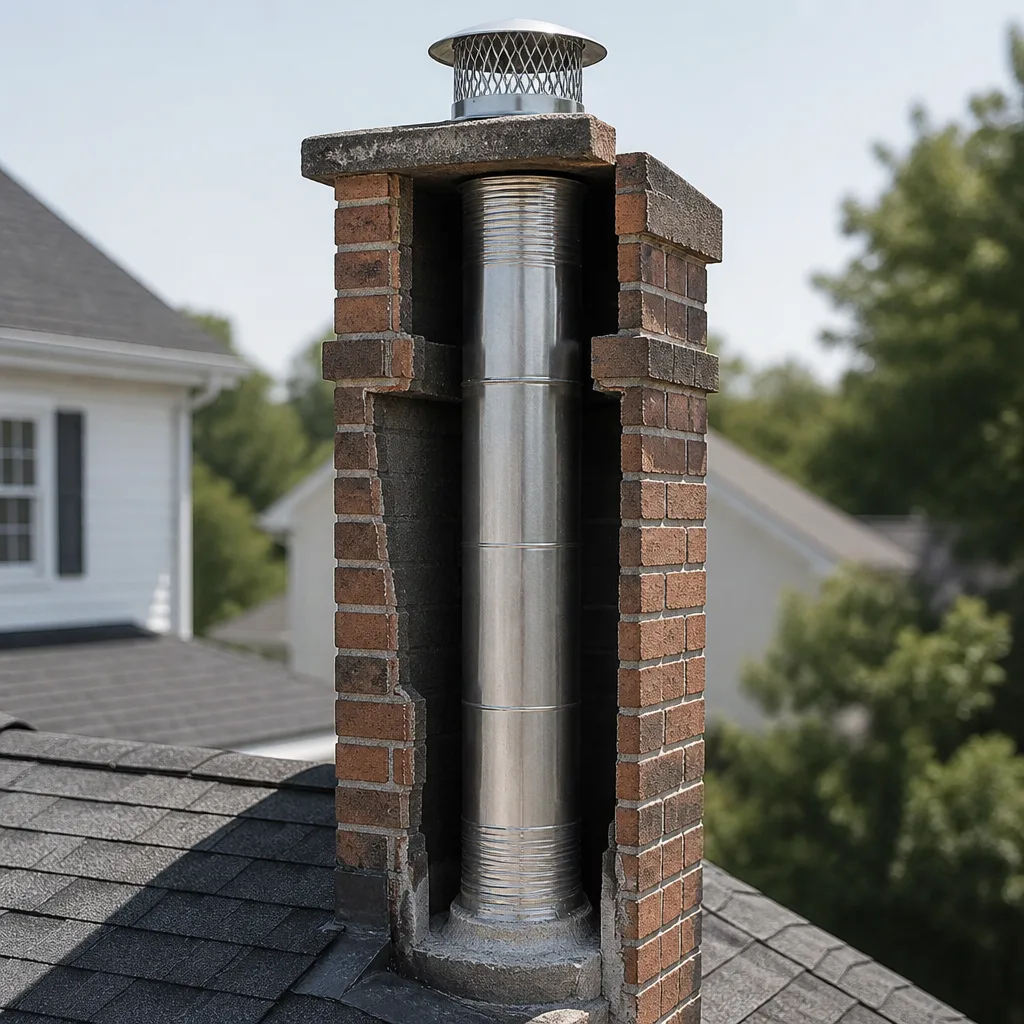
Level 2: Camera inspection of the entire flue interior. A Level 2 adds a video scan of the full flue length, the smoke chamber, and the interior of the firebox, plus the accessible exterior. NFPA 211 requires a Level 2 inspection when the property is being sold or transferred, when the chimney has been damaged by fire, earthquake, or weather, or when the use of the chimney has changed. In Jersey City, with the prevalence of rowhouse construction and the frequency of partial flue collapse in older brick chimneys, we recommend a Level 2 as the default for any home built before 1960, regardless of whether a sale is involved. The camera sees what the flashlight cannot: hidden gaps in the flue liner, deteriorated mortar joints mid-flue, and creosote buildup in the section of flue that runs through the attic where no one ever looks.
What’s not a real option: the “visual sweep.” Some local outfits advertise a “visual sweep” as a low-cost entry point. It’s usually a flashlight check billed as an inspection, with a brush run up the flue if the technician feels like it. There’s no camera, no documentation, and no verification that the flue is actually clean. It’s less than a Level 1 and it should be priced accordingly. When you see “sweep and inspection, $89” on a flyer in the Heights, that’s what you’re buying. And it’s the reason we offer a Free Second Opinion on any written estimate, because a $89 visual doesn’t tell you what you actually need to know.
For a deeper look at how this applies when a chimney has suffered damage, our guide to Chimney Repair in Jersey City covers what the Level 2 camera typically finds in older brick chimneys.
How Much Does Chimney Cleaning Cost in Jersey City?
Name the price range on the page, in dollars. Here’s what chimney cleaning costs in Jersey City as of 2026, based on our work across the city since 2009.
| Service | Typical Jersey City Price Range |
|---|---|
| Standard chimney sweep (Level 1, visual) | $200 - $280 |
| Sweep with Level 2 camera inspection | $320 - $430 |
| Rooftop access fee (steep or high roofs, detached homes) | $40 - $90 |
| Creosote removal, Stage 3 (glazed, hardened buildup) | $380 - $550 |
| Smoke chamber parging (minor, if needed post-clean) | $250 - $400 |
| Cap replacement (standard steel cap, installed) | $140 - $240 |
These are real ranges for the Jersey City market, not national averages. Three local factors push pricing compared to inland New Jersey: the age of the housing stock (most chimneys here were built before 1940, which means crumbling mortar and irregular flue dimensions that demand more labor), the density of the rowhouse blocks (roof access often requires walking shared parapets and coordinating with neighbors), and the salt air, which accelerates masonry deterioration and means more pre-sweep repairs than a comparable home in Morristown or Princeton.
Every job at Level Two Chimney Jersey City gets a written price before any work starts. That means the number you approve is the number you pay, and the scope is written down, not explained over the phone and then “discovered” to be different once the tech is on your roof. This is Haven Standard Clause 1: Have it in writing. No exceptions.
Why Jersey City’s Salt Air Changes the Cleaning Interval
Chimney cleaning intervals are not one-size-fits-all, and the single biggest variable in Jersey City is the salt air coming off Newark Bay and the Hudson River. Salt aerosols settle on brick and mortar, and every rain or snowmelt carries the salt into the masonry pores. When the water evaporates, the salt crystallizes and expands, slowly fracturing the mortar joints. This is called spalling, and it’s visible on half the chimneys we inspect in Downtown Jersey City and Bergen-Lafayette.
Why does this matter for a cleaning schedule? Two reasons.
First, a chimney with spalled mortar joints and a deteriorated crown lets water into the flue. Water mixes with creosote to form a corrosive acid that attacks the flue liner and accelerates Stage 3 creosote formation. A flue that would stay clean for a year in a dry inland climate can develop dangerous glaze in eight months here. We’ve documented this repeatedly in camera footage from homes near Liberty State Park, where the salt loading is highest.
Second, salt air corrodes the metal components, the cap, the damper, the flashing, faster than anywhere else in New Jersey. Losing a chimney cap to rust means animals and water get in, and a rusted damper often seizes in the open or closed position, which changes the draft and drives up creosote accumulation. The practical takeaway: if your Jersey City home is within three blocks of the water, budget for an annual sweep and a visual check of the cap and flashing every spring. If you’re inland, in the Heights or Journal Square, every 12 to 24 months is usually sufficient, but the camera should confirm that rather than a calendar assumption.
We’ve been tracking this pattern since 2009, and the 38,000+ chimneys we’ve inspected in Jersey City and Hudson County bear it out: waterfront homes clean twice as often, and their chimneys show more masonry damage when they don’t.
The Three Creosote Stages: What Each Looks Like on Camera
Creosote isn’t one substance; it’s a family of compounds that form when wood smoke cools below 250°F and condenses on the flue walls. The condition of that creosote determines not just how much cleaning you need, but whether the flue is a fire hazard. Chimney sweeps classify creosote into three stages, and the camera image tells you exactly which one you’re dealing with.
Stage 1: Dusty soot. This is a fine, powdery, gray or black film that brushes off easily. On camera, it looks like ground pepper dusted on the flue walls. It forms in the flue when the fire burns hot enough to keep the smoke moving but not hot enough to prevent all condensation. Stage 1 is normal and expected after a season of burning. A standard brush sweep removes it in minutes, and it doesn’t require special chemical treatment.
Stage 2: Shiny black flakes. As Stage 1 creosote builds and the flue temperature fluctuates, the soot compresses and hardens into shiny, brittle flakes that look like black cornflakes clinging to the flue walls. These flakes can peel and fall into the smoke chamber, where they smolder if a hot fire pushes embers up the flue. Stage 2 requires more aggressive brushing, often with a rotary loop system, and takes roughly twice as long to remove as Stage 1. This is what we see in most Jersey City rowhouses when a homeowner has skipped a season or two.
Stage 3: Glazed, tar-like creosote. This is the dangerous one. Stage 3 creosote looks like a thick, glossy, black coating that resembles hardened lava. It forms when creosote oils are repeatedly heated and cooled without being removed, polymerizing into a dense, fuel-rich glaze. Stage 3 can ignite at temperatures well below a normal chimney fire’s threshold, and once it’s burning, it’s a full-scale chimney fire that can crack the flue liner and spread into the shared walls of a rowhouse. Waterfront homes in Jersey City are particularly susceptible to Stage 3 formation because the salt-accelerated masonry damage lets moisture into the flue, which binds the creosote into a thicker, more adhesive glaze.
Removing Stage 3 creosote typically requires chemical treatment, a rotary chain whip, or both, over multiple passes. It’s not a job for a standard brush. And if the camera shows Stage 3, a responsible sweep will tell you plainly that the liner itself may have been damaged by heat, and a repair is the next conversation. Our Fireplace Services in Jersey City page explains what happens when a routine clean turns into a repair discussion.
How to Read a Sweep Company’s Invoice
A chimney cleaning invoice is the only evidence you have that the work was actually performed. Most homeowners never read theirs. Here’s how to read one, line by line, to confirm you got what you paid for.
First, the invoice should itemize the work, not just state “chimney sweep - $289.” A real invoice from a real sweep lists the steps: flue brushed, smoke chamber cleaned, firebox vaccumed, cap inspected, camera scan performed. If the invoice says “sweep” as a single line item, you were billed for an outcome with no defined scope, which means the scope was whatever the tech felt like doing that day.
Second, look for the inspection level. If there’s no mention of “Level 1” or “Level 2” or “camera scan” on the invoice, you received a visual check, even if you were told otherwise on the phone. In Jersey City, where the rowhouse flues are older and more concealed, a Level 2 camera scan is the only way to know the flue is clean and intact. If your invoice doesn’t say “Level 2,” the camera never went down the flue.
Third, check for the condition report. A legitimate sweep documents what was found: creosote stage, liner condition, crown integrity, cap condition, damper function. If the invoice has no condition notes, you have no baseline for next year and no evidence for your insurance company if something fails. At Level Two Chimney Jersey City, the condition report is generated from the camera footage, and the photos are included in the post-service record on every visit, because Clause 4 of the Haven Standard requires it.
Finally, look for the technician’s name and the date. A crew that shows up unannounced, doesn’t introduce themselves, and leaves an unsigned invoice is a crew you can’t hold accountable. Our technicians are background-checked and uniformed, and the license number is on the page when you book. The name of the tech assigned to your job is on your confirmation, and you get a text when they’re on the way.
If you have a written estimate from another Jersey City company and want to know whether the scope is honest, bring it to us. The Free Second Opinion applies to any written estimate, and we’ll tell you exactly what’s included, what’s missing, and what you should be paying.
What Your Written Post-Service Record Should Contain (And Why It Matters for Hudson County Insurance)
This is the part most homeowners don’t think about until the claim is denied. When a chimney fire or water intrusion damages your Jersey City rowhouse, your insurance adjuster will ask for proof that the chimney was maintained. “I had it cleaned last year” is not proof. A written post-service record with photos is.
A proper post-service record contains five specific items:
- The date of service and the technician’s name. This establishes who performed the work and when, which is the first thing an adjuster checks in a maintenance-requirement dispute.
- The level of inspection performed. “Level 2 with camera scan” or “Level 1 visual.” Without this, the insurer assumes it was a visual check, and in a chimney fire claim, a visual check is insufficient maintenance in many Hudson County policies.
- Photo documentation of the flue interior. The camera images from the post-sweep scan, showing a clean flue and an intact liner. These photos are evidence that the flue was not only brushed but inspected, and that any damage visible post-incident was not present at the time of service.
- A condition assessment. Notes on the crown, cap, flashing, liner, and creosote stage at the time of cleaning. If the crown was cracked and you declined repair, that’s documented. If you repaired it, that’s documented too, and the repair invoice becomes part of your maintenance record.
- The written warranty. Under the Haven Standard, every job at Level Two Chimney Jersey City home includes a written scope, a written price, and a written warranty before any work starts, and those documents are yours to keep. We also archive the record continuously, so if you call us three years later needing a copy for an insurance claim, we can produce it.
In Hudson County, where rowhouse chimney fires are a recurring claim category and shared-wall damage triggers neighbor-on-neighbor insurance disputes, the documentation is not optional. It’s the difference between a covered loss and a decline. The 365-Day Done Right Promise is our backstop: if the work isn’t done right, we make it right, and because the record is documented, there’s no ambiguity about what “right” means.
Common Mistakes to Avoid
- Booking a “visual sweep” for a pre-1960 rowhouse. Older brick flues hide their problems, and a flashlight cannot see a deteriorating liner mid-flue. A Level 2 camera scan is the appropriate default for rowhouses, and skipping it to save $120 is a false economy.
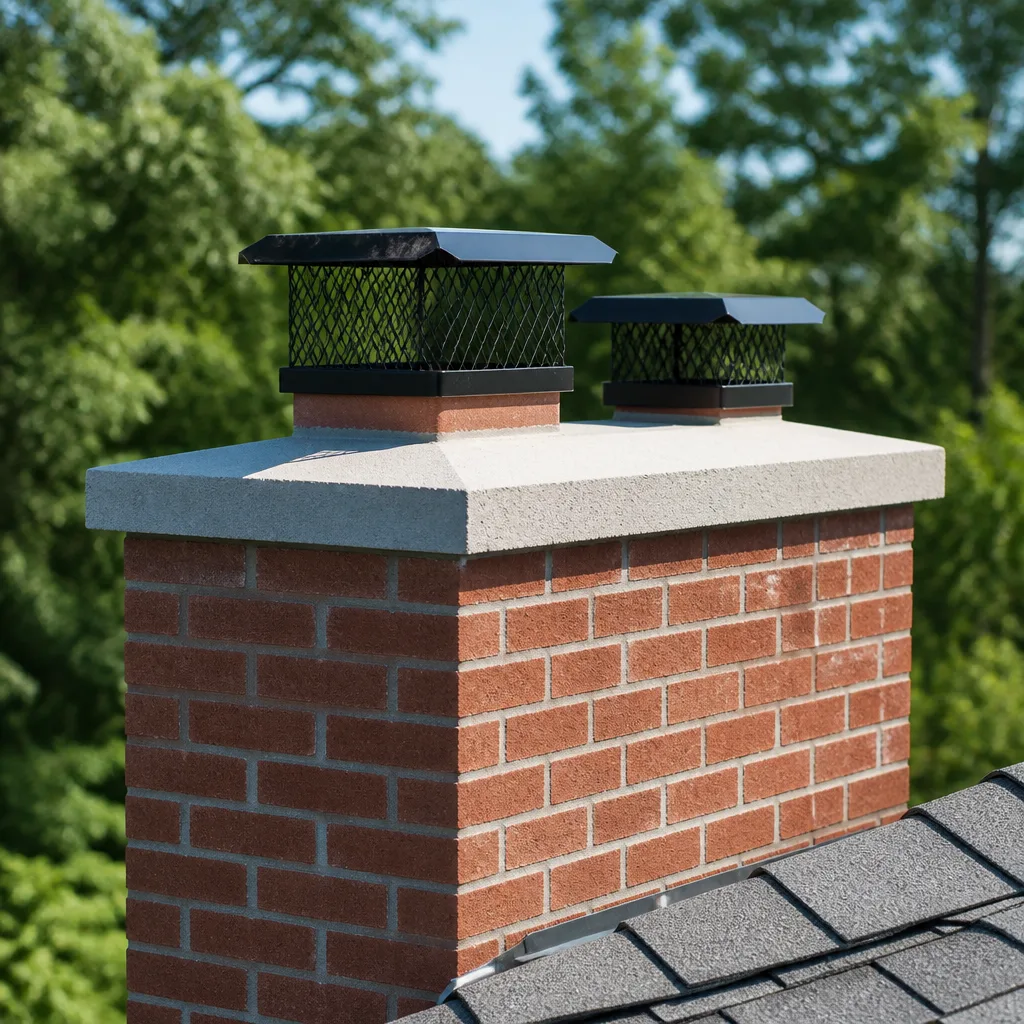
- Skipping the cap because the sweep didn’t mention it. A missing or rusted cap is the leading cause of water intrusion in Jersey City chimneys, and salt air corrodes caps faster than most homeowners expect. If your invoice doesn’t mention the cap, ask why.
- Trusting a price given over the phone without a written scope. A phone quote of “$199 sweep” almost always becomes more once the tech is on the roof, because the scope was never written down. Written price before work starts is the entire point of honest pricing.
- Assuming a gas fireplace doesn’t need chimney service. Gas flues accumulate acidic condensate that corrodes liners, and in attached Jersey City homes, a failed gas flue can vent carbon monoxide into a neighboring unit. Annual gas flue inspection is cheap insurance.
- Ignoring the smoke chamber. Most sweep invoices don’t mention it, and most homeowners don’t know what it is. Creosote in the smoke chamber is the ignition source in many chimney fires, and a thorough sweep includes it by default.
- Filing insurance claims without the maintenance record. Hudson County adjusters require proof of regular cleaning, and if you don’t have it, the claim is significantly harder to win. Keep the photo record and condition report from every sweep.
When to Call a Professional
Call a chimney sweep when you see signs of creosote buildup: a dark, shiny coating on the firebox walls, a smoky smell even when the fireplace isn’t in use, or white ash that looks unusually dark and sticky. Call if you hear animals in the flue, if the damper won’t hold position, or if water streaks appear on the chimney breast after rain. And call after any chimney fire, no matter how small; the flue may be structurally compromised and the only way to know is a camera scan. If you bought a Jersey City rowhouse and have no record of the last cleaning, schedule a Level 2 inspection before you burn anything; our step-by-step guide on hiring a chimney cleaning contractor in Jersey City can help you know what to ask. Level Two Chimney Jersey City offers free estimates in Jersey City; call (862) 272-3868 for a written quote.
Frequently Asked Questions
A standard chimney sweep in Jersey City costs between $200 and $280, while a sweep with a Level 2 camera inspection runs $320 to $430. Homes with steep roof access or Stage 3 creosote will pay on the higher end of the range. Call (862) 272-3868 for a written, line-item quote before any work is scheduled.
If you burn wood regularly, clean it once a year; if your home is within three blocks of the water, the salt air means annual cleaning is the minimum safe interval. Gas fireplaces should be inspected annually and cleaned every two to three years. The right interval depends on what the camera shows, not a calendar.
If your Jersey City home was built before 1960, you use a new appliance, or you have no record of the last inspection, yes. The camera sees liner gaps, hidden creosote, and masonry damage that a flashlight cannot reach, and in rowhouse construction those hidden defects can put a neighbor’s home at risk.
Creosote accumulates in stages, and by Stage 3 it’s a fuel-rich glaze that can ignite and crack the flue liner. In a Jersey City rowhouse, a chimney fire that breaches a shared wall becomes a neighbor’s emergency as well as yours. Skipping cleaning also voids most Hudson County insurance maintenance requirements.
You should receive a written record with the date, technician name, inspection level, condition assessment, and photos from the post-sweep camera scan. That record is your proof for insurance claims, and under the Haven Standard it’s included on every visit, not an optional add-on.
We give you a written price, a written scope, and a written warranty before any work begins, not a verbal number that changes after the tech climbs onto the roof. Send us the details of your home and chimney, and we’ll put the full price on the page in writing. Call (862) 272-3868 to start.
The Bottom Line
Chimney cleaning in Jersey City is a five-step sequence, and the difference between a real sweep and a flashlight check is documented in the invoice and the camera record. The salt air, the rowhouse construction, and the age of the housing stock make this market more demanding than inland New Jersey, which means a Level 2 camera inspection is the appropriate default for most homes here; see our DIY vs Professional Chimney Cleaning guide for Jersey City homeowners to understand why professional inspection matters. A written price before work starts, a documented photo record when it’s done, and a written warranty that backs the work are not extras; they’re the minimum standard. If you own a chimney in Jersey City and you’re unsure what the last sweep actually did, call us. We’ll tell you what we find, show you the photos, and put the price in writing before anyone starts.
Written by Corrine Halstead, Owner at Level Two Chimney Jersey City, serving Jersey City since 2009.