
Last updated September 20, 2026
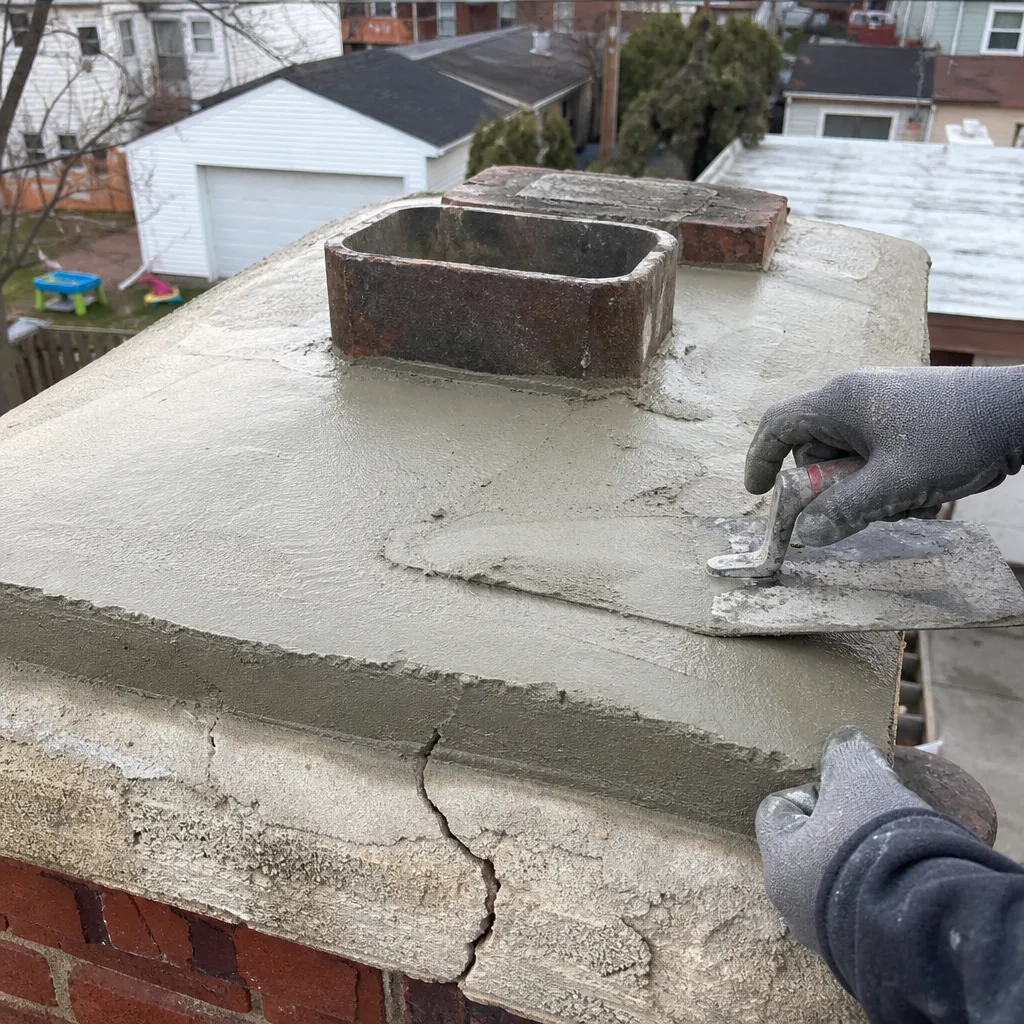
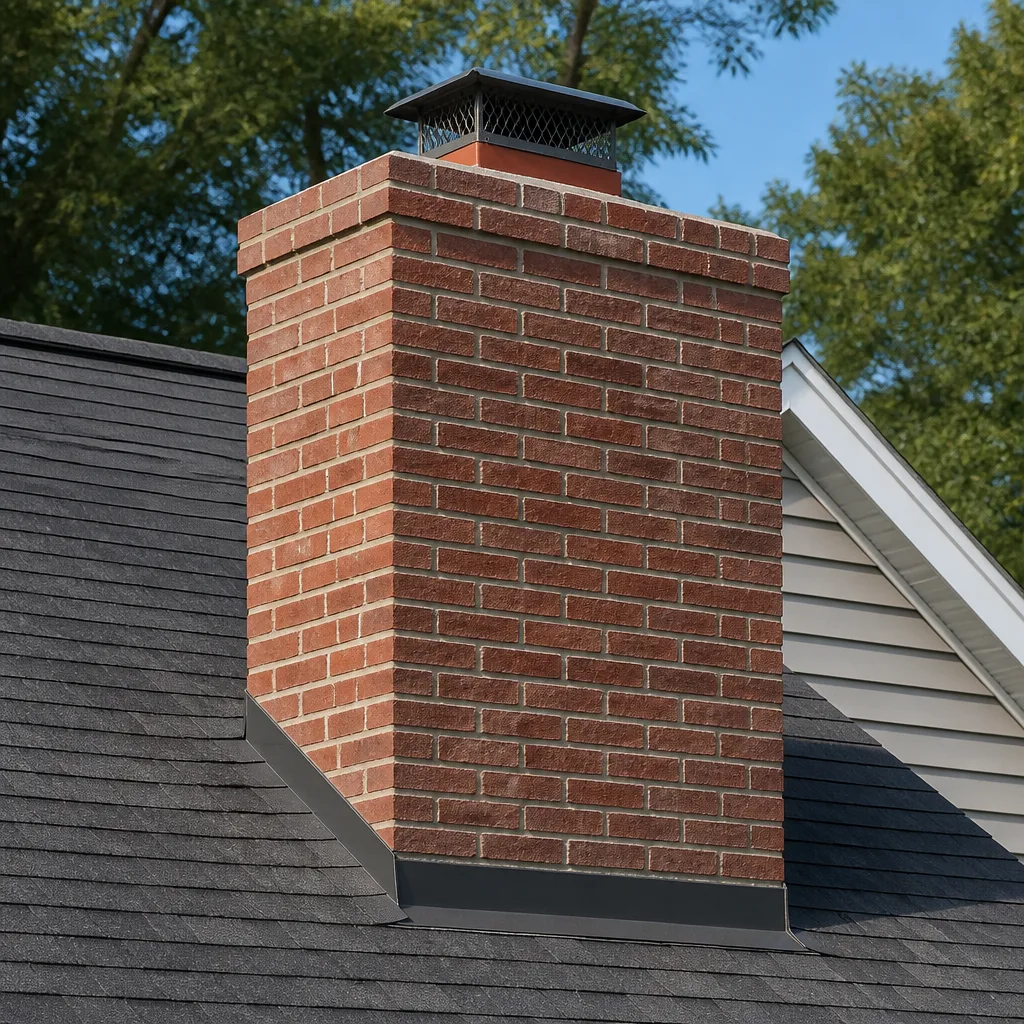
Level 1 sweep and inspection to the NFPA 211 annual standard - flue, crown, cap, and flashing checked and photographed
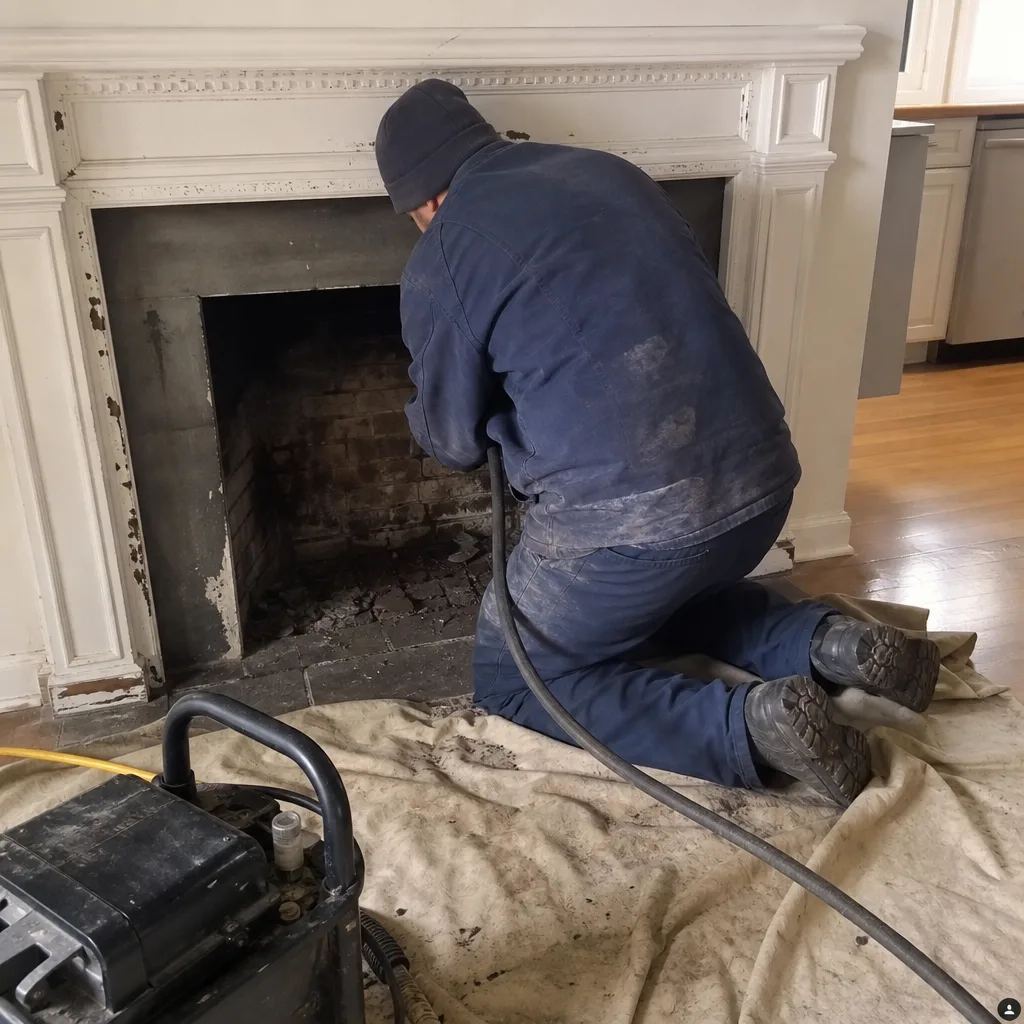
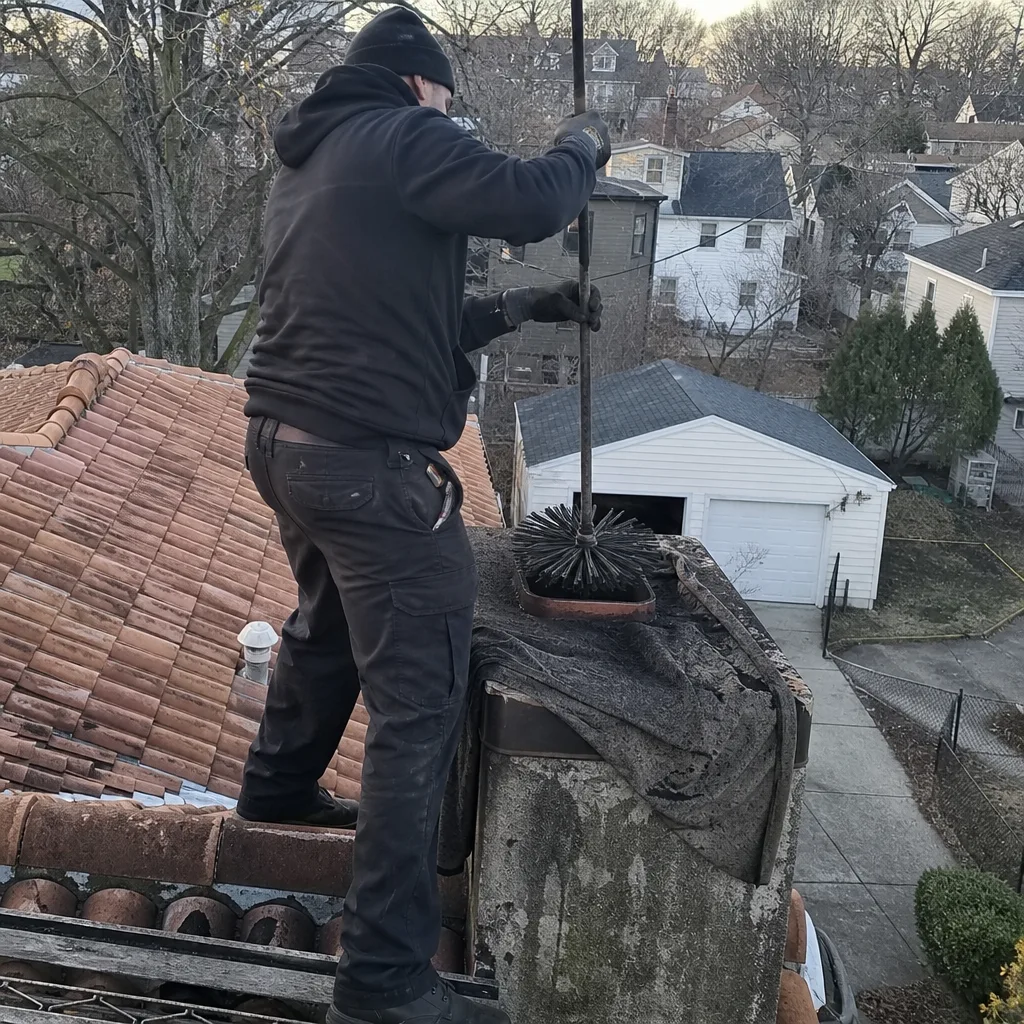
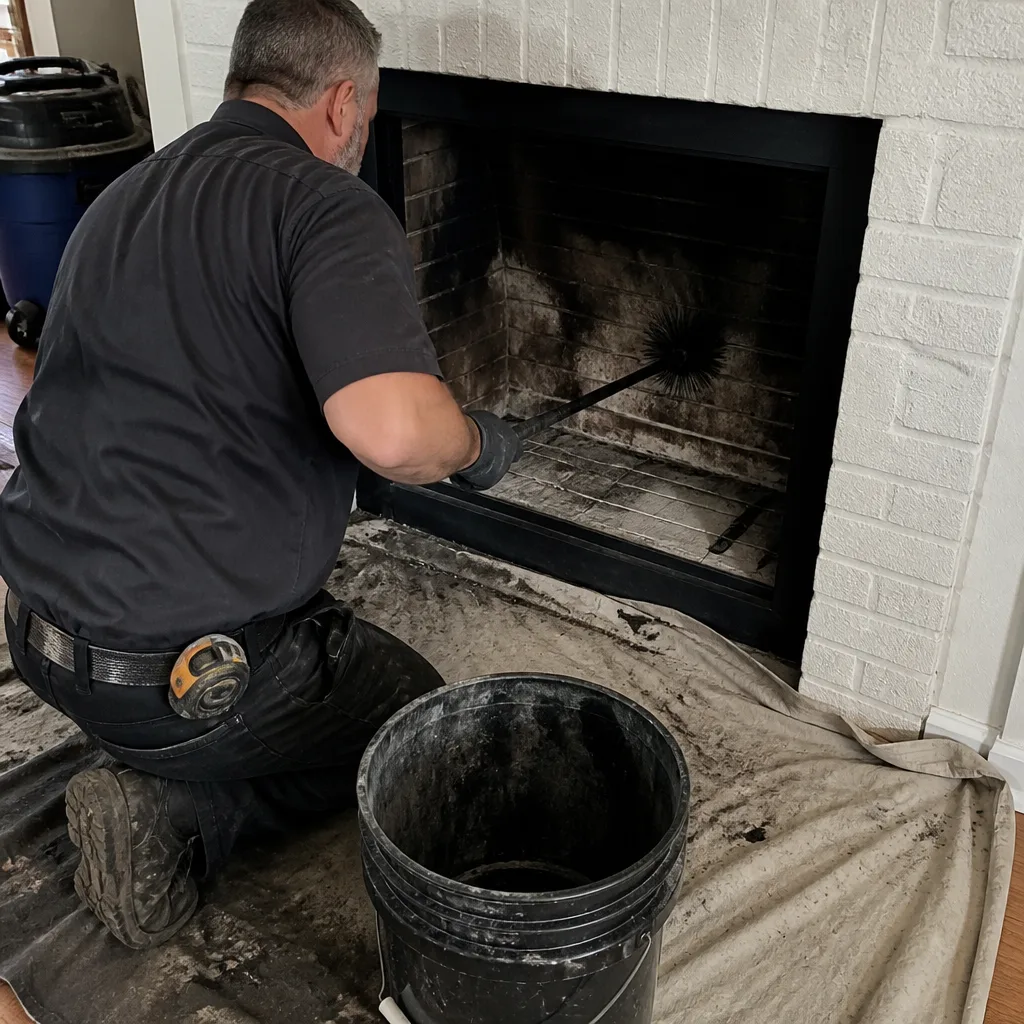
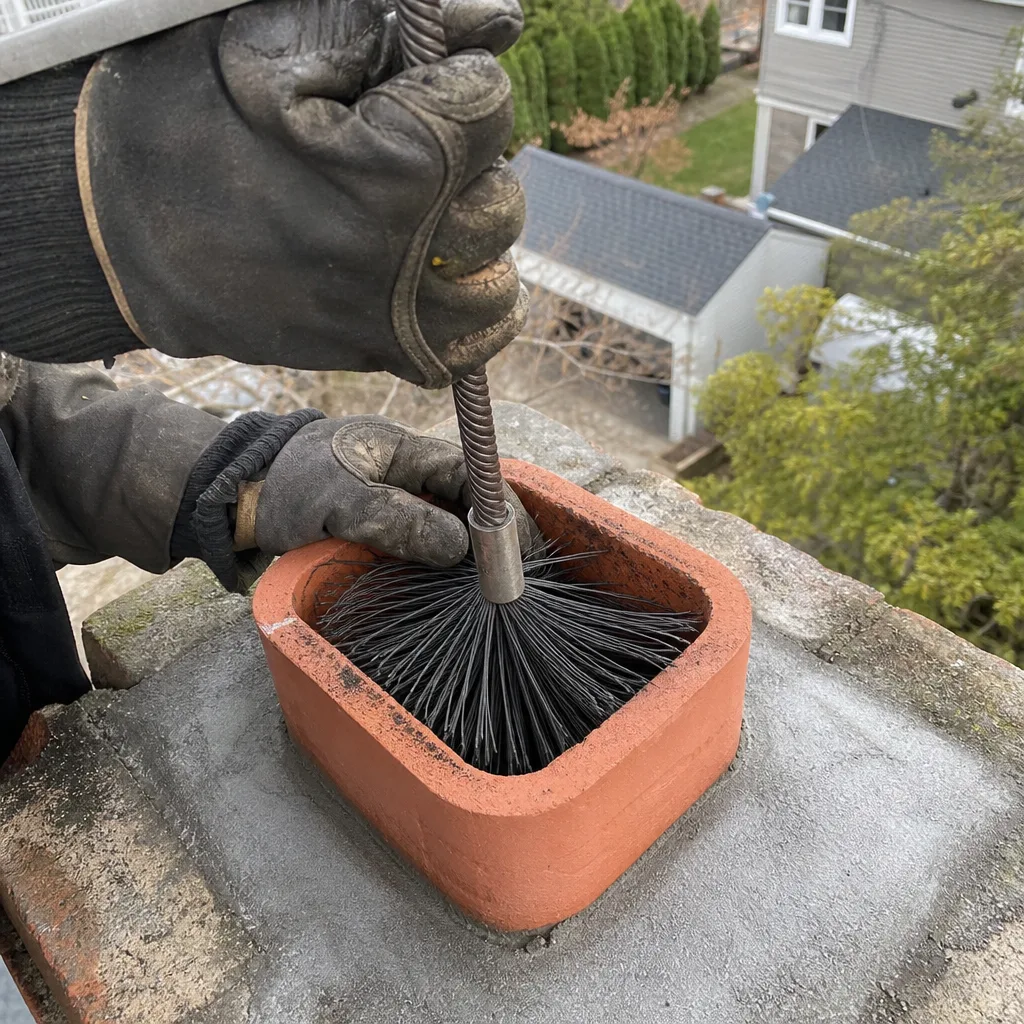
Chimney sweep logs do not sweep chimneys. They loosen some creosote - which then falls where a brush and vacuum still have to collect it.
 Before
 After
After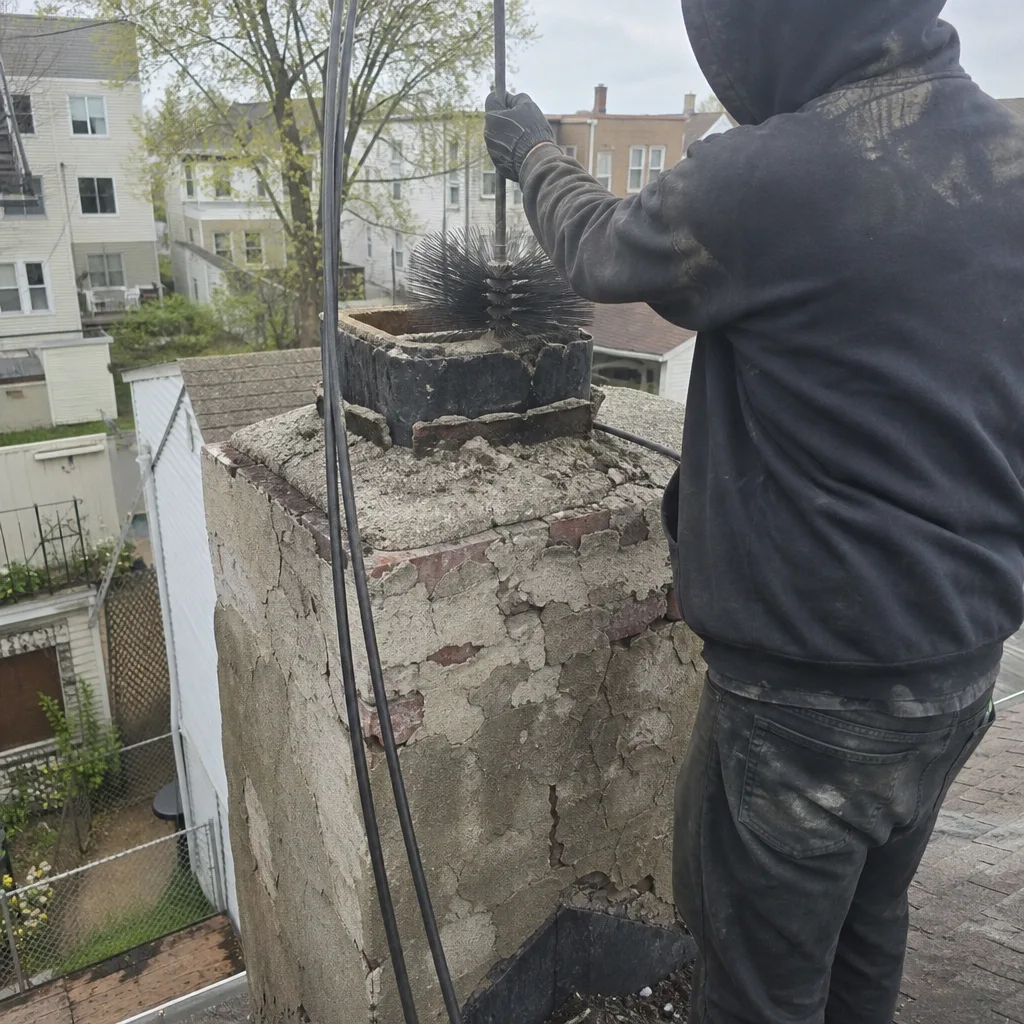 Before
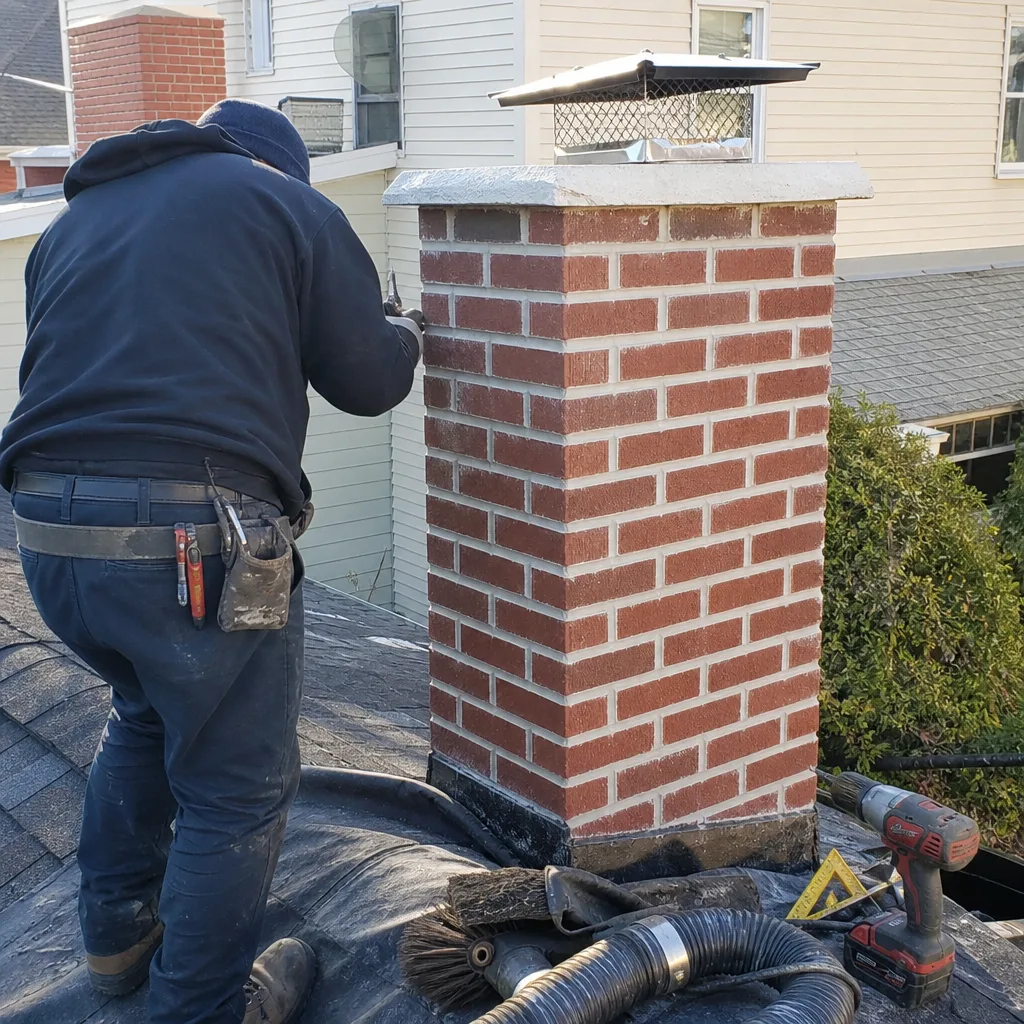 After
After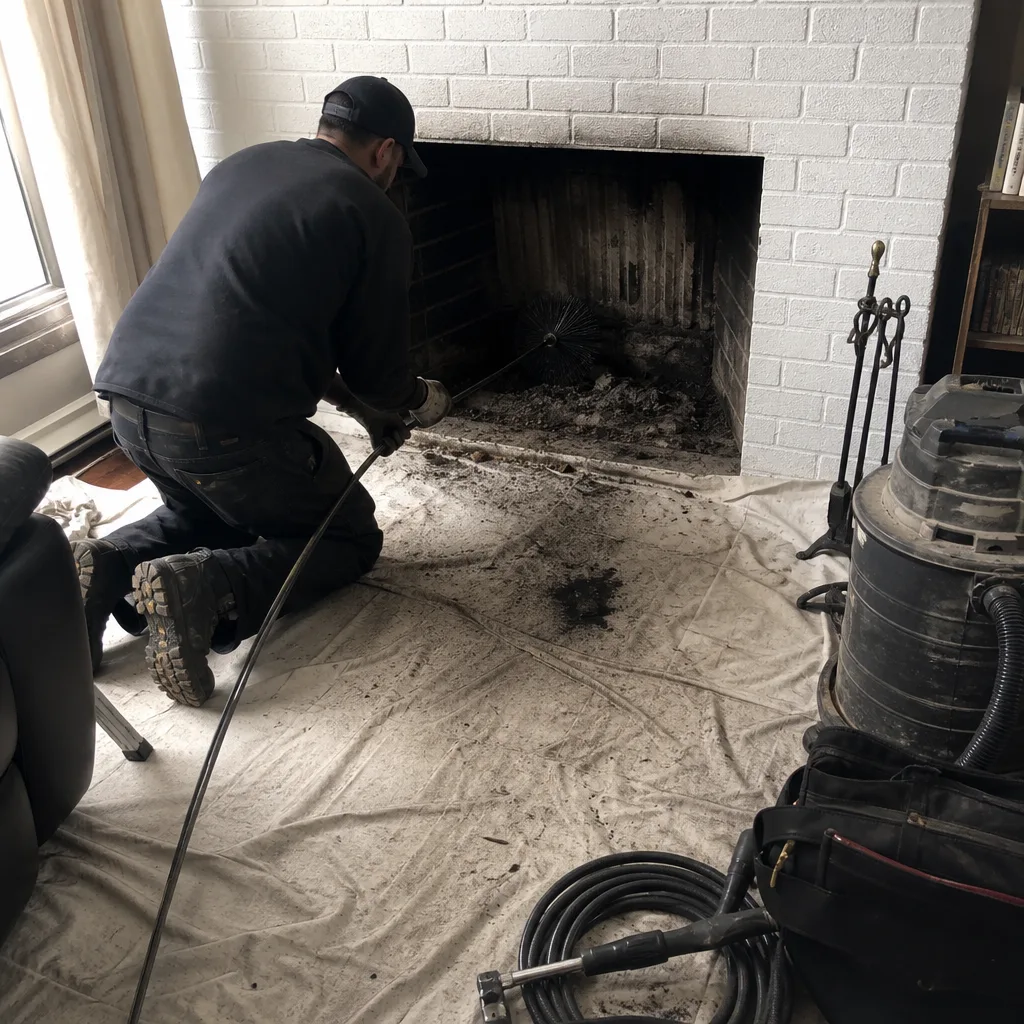 Before
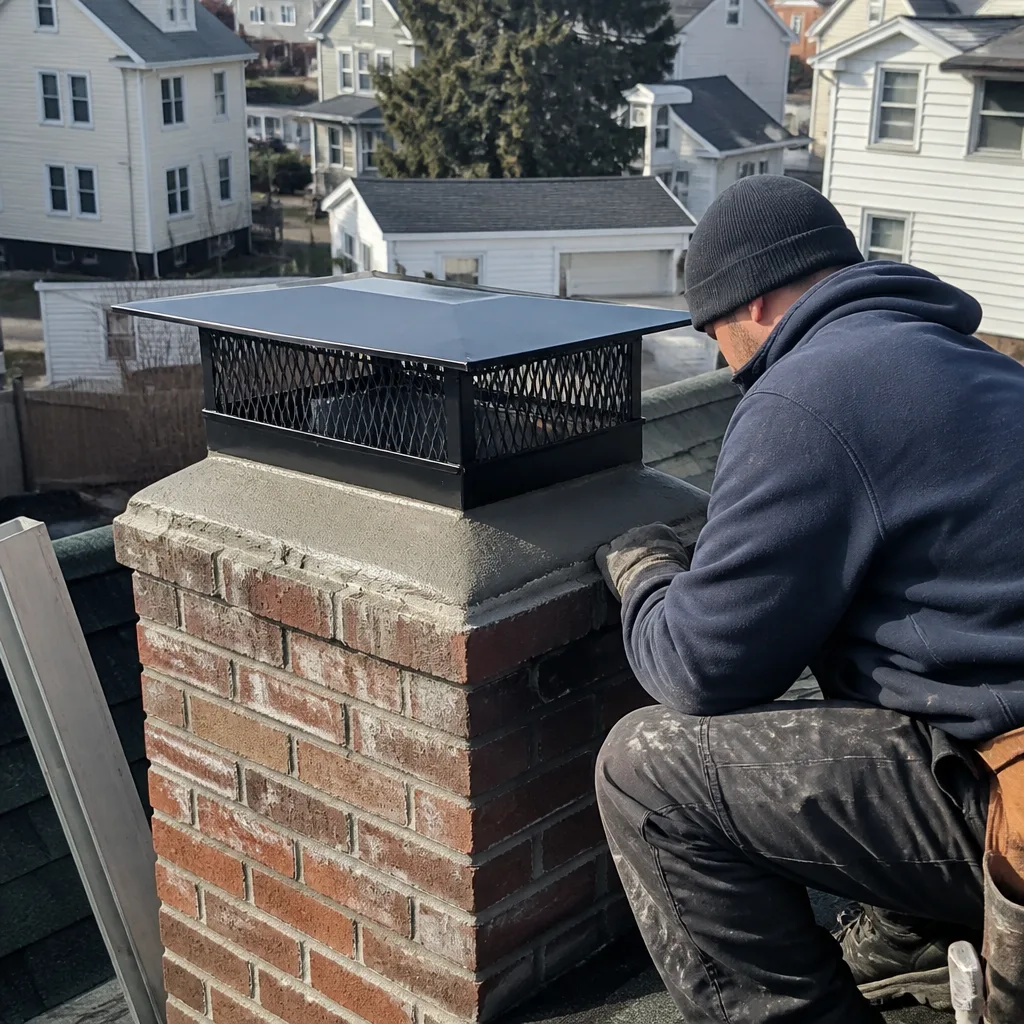 After
AfterChimney Cleaning Permits, Codes & Inspections in NJ: What You Need to Know
Here’s the number most homeowners never hear: in the 2023 and 2024 fire seasons, the New Jersey Division of Fire Safety attributed over 200 residential structure fires to chimneys and fireplaces. But here’s the number that matters more: the State of New Jersey does not require a permit to clean a chimney. It requires one to reline it, rebuild it, or alter its structure. That single distinction, between cleaning and modifying, is where almost every dispute with contractors, insurers, and code officials begins. We’re going to walk through exactly which chimney jobs trigger New Jersey Uniform Construction Code (UCC) permits, how Jersey City’s local inspection process layers on top, and how to keep your records clean for the day you sell, drawing on our complete guide to chimney cleaning in Jersey City. We see this every week in Jersey City, from the brownstones in Paulus Hook to the colonials in The Heights.
Quick Answer
In New Jersey, chimney cleaning (sweeping) does not require a permit, but chimney relining, rebuilding, or any structural alteration to the flue, firebox, or chimney breast does. The controlling document is the New Jersey Uniform Construction Code, specifically N.J.A.C. 5:23, which adopts the International Residential Code (IRC) and International Mechanical Code (IMC) with state amendments. In Jersey City, the municipal Construction Code Office enforces these same rules but requires its own permit application filed at 30 Montgomery Street or online through SDL.
Table of Contents
- What New Jersey Code Actually Says About Chimney Work
- The Permit Line: Cleaning, Inspection, and Repair vs. Alteration and Relining
- How Jersey City’s Municipal Inspection Process Works
- NFPA 211: The Inspection Standard Insurers Actually Reference
- Real Estate Transactions and the Mandatory Level 2 Inspection
- How to Request, Store, and Transfer Permit Records for a Future Sale
- Common Mistakes to Avoid
- When to Call a Professional
- Frequently Asked Questions
- The Bottom Line
 Before
 After
AfterWhat New Jersey Code Actually Says About Chimney Work
New Jersey operates under the Uniform Construction Code, codified at N.J.A.C. 5:23-1.1 et seq. The UCC adopts the International Residential Code (IRC) for one- and two-family dwellings and the International Building Code (IBC) for larger structures, with New Jersey-specific amendments layered on top. Chimney work falls under several specific code sections, depending on what’s being done.
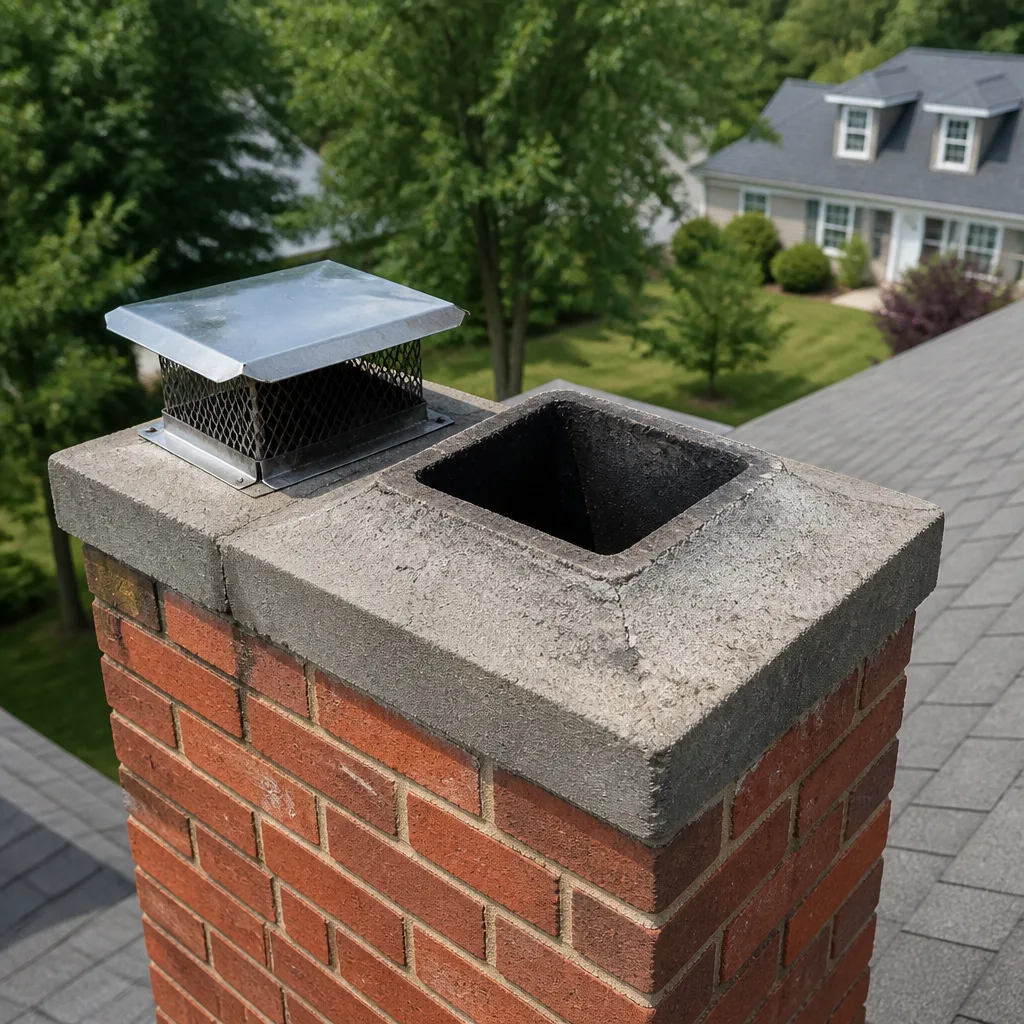
Chimney cleaning, which the code treats as maintenance, is not a construction activity and triggers no permit requirement, though homeowners should still watch for chimney cleaning warning signs. Chimney inspection, likewise, requires no permit. But the moment you alter the flue liner, rebuild the crown, replace a firebox, or tear down and rebuild chimney masonry, you are in the realm of construction, and the UCC kicks in.
The specific sections that govern chimney construction and alteration include:
- IRC Chapter 10 (Chimneys and Fireplaces): governs construction, sizing, and clearances for masonry and factory-built chimneys. Sections R1001 through R1006 cover seismic reinforcement, footing requirements, and termination heights above roofs. If you rebuild a chimney in New Jersey, this is the chapter the local code official enforces.
- IMC Chapter 8 (Chimneys and Vents): governs wood, pellet, and gas venting. Section 801 addresses appliance connections, and it matters when a liner is sized for a new appliance. A liner that was fine for a 1980s oil burner may be oversized or undersized for a new high-efficiency gas unit, and the IMC is where that sizing gets enforced.
- N.J.A.C. 5:23-2.14 (chimneys and vents): New Jersey’s own amendment governing chimney repair and replacement, including specifics on flue lining materials and when a liner must be brought to current code.
- N.J.A.C. 5:23-6 (rehabilitation subcode): applies to work on existing buildings. This is the section most relevant to Jersey City homeowners, because it governs alterations to old chimneys, and it specifies when a partial repair triggers a requirement to bring the entire chimney up to current code. In practice, this is why a “simple” crown repair can become a full rebuild.
What our technicians see regularly in Jersey City is that homeowners and even some contractors treat the chimney as outside the code’s reach. It isn’t. The state treats a chimney as a structural and life-safety component of the building envelope. The flue is part of the mechanical exhaust system. Both are regulated.
The Permit Line: Cleaning, Inspection, and Repair vs. Alteration and Relining
This is the section to bookmark. Here is the actual line, as we have applied it on thousands of Jersey City jobs since 2009.
No permit required:
- Chimney sweeping and creosote removal, including from the flue, smoke chamber, and firebox
- Chimney inspection at any level (Level 1, Level 2, or Level 3 under NFPA 211)
- Minor surface repairs that do not alter structure: repointing a few loose bricks, sealing hairline cracks in a crown, replacing a damper
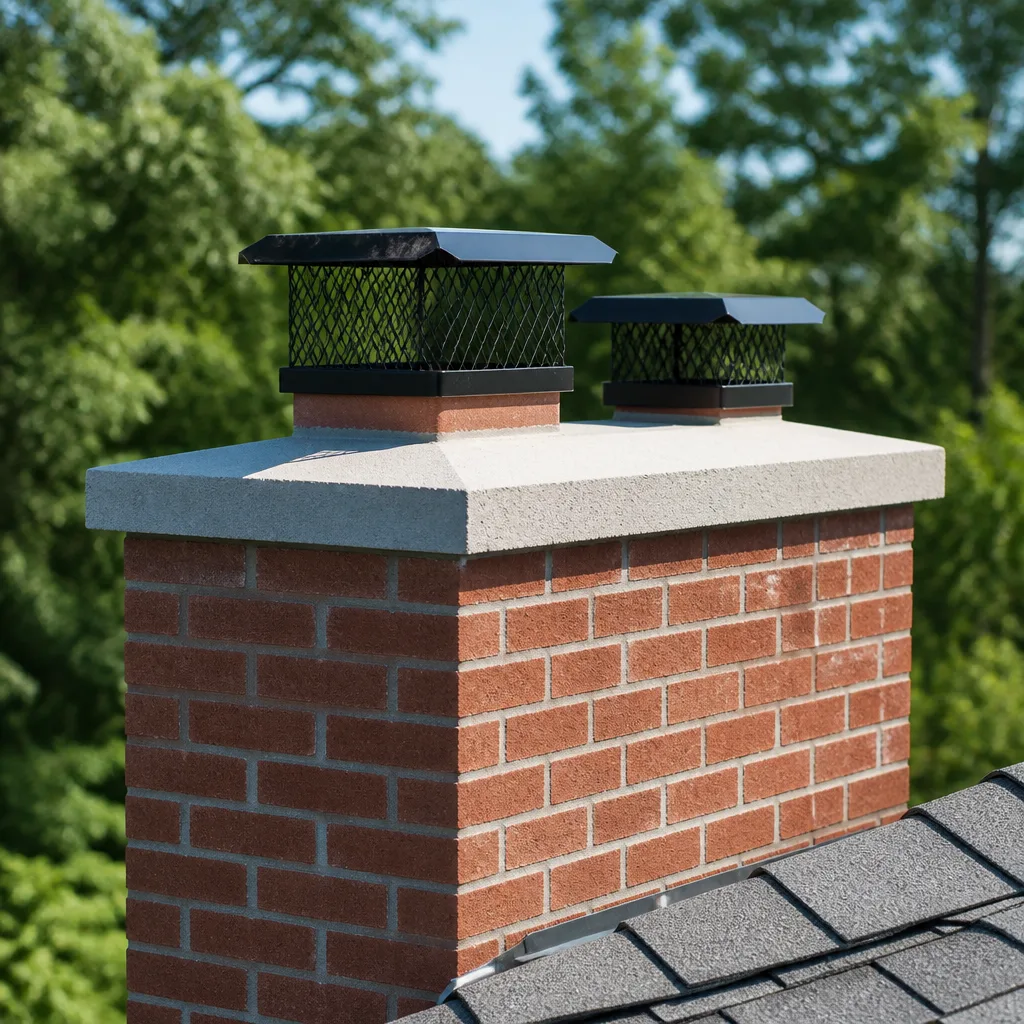
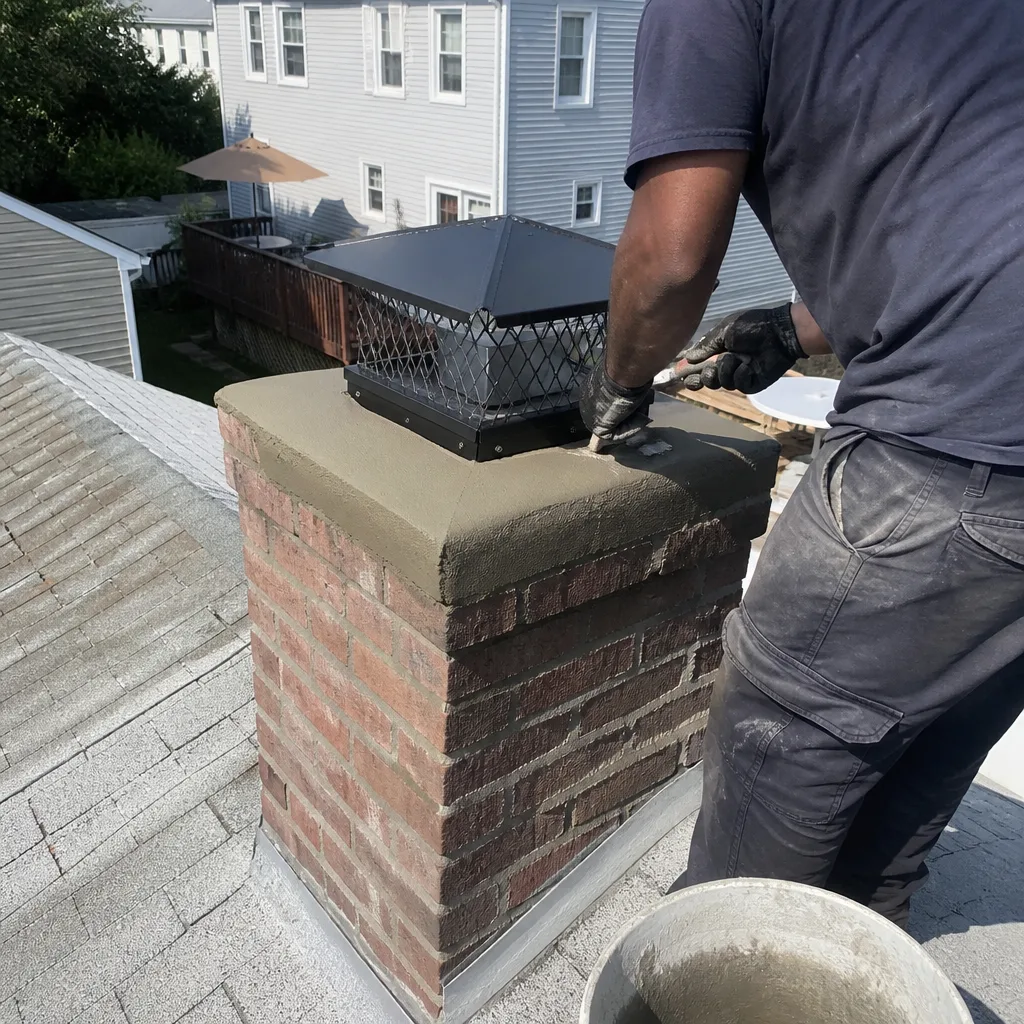
- Chimney cap installation, provided no structural alteration is needed
- Camera scanning of the flue interior
Permit required:
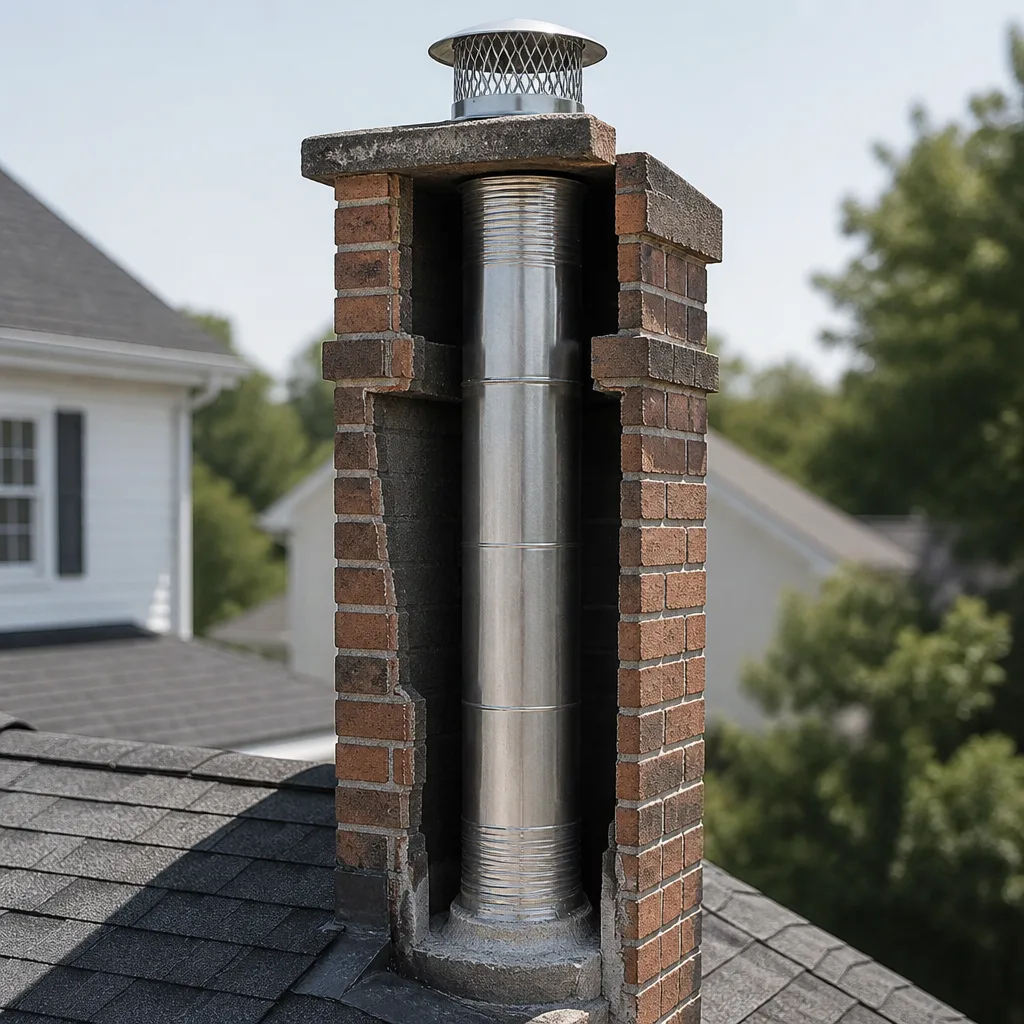
- Chimney relining with a stainless steel liner, a poured-in-place liner, or a clay tile replacement. This is an alteration to the exhaust system, governed by IRC R1001 and N.J.A.C. 5:23-2.14. If you buy a house and the seller tells you the chimney was “recently relined,” ask for the permit. In Jersey City, an unpermitted liner is the single most common issue we flag during pre-purchase inspections in The Heights and Bergen-Lafayette.
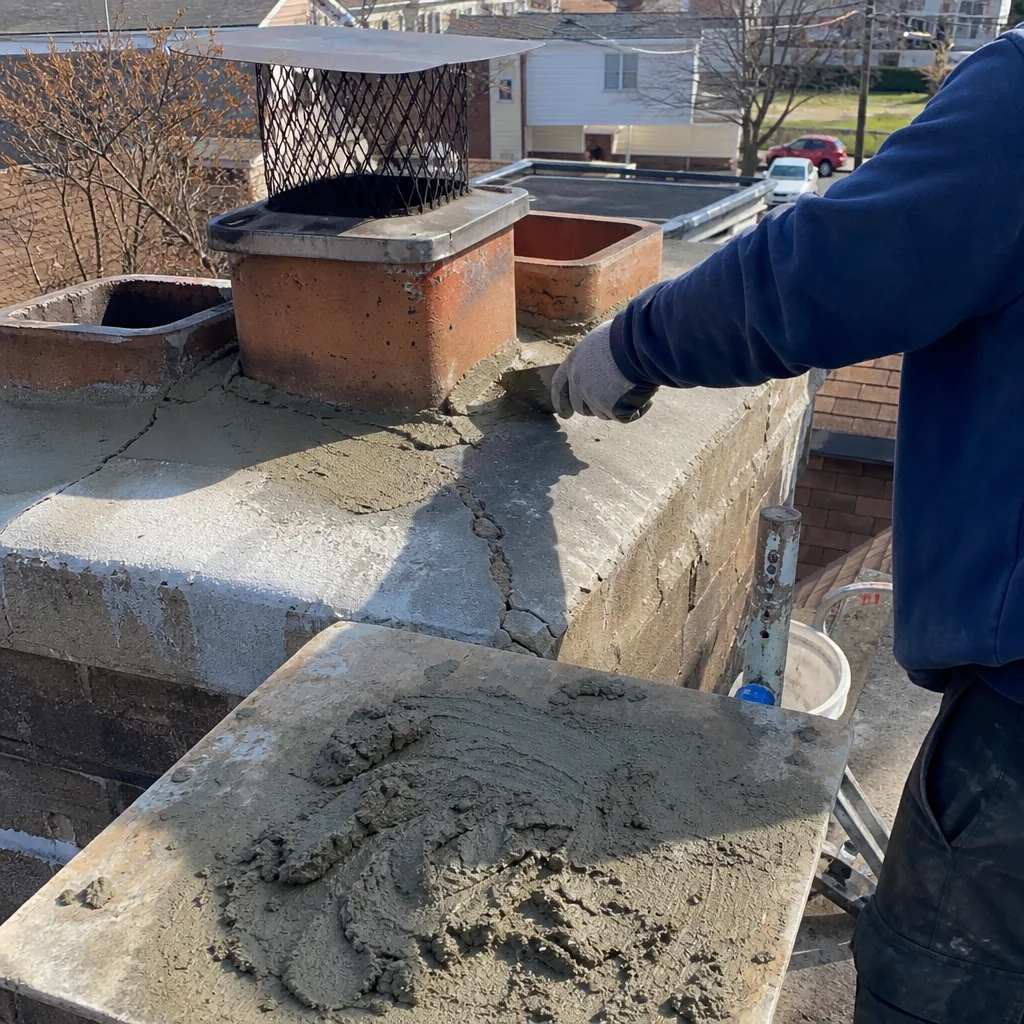
- Chimney rebuild, whether partial (above the roofline) or full. The moment you demolish masonry and lay new brick, you are constructing. In Jersey City, this requires a building permit, and depending on the height and setback, potentially a zoning review.
- Firebox reconstruction. Rebuilding a firebox is an alteration to the fireplace assembly and always requires a permit. We’ve seen handymen pour new refractory panels with no permit and no inspection, and the work typically fails within two to three seasons because no one verified clearances to combustibles.
- Flashing repair that involves structural alteration. Replacing a small section of step flashing around a dormer chimney is maintenance. Rebuilding the cricket or replacing the roof decking around the chimney is construction. In Jersey City, where row houses share party walls, a chimney rebuild on one side can affect the neighbor’s flashing. That’s precisely the situation where a permitted, inspected job protects you.
- Smoke chamber parging or rebuild. This is an alteration to the fireplace assembly and triggers a permit.
The contractor who tells you “we don’t need a permit for a liner” is either wrong or is trying to keep their price down by skipping the permit fee and the inspection. Either way, the liability lands on you, the homeowner. In our experience, Jersey City code enforcement has become increasingly rigorous on unpermitted chimney work since 2020, particularly after a series of chimney fires in the Journal Square area that were traced to unpermitted liner installations.
How Jersey City’s Municipal Inspection Process Works
Jersey City is one of the few municipalities in New Jersey with its own Construction Code Office that operates semiautonomously from the state Department of Community Affairs. The office is part of the Division of Housing Preservation and is responsible for enforcing the UCC as amended by local ordinance.
Here is the process a Jersey City homeowner should expect when permitting a chimney reline or rebuild:
- Permit application. Filed online through the Jersey City SDL portal or in person at 30 Montgomery Street. The application requires the contractor’s NJ construction license number (HIC registration for home improvement, or a building contractor license), a description of the work, and in some cases, a to-scale plan. For a chimney rebuild, the city wants a sketch showing existing and proposed dimensions.
- Plan review. For major chimney structural work (rebuilds, full relining), the city will conduct a plan review. In our experience, turnaround for a chimney plan review in Jersey City is currently one to three weeks. A simple liner replacement typically skips full review and gets issued over the counter.
- Rough inspection. Once the liner is physically in place but before the top plate and crown are sealed, the inspector comes out to verify the liner size, the connection to the appliance, and the clearance from combustibles. This is the inspection that matters most. If a contractor installs a liner without one, there is no independent record that the liner is the right size or correctly connected.
- Final inspection. After the crown, cap, and flashing are complete, the final inspection closes the permit. The city inspector at this stage is checking roof termination height, crown slope, and the firestop at the chimney chase or attic penetration.
- Permit close-out and certificate. When the permit is closed, the city produces a Certificate of Approval. This document is what you will show a buyer’s inspector at resale. Without it, the work is considered unpermitted in the city’s records, even if it was done well.
One Jersey City-specific nuance worth knowing: because much of the city’s housing stock is attached row houses, the city takes a stricter view of party-wall chimneys. A chimney that sits on a shared wall may require sign-off from the adjacent property owner before the permit is issued. We’ve helped homeowners in Hamilton Park and Van Vorst Park navigate this, and it’s the kind of detail a contractor who doesn’t work in Jersey City will miss until the application stalls.
NFPA 211: The Inspection Standard Insurers Actually Reference
NFPA 211, “Standard for Chimneys, Fireplaces, Vents, and Solid Fuel-Burning Appliances,” is the document insurers name when they deny a claim or demand proof of maintenance. It’s published by the National Fire Protection Association, and New Jersey has adopted it by reference in both the UCC and the state fire code. If you file a chimney fire claim and the adjuster asks when the chimney was last inspected, they’re applying NFPA 211.
NFPA 211 defines three levels of inspection:
- Level 1: a visual check of readily accessible areas, appropriate for a chimney that has been in continuous use with no changes. This is what most “inspection included with sweep” checkups are.
- Level 2: a more thorough inspection that includes a camera scan of the flue interior, the attic, the crawlspace, and any accessible chase. NFPA 211 requires a Level 2 when the property is being sold, when the system has been changed (new appliance, new liner), or after an event like a chimney fire, lightning strike, or earthquake. The camera-scan documentation we produce on every visit, and have done since 2009, is the exact deliverable that satisfies a Level 2 under this standard. It became Clause 4 of the Haven Standard because we realized years ago that without photos, a visual inspection is just a technician’s word.
- Level 3: an invasive inspection that involves opening concealed areas. This is for when a Level 2 finds something that requires seeing the inside of a wall or chase. It’s rare, and it’s expensive, but it’s also the only way to fully document a hidden hazard.
For a Jersey City homeowner, the practical takeaway is this: if your house is going on the market, have a Level 2 camera-scan inspection done during the listing period, not after the buyer’s inspector flags something, using our Chimney Cleaning & Sweep Maintenance Checklist for Jersey City Homeowners. A clean Level 2 report, with dated photos of the flue, firebox, and crown, is the single most effective piece of paper you can hand a buyer who’s nervous about an old masonry chimney. It gives their agent something to cite. More importantly, it moves the disclosure conversation from “unknown” to “documented,” which changes the negotiation entirely.
Real Estate Transactions and the Mandatory Level 2 Inspection
Jersey City sees some of the highest resale volume in New Jersey. In 2024 alone, the city recorded over 5,000 residential deed transfers. Every one of those homes, if it has a chimney, falls under the same NFPA 211 requirement: when a property changes hands, the chimney should have a Level 2 inspection.
The word “should” matters. NFPA 211 is a standard, not a law, and New Jersey does not legislatively mandate a Level 2 at closing the way some states mandate septic or well inspections. That’s precisely the problem. Sellers skip it because it’s not legally required. Buyers unknowingly assume the home inspection covered the chimney, when in fact a standard home inspection is a Level 1 at best, and often just a glance from the ground with binoculars. Then the new owner’s first winter fires up the fireplace, and the camera reveals a cracked flue liner that should have been caught at closing.
This plays out differently in Jersey City’s market:
- Brownstones and pre-war row houses (Paulus Hook, Van Vorst Park, Harsimus Cove): chimneys are often original to the building, unlined or clay-tile lined, and if the house was converted from multifamily to single-family, the chimney may have been repurposed for a gas boiler with no liner sizing check. A Level 2 camera scan is the only way to see what’s actually in there. We routinely find Class III creosote (the hard, tarry glaze that forms in unlined flues and is a fire accelerant) inside chimneys that looked fine from the roofline.
- Post-war single-family homes (The Heights, Country Village, Greenville): chimneys are masonry with clay liners, and the common failure is a cracked tile from 60 years of freeze-thaw. Jersey City winter temperatures cycle across freezing dozens of times each season. Water gets into the mortar joints, it freezes, it expands, and the tiles crack. A buyer who skips the Level 2 buys that problem unseen.
- New construction and flips (Journal Square, Liberty Harbor, West Side): the risk here is different. In a flip, the chimney may have had cosmetic work only (new cap, painted brick) while the flue interior was left untouched. A Level 2 camera scan documents whether the inside matches the outside. We’ve seen flipped Jersey City homes where the chimney looks new from the curb and has an unlined flue full of creosote on the inside.
If you’re a seller, do the Level 2 before you list. It costs a few hundred dollars, and it either gives you a clean report to attach to the disclosure or gives you time to fix the problem without a buyer’s deadline hanging over you. If you’re a buyer, put a Level 2 inspection contingency in the offer. Not a generic “chimney inspection,” but specifically “NFPA 211 Level 2 chimney inspection by a qualified chimney service company.”
How to Request, Store, and Transfer Permit Records for a Future Sale
Permit records are not just about safety, they’re about title. In Jersey City, an unpermitted structural alteration can surface during a title search as an open item, and it’s the seller who pays to resolve it.
Here’s how to keep your chimney permit records clean:
- Find existing records. Jersey City’s permit records are searchable through the city’s SDL portal. Search by address and block/lot number. Make sure you search both your current address and any address variations (Jersey City uses “1st Street” and “First Street” interchangeably in older records).
- Request copies. If you find a permit associated with your property, request the complete file, including the Certificate of Approval. The city may charge a nominal retrieval fee. If you’re in a condo or co-op, the association may hold these records.
- Store them digitally. Save the permit, the approved plan, the inspection sign-offs, and the Certificate of Approval as PDFs. Store them with your closing documents. When you sell, attach them to your seller’s disclosure.
- Request a Certificate of Continued Occupancy (CCO). Jersey City requires a CCO on resale in certain zones, and the CCO inspection includes a visual check for unpermitted work. If your chimney was relined without a permit, this is where it gets caught. If you know work was done unpermitted, don’t wait for the CCO inspection to discover it. File the permit now, as a retrofit, and get the work inspected. In our experience, Jersey City code officials are far more accommodating to a homeowner who comes forward than to one who gets caught.
- Get the chimney re-inspected after any major structural work on the roof or attic. A roof replacement, a solar install, or an attic conversion can alter chimney termination clearance, flashing, or access. A late summer re-inspection after major roof work is a prudent practice in Jersey City, and the record from that inspection belongs in the same folder.
For homeowners who’ve lost the paper trail, the most direct path is a Level 2 camera-scan inspection in Jersey City that documents the actual current condition of the flue, crown, and firebox. It doesn’t replace a missing permit, but it gives you a dated, photographed record that goes a long way with a buyer’s inspector.
Common Mistakes to Avoid
- Assuming the home inspection covered the chimney. A standard home inspection rarely extends beyond a visual check of the firebox and exterior masonry. It does not include a camera scan of the flue, which is where the fire hazards actually live. In Jersey City, where most housing stock is 60 to 120 years old, a bare home inspection chimney pass is close to meaningless.
- Letting a contractor do structural work without a permit. A reline done without a permit, without a rough inspection, and without a Certificate of Approval is your liability, not the contractor’s. If the chimney later fails or a fire occurs, the insurer will ask for the permit. When there is no permit, the claim gets complicated in a hurry.
- Confusing “cleaned” with “inspected.” A sweep removes creosote. An inspection tells you whether the liner is cracked, the crown is spalling, or the smoke chamber is collecting debris. They are different tasks. We do both on most visits, but a sweep alone should never be presented as an inspection.
- Deferring a liner replacement because the fireplace “works fine.” Creosote accumulation and carbon monoxide leakage are invisible until they’re not. A cracked liner doesn’t produce a sound or a smell. By the time you see the smoke stains on the wall, you’re already in a dangerous situation.
- Skipping the crown and cap repair before winter. Jersey City’s freeze-thaw cycles are brutal on masonry. A hairline crack in the crown becomes a spalled brick and a leaking flue by March. The crown is the chimney’s roof. When it fails, everything below it degrades faster.
- Not keeping records. Buyers in Jersey City ask for documentation. The seller who can produce a five-year stack of dated inspection reports and a permit for every alteration is the seller who closes without a chimney contingency.
When to Call a Professional
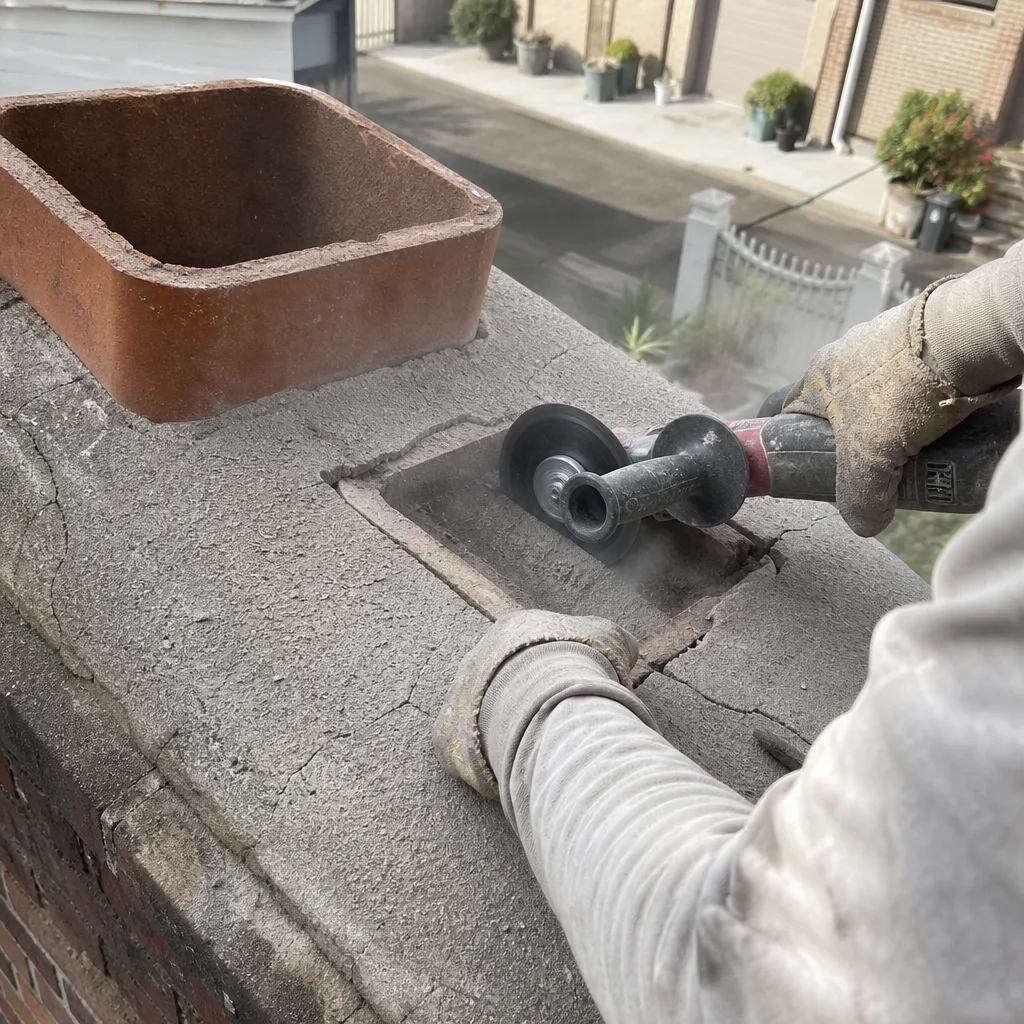
You should bring in a qualified chimney service when any of the following applies: you’ve owned the home for more than two years without a Level 2 camera scan; you’re planning to sell; you’ve just bought; you see smoke staining on the walls near the fireplace or chimney; you smell creosote or a burned, tarry odor in the firebox even after a cleaning; or you’ve had a chimney fire that you suspect you caught early. If you’re in a Jersey City row house and your neighbor’s chimney work disturbed the shared party wall, a professional needs to look at your side of that wall. Fireplace and chimney repairs in Jersey City are not the place for a handyman with a trowel. Level Two Chimney Jersey City offers free estimates in Jersey City, and every one includes a written price before work starts. Call (862) 272-3868.
Frequently Asked Questions
A chimney sweep in Jersey City typically costs $199 to $399 depending on the flue size, the amount of creosote, and whether it’s a masonry or factory-built chimney. Add $75 to $150 for a Level 2 camera-scan inspection bundled with the sweep. At Level Two Chimney Jersey City, we quote a written flat price before we start, so you’ll know the exact number before anyone steps a ladder onto your roof. Call (862) 272-3868 for a free estimate and a written quote.
No. Chimney sweeping is maintenance, not construction, and no New Jersey municipality, including Jersey City, requires a permit for it. The permit requirement applies to structural work: relining, rebuilding, firebox reconstruction, and smoke chamber parging.
Yes. A chimney reline requires a building permit under the New Jersey Uniform Construction Code, and in Jersey City you file through the Construction Code Office at 30 Montgomery Street or the SDL portal. The permit triggers a rough inspection before the crown is sealed and a final inspection after. Without those inspections, the work is unpermitted and will surface during a CCO or title search when you sell.
NFPA 211, the standard adopted in New Jersey, says chimneys should be swept at least once a year if used regularly, and as soon as creosote buildup reaches 1/8 inch. In practice, Jersey City homeowners who use their fireplaces more than once a week from October through March should expect to sweep each fall. Those who use them occasionally can often go two seasons, but only a camera scan tells you for sure.
A Level 2 inspection is an NFPA 211-defined inspection that includes a camera scan of the flue interior, plus a check of the attic, chase, and other accessible areas around the chimney. It’s required when a property is sold, when a new appliance is connected to the chimney, or after a chimney fire or other structural event. We’ve included camera-scan documentation on every visit since 2009 under Haven Standard Clause 4.
Skipping inspections doesn’t stop the chimney from degrading; it only stops you from knowing about it. In Jersey City’s freeze-thaw climate, cracked liners, failing crowns, and water-damaged masonry progress every year. The risk is a chimney fire from accumulated creosote or carbon monoxide leaking through a cracked liner into the house. Call (862) 272-3868 for a free estimate and we’ll document the actual condition with photos before recommending anything, or browse more guides & resources.
The Bottom Line
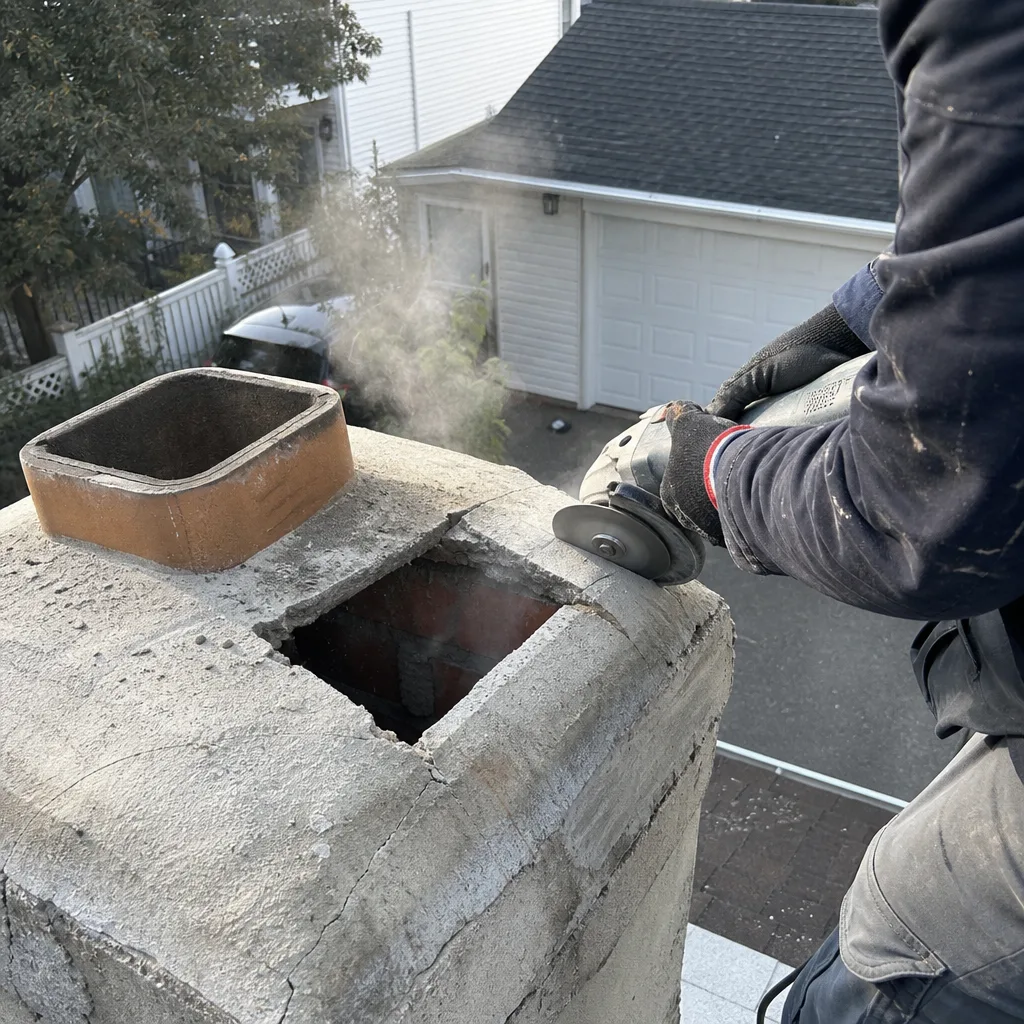
Cleaning your chimney in New Jersey requires no permit. Repairs you might think do, and repairs you might think don’t, actually do. The line is structural alteration, and the moment a contractor proposes relining, rebuilding, or reconstructing, the permit process should begin. In Jersey City, that process runs through 30 Montgomery Street, and the paper it produces is what protects you at resale. Get the Level 2 camera scan before you sell or before you buy. Keep the records. And treat your chimney as a system that needs documented, inspected maintenance, not a masonry box that burns wood. That’s the difference between a chimney that’s cleaned and a home that’s protected. To inspect and clean your chimney this season with a written price before work starts, call Level Two Chimney Jersey City at (862) 272-3868. Estimates are free, and so is a second opinion on any written quote you’ve received.
Written by Corrine Halstead, Owner at Level Two Chimney Jersey City, serving Jersey City since 2009.